Trump says Iran war "close to over" as Pakistan pushes for new peace talks
Follow updates on the war in the Middle East for Thursday, April 16, here. See earlier developments below.
What to know about the Iran war:
- President Trump is again voicing optimism about a potential deal with Iran to end the war currently paused by a two-week ceasefire. Mr. Trump told Fox News the conflict is "very close to over" as he and Pakistan's leader suggest a new round of direct U.S.-Iran peace talks could be looming.
- The Iranian regime is challenging the U.S. military's claim to have "completely halted economic trade going into and out of Iran by sea," and is again threatening to impede commercial shipping in another vital Middle Eastern waterway if the American blockade of its ports continues.
- The Iran war continues to drive a deeper wedge between the U.S. and its NATO allies and between President Trump and the leader of the Catholic Church. Mr. Trump has lashed out again at Pope Leo for calling for an end to the war, and for what he considers NATO's failure to support the U.S.-Israeli attacks on Iran.
4 Lebanese rescue workers killed in 3 straight Israeli attacks, paramedic groups say
The Israeli military killed four Lebanese rescue workers and wounded six others in three consecutive, targeted strikes Wednesday, paramedic groups said, a stark illustration of the human cost of the Israeli military campaign against Hezbollah in southern Lebanon a day after the two countries held historic talks in Washington.
The back-to-back Israeli attacks on the southern village of Mayfadoun, near the bigger town of Nabatiyeh, hit the first group of medics responding to a distress call from wounded civilians, a second group trying to assist their wounded colleagues and a third group rushing to aid the first two teams that had been targeted.
The Israeli military did not respond to a request for comment on the strikes beyond saying it was "looking into" what happened. It has previously accused the Iran-backed Hezbollah militant group of using ambulances as cover for militant activities, without offering evidence.
The Lebanese Health Ministry condemned the attacks as a "blatant violation" of international law.
Abou Haidar Hayya, an official with the Islamic Health Committee involved in the rescue operation, said he feared such direct targeting of medics meant that "there are no more red lines in this war."
Trump says Israel, Lebanon leaders to speak Thursday
President Trump says leaders of Israel and Lebanon will speak on Thursday, as Washington pushes to ease hostilities after the rivals' first direct talks in decades on Tuesday.
"Trying to get a little breathing room between Israel and Lebanon," Mr. Trump said late Wednesday on his Truth Social platform, apparently referring to the meeting held in Washington the day before -- the first direct negotiations between senior officials from the two countries since 1993 — and to Thursday's planned discussion.
He didn't identify Thursday's participants or give details but said, "It has been a long time since the two leaders have spoken, like 34 years. It will happen tomorrow. Nice!"
Israeli Army Radio, also known as GLZ Radio, said Thursday that, "Intelligence Minister Gila Gamliel confirmed in an interview that Prime Minister Benjamin Netanyahu will speak with Lebanese President Joseph Aoun."
GLZ quoted Gamliel as saying, "I hope that this move will ultimately lead to prosperity and flourishing for Lebanon as a country. This is a move that was conceived over time."
But an official source told AFP, "We are not aware of any planned contact with the Israeli side, and we have not been informed of any through official channels."
A senior Trump administration official said earlier that the president would "welcome" an end to hostilities between Israel and Hezbollah in Lebanon, but stressed that any such outcome isn't part of talks between Washington and Tehran.
Lebanon was pulled into the Middle East war on March 2 after pro-Tehran group Hezbollah attacked Israel.
Since then, Israeli strikes have killed more than 2,000 people in Lebanon, health officials there say, and displaced more than one million in that nation, and Israeli ground forces have invaded Lebanon's south.
CBS/AFP
China's foreign minister stresses to Iran that Strait of Hormuz needs to reopen
Chinese Foreign Minister Wang Yi told his Iranian counterpart that reopening the Strait of Hormuz was a unanimous demand from the international community.
Wang Yi told Iran's Foreign Minister Abbas Araghchi in a phone call late Wednesday that Iran's sovereignty, security, and legitimate rights should be respected as a littoral state of the Strait of Hormuz, but freedom of navigation and safety through the strait should be ensured.
"Working to resume normal passage of the strait is a unanimous call from the international community," Wang was quoted as saying in a government statement.
Wang noted that the current situation had reached a critical juncture between war and peace, and also said that the window of peace was opening.
Earlier Wednesday, President Trump said that China had agreed not to send weapons to Iran. China has long been a supporter of Iran's ballistic missile program.
Mr. Trump's trip to China, originally scheduled for early April, was delayed to mid-May because of the Iran War.
CBS/AP
Pakistan's prime minister, Saudi crown prince meet on Iran
Pakistan Prime Minister Shehbaz Sharif met Saudi Crown Prince Mohammed bin Salman during a visit to the Kingdom Wednesday, briefing him on Pakistan's efforts to ease U.S.-Iran tensions and assuring him of Islamabad's "full support," his office said before dawn Thursday.
Wednesday's meeting lasted more than two hours, and Sharif was accompanied by Pakistan Foreign Minister Ishaq Dar.
The statement said the crown prince praised what it described as the constructive role played by Sharif and Pakistan's army chief, Field Marshal Asim Munir, in the peace process.
Sharif dispatched Munir to Tehran for talks with Iranian leaders.
Pakistan has long maintained close ties with Saudi Arabia while also keeping relations with Iran.
Hegseth, Caine to hold news conference on Iran war Thursday
Defense Secretary Pete Hegseth and Gen. Dan Caine, chairman of the Joint Chiefs of Staff, will hold a news conference Thursday on the Iran war, the Department of Defense said.
It's expected to begin at 8 a.m. ET, according to the department's announcement on X.
CBS News 24/7 will stream the update live.
USS Gerald R. Ford breaks record for longest deployment since Vietnam War
The world's largest aircraft carrier, the USS Gerald R. Ford, broke the U.S. record Wednesday for the longest post-Vietnam War deployment, a nearly 10-month span that saw it take part in both the military raid in Venezuela and the Iran war.
The ship's 295th day at sea surpassed the previous longest deployment by an aircraft carrier in the past 50 years, when the USS Abraham Lincoln was sent out for 294 days in 2020 during the COVID-19 pandemic, according to data compiled by U.S. Naval Institute News, a news outlet run by the U.S. Naval Institute, a nonprofit organization.
The USS Ford was deployed to the Caribbean region in November 2025 as part of a broader military buildup near Venezuela. The aircraft carrier and its escort ships pivoted to the Middle East in February ahead of the war with Iran.
Pentagon officials have not said how long the Ford will stay deployed, but the Navy's two highest-ranking officers both said publicly that they expect the ship to be deployed for around 11 months. That would put the ship returning home in late May.
The USS Ford is the largest aircraft carrier in the world, and the U.S. Navy's most advanced. Its $13 billion price tag also makes the Ford the most expensive warship in Navy history.
CBS/AP
Iran supreme leader's adviser threatens to sink U.S. ships in Strait of Hormuz
The military adviser to Iran's supreme leader, Mojtaba Khamenei, on Wednesday warned that Iran would sink American ships in the Strait of Hormuz if the United States decided to "police" the key shipping bottleneck.
"Mr. Trump wants to become the police of the Strait of Hormuz. Is this really your job? Is this the job of a powerful army like the U.S.?" Mohsen Rezaei, a former commander-in-chief of Iran's Revolutionary Guards who was named as a military adviser by Khamenei last month, told state TV.
"These ships of yours will be sunk by our first missiles and have created a great danger for the U.S. military. They can definitely be exposed to our missiles and we can destroy them," Rezaei, wearing his military uniform, told the state broadcaster.
He also added, without giving further details: "I am not in favour of extending the ceasefire at all and this is a personal view."
A veteran and high-profile figure in Iran, Rezaei headed the Revolutionary Guards from 1981 to 1997.
S&P 500 and Nasdaq hit record highs, erasing Iran war impact
The S&P 500 and Nasdaq both hit record highs Wednesday as investors appear to look past continued uncertainty of the war with Iran.
The S&P 500 climbed 56 points, or 0.8%, to close at 7,023, topping its previous high of 6,979 on Jan. 27.
The Nasdaq Composite Index also jumped 377 points, or 1.6%, to 24,016, eclipsing its previous record of 23,958 in October 2025. The Nasdaq has seen 11 consecutive days of gains.
One factor possibly driving the stocks is President Trump's remarks Tuesday that the war is "very close to over," coupled with the possibility of a second round of negotiations with Iran.
Another possible contributor to the rally is a slight decline in oil prices — which were below $100 a barrel Tuesday. Oil prices are still significantly higher than they were in late February, when the war began, but it is a positive signal for traders.
Earnings season has also started strong, with the big banks showing good results. Despite the uncertainty, it's an early indicator that companies may pull out a win this quarter.
The rally marks a sharp reversal from late March, when the Dow fell into correction territory — a drop of at least 10% from its recent high — after five straight weeks of losses, underscoring how quickly investor sentiment has shifted.
Former NATO chief says "I'm confident that it's possible to preserve" alliance
Former NATO Secretary-General Jens Stoltenberg told CBS News it's important to take President Trump's stiff criticism of the alliance seriously, but he believes NATO will remain intact.
"I'm confident that it's possible to preserve NATO, because a strong NATO is good for Europe, but it's also good for the United States," Stoltenberg told CBS News chief Washington correspondent Major Garrett on "The Takeout."
Mr. Trump has questioned NATO for years, arguing its European member states don't spend enough on defense and are overly reliant on the U.S. That criticism has grown louder in recent weeks as some members seek to distance themselves from the United States' war with Iran. The president said earlier this month that he's considering withdrawing from NATO, which would require an act of Congress, calling the alliance a "paper tiger."
Stoltenberg said he believes Mr. Trump is not criticizing the idea of NATO itself, but instead is upset that some members do not invest enough in the alliance, which he called a "fair criticism" that has been addressed in recent years through increased defense spending.
Stoltenberg, who currently serves as Norway's finance minister and was previously the Nordic country's prime minister, also predicted that European countries could assist the U.S. in keeping the Strait of Hormuz open.
Asked about a Wall Street Journal report that some European states are seeking to boost their involvement in NATO as a fallback in case the U.S. rolls back its contributions, Stoltenberg said "many European countries are hedging," but "this is not as [an] alternative to NATO."
"The aim, the goal, is to preserve NATO by having a stronger European contribution within the overall NATO framework," he said.
FIFA chief says Iran will participate in World Cup "for sure" despite war
FIFA President Gianni Infantino reiterated his stance Wednesday that Iran will participate in the World Cup "for sure" despite its war with the U.S.
Speaking at CNBC's Invest in America Forum, Infantino said it is important that Iran participates in the World Cup even though that has been in doubt since the U.S. and Israel launched airstrikes on the country.
"The Iranian team is coming for sure, yes," Infantino said. "We hope that by then, of course, the situation will be a peaceful situation. As I said, that would definitely help. But Iran has to come. Of course, they represent their people. They have qualified. The players want to play."
President Trump has appeared to waffle on whether Iran should take part in the World Cup, which the U.S. is co-hosting with Mexico and Canada. In a White House meeting in mid-March, Mr. Trump told FIFA representatives that Iran was welcome to play in the tournament, officials told CBS News. However, two days later, Mr. Trump wrote on Truth Social that while the Iranian team was "welcome" to participate, he didn't "believe it is appropriate that they be there, for their own life and safety."
Following those remarks, the president of the Iranian Football Federation said the nation was negotiating with FIFA to play its matches in Mexico.
"When [President] Trump has explicitly stated that he cannot ensure the security of the Iranian national team, we will certainly not travel to America," Taj said last month.
Iran is currently scheduled to play all three of its group games in the U.S., with two at SoFi Stadium outside Los Angeles, and a third in Seattle.
CBS/AP
Iranian ship tried to evade U.S. blockade in Strait of Hormuz, Pentagon says
An Iranian cargo ship tried to evade the U.S. blockade in the Strait of Hormuz on Tuesday, according to U.S. Central Command.
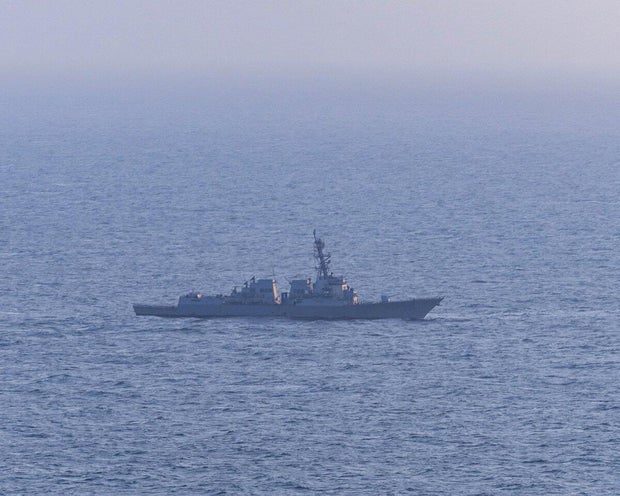
The vessel left the port city of Bandar Abbas, exited the strait and was transiting along the Iranian coastline when USS Spruance redirected the Iranian-flagged ship, CENTCOM said in a statement on Wednesday. It is now heading back to Iran, the U.S. military said.
"Ten vessels have now been turned around and ZERO ships have broken through since the start of the U.S. blockade on Monday," CENTCOM said.
Iran's vice president thanks Pope Leo for "principled positions" in condemning war
Mohammad Reza Aref, the first vice president of Iran, thanked Pope Leo Wednesday for condemning the war as a feud between the pontiff and President Trump develops.
"Iran, for years, has been subjected to sanctions for the crime of defending justice, humanity, and freedom. It is now also the target of direct and unjust aggression by the United States and Israel," Aref said on X. "Your Holiness @Pontifex, we thank you for your principled positions in condemning this brutality. Our suffering is evidence of steadfastness in human values. Iran calls on the world for a 'collective action for justice and compassion' in order to go beyond destructive policies and defend a lasting peace."
Over the weekend, Mr. Trump lashed out at Pope Leo on social media following the pope's criticism of the war with Iran. Leo had previously called Mr. Trump's threat to wipe out Iranian civilization "truly unacceptable," and encouraged people to contact "political leaders…to ask them, tell them to work for peace."
In an interview with CBS News senior correspondent Norah O'Donnell on Monday, the president said Leo should stay out of politics.
"He's wrong on the issues," Mr. Trump said of the pope. "I don't think he should be getting into politics. I think he probably learned that from this."
U.S. Treasury issues sanctions targeting Iran's alleged oil smuggling networks
The Treasury Department announced Wednesday that it had issued sanctions against an alleged oil smuggling network run by the son of a now-deceased senior Iranian security official, as well as those involved in an "oil-for-gold" scheme under former Venezuelan leader Nicolás Maduro.
The latest sanctions by the Treasury's Office of Foreign Assets Control targeted more than two dozen people, companies and vessels operated by Mohammad Hossein Shamkhani, whose father, Ali Shamkhani, was an advisor to former Supreme Leader Ayatollah Ali Khamenei, the department said.
"Treasury is moving aggressively with Economic Fury by targeting regime elites like the Shamkhani family that attempt to profit at the expense of the Iranian people," Treasury Secretary Scott Bessent said in a statement.
Seyed Naiemaei Badroddin Moosavi, an alleged financier of the Iranian-backed militant group Hezbollah — as well as three companies linked to an alleged money laundering operation involving the sale of Iranian oil in exchange for Venezuelan gold — were also part of the sanctions, the department said.
"As a result of today's action, all property and interests in property of the designated or blocked persons described above that are in the United States or in the possession or control of U.S. persons are blocked and must be reported to OFAC," the department said in a news release.
State Department spokesperson Tommy Pigott said in a statement that the sanctions are part of the U.S.' plan to limit Iran's ability to generate revenue as Iran "attempts to hold the Strait of Hormuz hostage."
"The complex schemes involving illicit Iranian oil, gold, and terrorist financing demonstrate the lengths to which Iran and its partners will go to evade sanctions and fund malign activities," Pigott said.
Israel prepared to strike Iran again, if necessary
Israel is saying it is prepared to continue its strikes in Iran, if necessary, as negotiations on a lasting truce continue between the U.S. and Iran.
"Our American friends are constantly updating us on the talks with Iran," Prime Minister Benjamin Netanyahu said in a video update Wednesday evening. "Our goals are the same. In anticipation of the possibility that fighting will resume, we are prepared for any scenario."
The Israeli military echoed it will be ready to strike if the two-week ceasefire ends without an extension or long-term deal.
"The IDF has been in a ceasefire with Iran for several days, in accordance with the directives of the political echelon. We are closely following what is happening in Iran and the negotiations that are underway," IDF spokesperson Effie Defrin said in a statement. "I want to emphasize that the IDF is well prepared in defense, we are prepared to attack again in a powerful manner quickly if necessary."
U.S. will not renew waivers for Russian and Iranian oil, Bessent says
The U.S. will not renew waivers that allowed for the purchase of some Russian and Iranian oil without facing sanctions, Treasury Secretary Scott Bessent said.
Speaking to reporters at the White House, Bessent said the U.S. will not renew general licenses allowing the purchase of Russian and Iranian oil. The treasury secretary said the oil that qualified for waivers was already on the water by March 11. The waivers expire this week.
"We will not be renewing the general license on Russian oil and we will not be renewing the general license on Iranian oil," he said. "That was oil that was on the water prior to March 11, so all that has been used."
Bessent said sanctions relief applying to Russian oil could have benefitted Russia to the tune of roughly $2 billion, but also said that number isn't confirmed.
Bessent says high gas prices are "short-term volatility for long-term gain"
Speaking to reporters at a White House briefing, Treasury Secretary Scott Bessent, whose estimated net worth is over $500 million, said that on gas prices, "the message is the short-term volatility for long-term gain."
"The president's been very clear, again, as the secretary just said, this is short-term disruption for the long-term strategic goal of the United States to ensure that the world's leading state sponsor of terror cannot obtain a nuclear weapon," White House press secretary Karoline Leavitt said.
It's not clear, however, how long those higher prices at the pump will last. In January, before the war began, the U.S. Energy Information Administration anticipated national gas prices to average $2.95 per gallon in 2027. Now, it projects gas prices will be $3.46 per gallon on average in 2027.
Gas prices will drop under $4 "sooner rather than later," Bessent says
Treasury Secretary Scott Bessent echoed President Trump's comments that he believes the war with Iran could be over soon, but added those negotiations will decide how soon gas prices come down below $4 again.
"I'm optimistic that during the summer, we will see gas with a '3' in front of it sooner rather than later," Bessent said during an appearance at the White House briefing room. "It's bank week here in D.C., so I've been meeting with a lot of my Middle Eastern counterparts, the finance ministers, and they all say once the straits are open, they can start pumping again within one week."
Still, Bessent left a fairly wide date range for when the gas prices will drop.
"I'm optimistic sometime between June 20 and Sept. 20 that we can have $3 gas again," he said.
The current average price for a regular gallon of gas is currently $4.11 nationwide, according to AAA. Just a month ago, that average was $3.70, and a year ago it was $3.17, according to AAA. In California, the priciest state in the country, a gallon of regular will cost you $5.88 on average.
U.N. allocates $12 million to support humanitarian response in Iran
U.N. Relief Chief Tom Fletcher said he has allocated $12 million from the United Nations' Global Emergency Fund to support the humanitarian response in Iran.
"Thousands of civilians killed. Infrastructure destroyed. Essential services disrupted," he said Wednesday in a post on X.
"This funding will help our partners deliver life-saving assistance at scale," he said.
U.S. military says forces "ready to ensure compliance" of blockade
U.S. forces are "ready to ensure compliance" of the U.S. blockade of Iranian ports as American naval vessels remain on patrol in the Gulf of Oman, U.S. Central Command said Wednesday.
CENTCOM shared an audio recording in a post on X warning that any vessels that try to breach the blockade by transiting to or from an Iranian port "will be boarded for interdiction and seizure."
"If you do not comply with this blockade, we will use force," the recording says. "The whole of the United States Navy is ready to enforce compliance."
The blockade has been in place for more than two days as Washington pressures Tehran to relinquish control of the Strait of Hormuz, a critical chokepoint for shipments of oil, fertilizer and other vital commodities.
John Bolton says he doesn't "fully understand" what Trump's objective is
Former Trump national security adviser John Bolton, a longtime advocate of U.S. military intervention in Iran, told CBS News that while he agreed with the president undertaking the current war, he would have done it differently.
"The first thing is to find out what his objective is," said Bolton, who is also the former U.S. ambassador to the United Nations. "And to this day, I can't say that I fully understand what his objective is."
"If you can't change a regime's behavior, the only other alternative is change the regime," he added. "I don't know if that's what Trump was up to. He's certainly not done things that are necessary if that was his objective."
Bolton said he warned President Trump during his first term, when he was national security adviser, about the risks of attacking Iran, including to the Strait of Hormuz and Iran's targeting of Gulf Arab states.
"I don't sense the president has a plan. I think he's made clear in many, many different ways he wants out," Bolton said. "He's looking for a way to declare victory. And I think if we leave at least without reopening the Strait of Hormuz militarily to … Arab oil, then I think it's a very hollow victory, if that's what he does."
3 different teams of paramedics were struck, Lebanese health ministry says
Attacks in southern Lebanon killed three paramedics, wounded six others and left a fourth medic missing in the town of Mayfadoun, Lebanon's health ministry said.
Israel struck the first team of paramedics on Wednesday as it was heading to rescue wounded people, killing one paramedic, the ministry said. Another medical worker on that initial mission remains "missing," the ministry said, without elaborating.
Israel struck the second team as it rushed to rescue the first, wounding three more paramedics.
In the third and final rescue attempt, Israel again hit ambulances heading to the site, killing two paramedics and wounding three more.
The Israeli military did not immediately respond to a request for comment on the strikes.
Lebanon's health ministry denounced Israel's attacks as "a flagrant crime" and warned that "paramedics have become direct targets, pursued relentlessly in a blatant violation (of) … international humanitarian law."
U.S. military: No vessels made it past U.S. forces in first 48 hours of blockade
No vessels made it past U.S. forces in the first 48 hours of the U.S. blockade on ships entering and exiting Iranian ports, according to U.S. Central Command.
Nine vessels also complied with direction from U.S. forces to turn around and return toward an Iranian port or coastal area, CENTCOM said on X Wednesday.
U.S. forces are positioned in the Arabian Sea or Gulf of Oman to enforce the blockade, according to U.S. officials.
Death toll from Israel's ongoing offensive against Hezbollah has hit 2,167, Lebanon says
The death toll from Israel's ongoing military offensive against the Iranian-backed group Hezbollah in the country had reached 2,167, Lebanon's Ministry of Public Health said Wednesday.
At least 7,061 people have been wounded, according to the ministry, which does not distinguish between civilian and combatant casualties in its figures. The numbers reported by the ministry on Wednesday include casualties reported since the beginning of March, when Israel significantly ramped up its airstrikes in Lebanon.
Israeli forces have also occupied a significant portion of southern Lebanon, and Israeli leaders vow to continue operations until the threat posted to Israeli citizens by Hezbollah is removed.
Since the U.S. and Iran agreed to a two-week ceasefire, Israel has reduced its attack on other parts of Lebanon, including the capital Beirut.
Tehran balked at Israel's ongoing attacks against Hezbollah as a violation of Iran's agreement with Washington, but Israel and the Trump administration insisted Lebanon was never part of that deal.
Iran's foreign ministry spokesman said Wednesday that the country remained committed to demanding an end to the war in Lebanon as part of any final agreement with the U.S. on a wider peace deal.
"This issue was pursued seriously in [talks in] Islamabad, and it is still being followed up," ministry spokesman Esmail Baqaei said Wednesday in Tehran. "Any understanding has two sides. If part of an understanding is violated, the other side is also entitled to reduce its commitments in proportion to that violation."
Top Pakistani military official arrives in Tehran "as part of the ongoing mediation efforts"
A top Pakistani military official who has played a key role in his nation's efforts to broker peace between the U.S. and Iran arrived in Tehran Wednesday amid reports that he had new information from the Trump administration to convey to Iranian officials.
A post by Pakistan's Armed Forces News agency on social media showed Chief of Army Staff Field Marshal Syed Asim Munir arriving at an airport and being greeted by Iranian officials.
His visit had been previewed earlier by Iran's foreign ministry, which acknowledged ongoing, indirect talks with the U.S.
The Pakistani military news agency said only that Munir was in Pakistan "as part of the ongoing mediation efforts."
A senior U.S. official told CBS News earlier Wednesday that while indirect dialogue was ongoing, there were no new terms for an extension of the current ceasefire, or a more lasting peace deal, yet agreed by the two sides.
Ceasefire and ongoing diplomacy buoy U.S. stocks, but fluctuating energy prices show lingering nerves
The U.S. stock market is flirting with a record Wednesday following its big rally over the last two weeks as hopes have built that the global economy can avoid a worst-case scenario because of the U.S.-Iran war.
The S&P 500 rose 0.2% in early trading and was on track to edge past its all-time high, which was set in January. The Dow Jones Industrial Average was up 91 points, or 0.2%, as of 9:35 a.m. Eastern time, and the Nasdaq composite was 0.3% higher.
Treasury yields were also holding relatively steady in the bond market as mediators moved closer to extending the ceasefire between the United States and Iran and restarting negotiations before the agreement expires next week.
After falling nearly 10% below its record at one point, a drop steep enough that Wall Street calls it a "correction," the S&P 500 has roared 10% higher since late March. That move was mostly on expectations for calming tensions to come in the war and a resumption of the full flow of oil from Persian Gulf producers to customers worldwide through the Strait of Hormuz.
If those expectations get dashed, which has happened before in the war, stocks could easily resume their fall. Oil prices drifted up and down on Wednesday and showed that caution remains in financial markets.
The price for a barrel of Brent crude, the international standard, rose 0.2% to $94.94. That's still well above its roughly $70 price from before the war, though it's down from its $119 peak when worries about the fighting have been at their heights.
Iran says release of its frozen financial assets part of ongoing indirect discussions with U.S.
Iran's foreign ministry spokesman said Wednesday that the release of billions of dollars in frozen Iranian government assets was being discussed as part of a potential new agreement with the U.S. to end the war.
Qatar says it still has $6 billion in Iranian assets frozen intact, which the U.S. Treasury would have to clear for release back to Tehran.
"This was one of the issues that was discussed," Iranian Foreign Ministry spokesman Esmail Baqaei told reporters in Tehran on Wednesday, referring to discussions being facilitated by Pakistan as an intermediary between Iran and the U.S.
"The release of Iran's assets, in our view, is not a concession. It is Iran's right that has been violated. It is like someone stealing your property and then wanting to return it to you as a concession," Baqaei said.
"This issue was one of our demands and was raised there. But the reality is that we did not reach a final conclusion, just as no conclusion was reached on the other issues either," said Baqaei, who noted that central bank and other financial officials from both Iran and the U.S. were involved in the previous round of talks.
A senior U.S. official told CBS News' Jennifer Jacobs last week that the U.S. had not agreed to release any frozen Iranian assets as part of a ceasefire.
Iran says no date set yet for new round of direct talks with U.S.
Iranian Foreign Ministry spokesman Esmail Baqaei said Wednesday that no date had been set for a new round of direct negotiations between Iran and the U.S.
President Trump has voiced hope that a second round of direct talks could begin in the coming days, which he predicted would be "amazing," and Pakistani officials say they are working to facilitate such negotiations again.
Senior officials from Pakistan, which has acted as an intermediary between Washington and Tehran, were expected in Tehran on Wednesday as part of efforts by Islamabad to keep the diplomacy going.
Trump says China "agreed not to send weapons to Iran"
President Trump said Wednesday that China has agreed not to provide weapons to Iran, as reports circulate that Beijing has considered transferring arms.
"China is very happy that I am permanently opening the Strait of Hormuz," Mr. Trump said in a post on Truth Social. "I am doing it for them, also — And the World. This situation will never happen again. They have agreed not to send weapons to Iran. President Xi will give me a big, fat, hug when I get there in a few weeks. We are working together smartly, and very well!"
Mr. Trump said in an interview Tuesday with Fox News host Maria Bartiromo that he wrote a letter to China's President Xi Jinping asking him not to give Iran weapons. "And he wrote me a letter saying that essentially, he's not doing that," Mr. Trump said.
China has long supported Iran's ballistic missile program and backed it with dual-use industrial components that can be used for missile production, according to the U.S. government.
CBS/AP
U.S. and Iran acknowledge ongoing, indirect dialogue, but U.S. officials say no new agreements yet
U.S. officials told CBS News on Wednesday that talks on extending the current two-week ceasefire with Iran, which is set to expire on Tuesday, were ongoing, but that there has been no agreement yet on terms.
"The United States has not formally agreed to an extension of the ceasefire," a senior U.S. official said Wednesday. "There is continued engagement between the U.S. and Iran to reach a deal."
Iran's Foreign Ministry acknowledged Wednesday that the regime was engaged in indirect communications with the U.S., meanwhile, but said the aim is a complete end to the war and a lifting of sanctions against Tehran.
President Trump has said he's optimistic that a new round of direct talks could soon bring a final agreement to end the war.
"Regarding talks and negotiations, the exchange of messages is continuing," Foreign Ministry spokesman Esmail Baqaei said Wednesday in remarks aired by Iranian state TV. "Since Sunday, when the Iranian delegation returned to Tehran, multiple messages have been exchanged through a Pakistani intermediary."
Baqaei said Iran's "positions are very clear" and that the ongoing diplomacy, in Tehran's view, is "aimed at a complete cessation of war and the restoration of Iran's rights, including not only the lifting of sanctions but also compensation for damages inflicted on Iran during the imposed war by the United States and the Israeli regime."
Baqaei said Iran was "likely hosting a Pakistani delegation" on Wednesday "in continuation of the discussions that took place in Islamabad and the talks the Pakistani side has had with the United States; our positions have been heard and conveyed."
Iran again threatens Red Sea shipping after previous warnings over Bab el-Mandeb Strait
The head of Iran's central military command said Wednesday that if the U.S. continues with its blockade of Iranian ports in the Persian Gulf and "creates insecurity for Iran's commercial vessels and oil tankers," the country will extend its own efforts to disrupt shipping to another key waterway in the Middle East.
"The powerful armed forces of the Islamic republic will not allow any exports or imports to continue in the Persian Gulf, the Sea of Oman, and the Red Sea," Ali Abdollahi said in a message conveyed by Iranian state media.
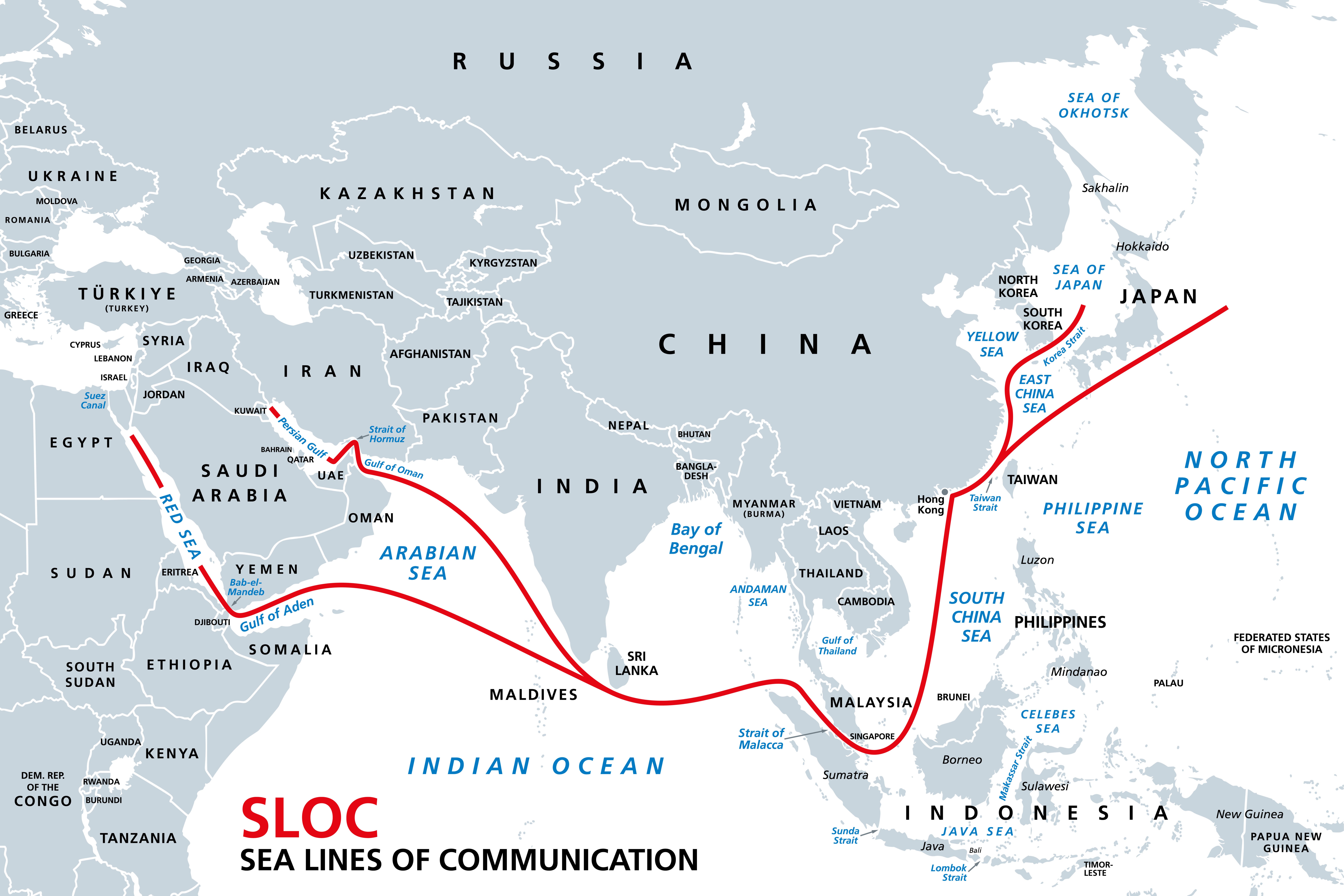
Iran has threatened on at least two previous occasions during the war to block shipping from the Red Sea, where a number of ports vital to global energy markets sit on the coastlines of Saudi Arabia and other nations. The southern gateway to the Red Sea is the narrow Bab el-Mandeb Strait, an effective chokepoint that could be subjected to attacks by the Iranian-backed Houthi rebels in Yemen.
The Houthis control a vast portion of Yemen bordering the Red Sea, where they have attacked ships before. Like the Strait of Hormuz, over which both the U.S. and Iran claim to have control, the Bab el-Mandeb is a vital conduit for natural gas and oil products exported from the Middle East.
An estimated 10% of the world's oil supply flows through the passage, which is bordered by Djibouti to the south and Yemen to the north.
An Iranian military official was first quoted in late March by the country's state media as saying the Bab el-Mandeb could be targeted.
While the Houthis have stayed out of the Iran war thus far, its leaders have warned they could wade into the conflict if Tehran asks them to.
Sanctioned ships appear to enter Persian Gulf through Strait of Hormuz as U.S. claim full blockade
U.S.-sanctioned ships appeared to be entering the Persian Gulf through the Strait of Hormuz on Wednesday, hours after a top U.S. military commander said a blockade of Iranian ports was "fully implemented."
Ship tracking data show a number of vessels, including the crude oil tanker Alicia — making the journey overnight. The Chinese-owned Alicia has previously called at Iranian ports.
The Alicia appeared to alter its course in the Gulf of Oman when the blockade began, but then continued through the Strait of Hormuz overnight, along with at least two other oil tankers.
Two Iran-flagged container ships, both subject to U.S. sanctions, also appeared to leave the Persian Gulf Tuesday and were continuing to sail close to Iran's south coast Wednesday.
A CBS News analysis of ship tracking data from earlier this week appeared to show a number of other Iran-linked ships passing through the Strait of Hormuz in the hours after the U.S. blockade of the waterway began on Monday.
The U.S. military said its blockade would apply to "all maritime traffic entering and exiting Iranian ports," but that it would "not impede freedom of navigation for vessels transiting the Strait of Hormuz to and from non-Iranian ports."
Iran's state media claimed Wednesday morning that a bulk carrier transporting food supplies — and an Iranian crude oil tanker — had entered Iranian waters after transiting the Strait of Hormuz, despite the U.S. blockade.
Iran's Fars News Agency said a supertanker capable of transporting 2 million barrels of oil had sailed through international waters and the Strait of Hormuz with its tracking system switched on, "without any concealment.
Despite tension with U.K. over war, Trump says he's looking forward to King Charles' visit
President Trump called Britain's King Charles "a fantastic person" ahead of his state visit to the U.S. later this month.
In an interview with U.K. broadcaster Sky News, Mr. Trump said he was looking forward to "all of" Charles' visit.
"Just being with him. I've known him for a long time. He's wonderful. Wonderful person," Mr. Trump said.
But the president reiterated his dissatisfaction with Prime Minister Keir Starmer, criticizing the British leader's decision not to join the U.S.-Israeli strikes on Iran.
When asked about the so-called "special relationship" between the U.S. and U.K., Mr. Trump said "when we asked them [the U.K.] for help [with the Iran war], they were not there. When we needed them, they were not there. When we didn't need them, they were not there. And they still aren't there."
Mr. Trump appeared to threaten a trade deal previously negotiated between the U.S. and the U.K.
"We gave them a good trade deal. Better than I had to. Which can always be changed," he said.
The president also renewed his criticism over the Starmer government's policies on energy and immigration.
U.K. finance chief "frustrated and angry" over Iran war's economic impact on Britain
U.K. Chancellor of the Exchequer Rachel Reeves is set to meet with her American counterpart, Treasury Secretary Scott Bessent, in Washington on Wednesday after voicing frustration over the economic fallout from the U.S.-Israeli war with Iran.
The International Monetary Fund has warned that the energy price shock due to the war will hit the U.K. harder than any other advanced economy, though the IMF expects Britain to rebound next year and show rapid economic growth compared to its G7 peers.
Before she departed for the U.S., Reeves told the British tabloid the Daily Mirror that she was "very frustrated and angry" about how the war will impact Britain's economy.
"This is a war that we did not start. It was a war that we did not want," Reeves said. "I feel very frustrated and angry that the U.S. went into this war without a clear exit plan, without a clear idea of what they were trying to achieve. And as a result, the Strait of Hormuz is now blocked."
Reeves said she was frustrated by "the impact it's having on families and businesses in our country."
"Obviously, no sensible person is a supporter of the Iranian regime, but to start a conflict without being clear what the objectives are and not being clear about how you are going to get out of it, I do think that is a folly and it is one that is affecting families here in the U.K., but also families in the U.S. and around the world," Reeves said. "I don't think it was the right decision. But it was absolutely the right decision for Keir Starmer - our prime minister - to keep us out of this conflict."
Israeli army strikes south of Beirut as Hezbollah launches more rockets at Israel
Two Israeli strikes hit vehicles south of Beirut on Wednesday, state media reported, while Hezbollah launched rockets at Israel, hours after Lebanon and Israel held historic direct negotiations.
Israel is continuing its strikes on southern Lebanon in its war with Iran-backed Hezbollah but had not targeted the Lebanese capital since a series of attacks across the country on April 8 that killed more than 350 people.
Lebanon's state-run National News Agency reported two separate Israeli strikes on two vehicles, one in the seafront town of Saadiyat and another on a coastal highway in neighboring Jiyeh, around 12 miles south of Beirut and outside Hezbollah's traditional strongholds.
NNA also reported several other strikes across southern Lebanon.
The Israeli military said it had detected "approximately 30 launches" by Hezbollah militants toward Israel since the early hours of Wednesday, a spokesman told AFP.
Hezbollah said it launched rockets at 10 northern Israeli areas.
The attacks come a day after Lebanon and Israel's ambassadors to the United States held their first direct talks in decades in Washington and agreed to hold further direct negotiations, with the Lebanese envoy calling for a ceasefire. Hezbollah strongly rejected the talks.
Israeli attacks on Lebanon have killed more than 2,000 people and displaced more than a million since March 2, according to Lebanese authorities.
Trump criticizes Pope Leo and NATO again
Among a series of posts on his Truth Social platform overnight, President Trump continued disparaging Pope Leo XIV and NATO.
In one post, he said: "Will someone please tell Pope Leo that Iran has killed at least 42,000 innocent, completely unarmed, protesters in the last two months, and that for Iran to have a Nuclear Bomb is absolutely unacceptable."
The pontiff has panned the administration's actions in Iran, among other things, and the president has taken exception.
The administration says ending Tehran's nuclear program is one of its key goals in the war with Iran. Rights groups say the Iranian regime killed tens of thousands of people who took to the streets to demonstrate against the Iranian regime earlier this year.
In another post, the president repeated his frequent characterization of the actions of other NATO nations during the war, saying, "NATO wasn't there for us, and they won't be there for us in the future!"
Pakistan working to secure new round of U.S.-Iran peace talks
Pakistan Prime Minister Shehbaz Sharif will travel to Saudi Arabia, Qatar and Turkey this week during a diplomatic push to secure a new round of talks between the U.S. and Iran, Pakistan's Foreign Ministry said in a statement.
The trip comes days after Islamabad hosted marathon negotiations last weekend that ended without a formal agreement.
Sharif is attempting to facilitate a second round before a fragile ceasefire expires early next week. The ministry said Sharif's visits will start Wednesday and conclude on Saturday.
President Trump told Fox News the war "is very close to over," and he said to the New York Post that a second round of talks with Iran "could be happening over next two days," again in Islamabad.
Late Tuesday night, ABC News Chief Washington correspondent Jonathan Karl said on social media that Mr. Trump "told me today he isn't thinking about extending the ceasefire. He doesn't think it will be necessary."
Karl said the president told him, "I think you're going to be watching an amazing two days ahead. I really do."
CBS/AP
CENTCOM says blockade of Iranian ports is "fully implemented"
In a statement Tuesday night, U.S. Central Command said a blockade of Iranian ports "has been fully implemented as U.S. forces maintain maritime superiority in the Middle East."
"An estimated 90% of Iran's economy is fueled by international trade by sea," Adm. Brad Cooper, CENTCOM commander, said in the statement. "In less than 36 hours since the blockade was implemented, U.S. forces have completely halted economic trade going into and out of Iran by sea."
U.S. destroyer interdicts 2 oil tankers in the Strait of Hormuz, U.S. official tells CBS News
A U.S. destroyer interdicted two oil tankers on Tuesday in the Strait of Hormuz, a U.S. official confirmed to CBS News.
The official said the two ships were part of the six merchant vessels U.S. forces told to turn back to an Iranian port on the Gulf of Oman in the initial 24 hours of the blockade. Reuters was first to report on the interdiction.
In that same timeframe, more than 20 other ships not from Iranian ports transited safely through the strait, the U.S. official said.