Michigan tribes issue instructions on how to respond to ICE encounters

Leaders of two Native American tribes based in Michigan's Upper Peninsula are recommending that members of the Native American community carry proof of U.S. citizenship with them in response to reports of interactions people elsewhere have had with U.S. Immigration and Customs Enforcement.
Bay Mills Indian Community
A document on what to do if ICE stops a tribal citizen was posted Tuesday on the Bay Mills Indian Community Tribal Chairperson Facebook page, in advance of the General Tribal Council's meeting Wednesday in Brimley.
The instructions also underlined that Native American citizens are also automatically U.S. citizens should they have been born in this country.
"While Tribal Identification Cards are valid and should be sufficient to establish U.S. citizenship and immigration status, it is not guaranteed that every ICE agent will recognize or understand this reality, creating unnecessary risk and harm," the document said. "These encounters cut against the sacrifices of our ancestors, who fought to protect our people, our lands, and our inherent rights, and they violate our shared values of respect for human life and the responsibility we share to protect one another."
The instructions to tribal members include:
- All Bay Mills Indian Community tribal citizens should make sure that their Tribal Identification Card or Enrollment Card is current. If the photo is more than five years old or has faded, the community leaders suggest getting a replacement ID.
- Tribal citizens "should be prepared to be asked for additional, back-up documentation," the notice said. Examples listed were of a passport, passport card, Michigan ID, Real ID card or any immigration documents that are relevant. "Keep copies in more than one location, especially when traveling," the notice said.
Tribal leaders said those who are approached by ICE while in a public space should stay calm and ask if they are free to leave. If they are not free to leave, ask if they are being detained.
"If you are detained, Bay Mills Indian Community will assist in helping our tribal citizens find legal representation," the notice said.
In terms of tribally-owned buildings, the document says ICE agents may only access areas that are normally open to the public, such as the lobby of the Ogimaag Gamig Governmental Center or the waiting room at the Bay Mills Health Center, without a valid judicial warrant or specific permission from the president of the Bay Mills Indian Community.
Those who are approached at home by someone who states they are from ICE should ask for identification, and request that a warrant signed by a judge is presented specifying who or what they are looking for at that location, the notice says.
"In any circumstance, if you encounter ICE while on Bay Mills Indian Community's reservation, please call Bay Mills Police Department," the notice said.
The Bay Mills Indian Community, whose offices are based in Brimley, has 2,258 citizens, with 1,657 of them age 18 or older. The tribe has inter-governmental agreements with the State of Michigan and Chippewa County over matters such as taxes, services and natural resources.
The community of Brimley is near Sault St. Marie, along Lake Superior in the Upper Peninsula.
Sault Ste. Marie Tribe of Chippewa Indians
The Sault Ste. Marie Tribe of Chippewa Indians, which is based in Sault Ste. Marie, Michigan, also has posted a notice on its Facebook page, with Chairman Austin Lowes speaking on behalf of the board of directors, "condemning recent aggressive Immigration and Customs Enforcement activity for creating fear, confusion and anxiety in indigenous and minority communities."
"No one should feel unsafe in their neighborhood, workplace, or homeland because of how they look, the language they speak, or the country they were born in," Lowes said.
"Recent incidents involving the unlawful detention of Tribal citizens from Federally Recognized Tribal Nations are deeply troubling and unacceptable. Tribal citizens are members of sovereign governments."
Lowes said he is urging all Sault tribe citizens to carry their tribal identification card or a copy of relevant documentation with them at all times, along with a state-issued identification card. The tribal identification will help establish both tribal nation and U.S. citizenship, he said.
He also instructed tribal citizens to remain calm if they are approached by an ICE agent.
"As a Tribal citizen, you cannot be deported," he said.
Should they have concerns or questions, tribal citizens can call the Tribal Legal Department office. The Sault tribe will work with officials to provide enrollment documentation, "and otherwise work towards the release of any Tribal citizen who is illegally detained by ICE," the notice said.
What's happened elsewhere?
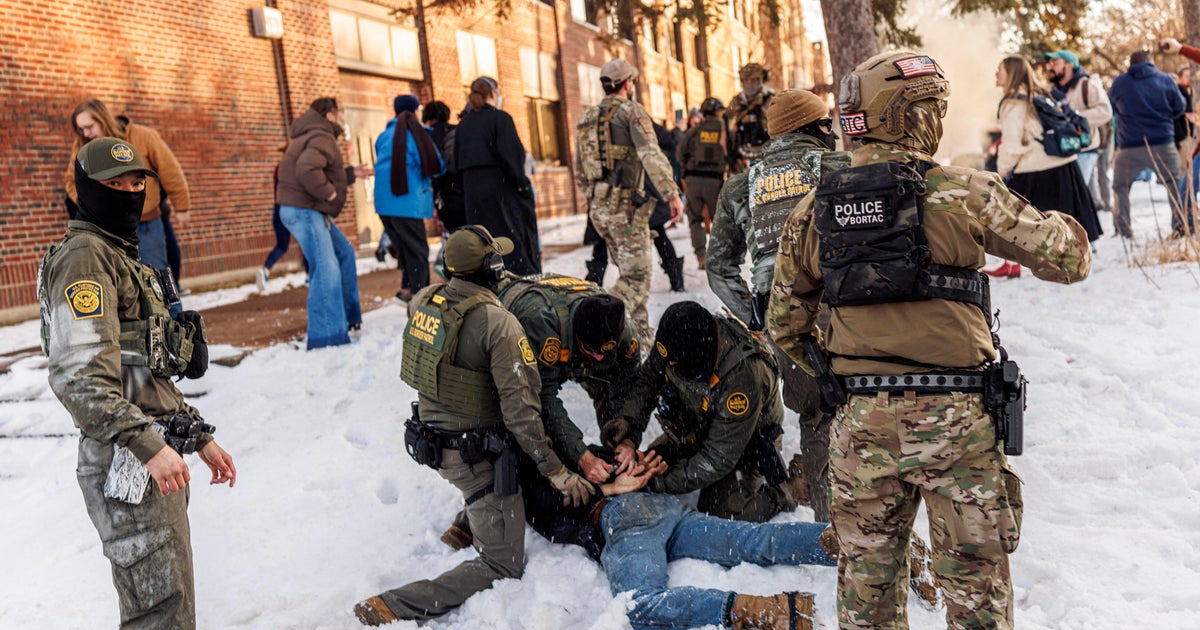
In Minnesota, members of the Native American community said they have been discussing the situation and working together to address concerns. This report was after the president of the Oglala Sioux Tribe said on Jan. 9 that four of its members had been detained by Immigration and Customs Enforcement.
The Navajo Nation said in December that dozens of Native Americans were questioned or detained during 2025 by U.S. Immigration and Customs Enforcement agents, even though Indigenous people born in the U.S. are U.S. citizens.
In response to questions over a Nov. 3 instance, the agency told CBS News Texas that, "ICE agents are trained to recognize tribal IDs and accept them as proof of status."