Michigan State University program helps develop turfgrass for 2026 World Cup

Millions of people will be tuning in to watch some of the best soccer players compete at the FIFA World Cup in just under a month.
They'll also be seeing years' worth of work and research by members of the Michigan State University Turf Grass Program right under those players' feet. The World Cup turfgrass, developed in collaboration between Michigan State University and the University of Tennessee, is designed to make play as consistent as possible, a challenge when the World Cup stadiums are anything but.
"We have 16 stadiums across three countries, and we want all the grasses to play the same," said MSU Turf Grass Management professor John 'Trey' Rogers III.
That means maintaining their quality amid constant mowing, miles of player foot traffic, and use in stadiums that weren't built for natural grass.
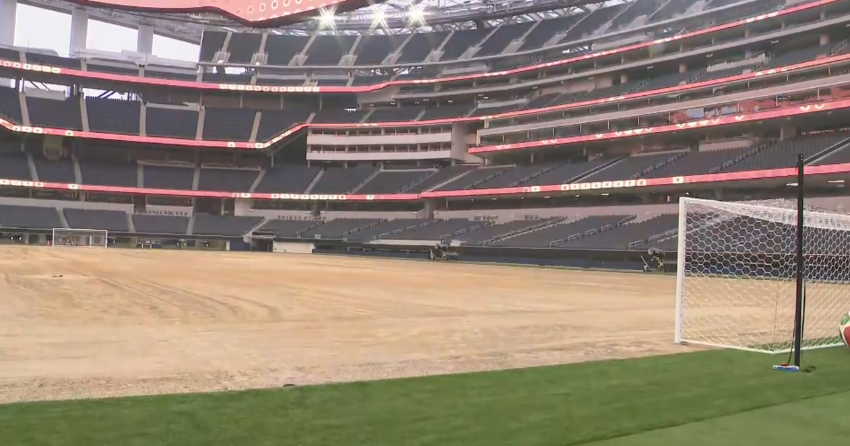
"We're putting a natural turfgrass field in on a temporary basis, and we're doing that for eight of the 16 stadiums," Rogers said.
Rogers says their challenge is eliminating the time it takes for the grass to re-root in its new home. The solution is to grow the grass on plastic.
"When it's harvested, we don't shear the roots. The roots come up just like a piece of pizza. They can travel long distances in a refrigerated truck. Subsequently, when they're laid down, they're ready to play," he said.
Green plastic fibers are woven into the sod once inside the stadium to keep the field durable.
"One World Cup game equals the same amount of traffic as one Super Bowl. So that means the stadium could have nine Super Bowls on it," Rogers said.
Field crews ensure the grass and plastic act as one throughout the tournament through a process called hygiene.
"We need to find a way to make sure those plastic fibers stay upright. All we're doing is scraping through this top layer, and actually removing some of that surface litter so the plastic fibers that are in here can actually remain standing up," said MSU Plant, Soil and Microbial Sciences research assistant Ryan Bearss.
The team of researchers says they don't expect anyone to recognize their work; in fact, the ultimate sign that their grass did the job is if no one says anything about it.