Three children killed from apparent drownings in Colorado last week, YMCA shares resources for water safety
A 7-year-old boy became the third victim of apparent drowning within a week, as June weather sent people looking for cooler spots on Colorado's Front Range.
The boy, Ariel Mauricio Banda, was reportedly on a flotation device with another child at the swim beach of Cherry Creek Reservoir Saturday afternoon. The other child went ashore from a shallow area, walking in, but the seven-year-old stayed on the float, which drifted into deeper water. Soon, he was in the water and then went under. It took six hours for rescuers to find him.
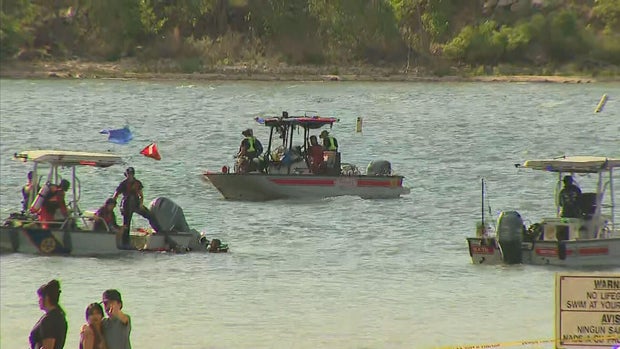
"The best thing you can do is wear a life jacket," said Colorado Parks and Wildlife's Kara Van Hoose.
As a landlocked state, Colorado has fewer recreational lakes and no ocean. But that does not mean it does not have significant dangers from water, especially to children.
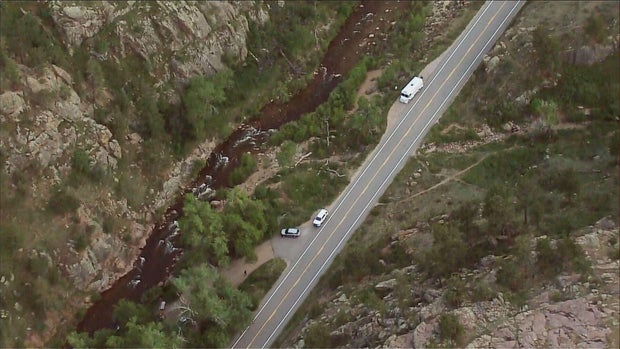
Last Tuesday, June 2, a toddler died after falling into an irrigation ditch fed by the Cache La Poudre River in Larimer County. A four-year-old also died Tuesday after being swept away by water in St. Vrain Creek near Lyons in Boulder County.
Unlike a lot of other states, Colorado's water can be cold and fast-moving. People go into creeks and rivers where conditions vary.
"I do understand. It's cold part of the year. We don't have as many pools here as we have in other locations. We don't have a big ocean. But we have a really active outdoor community in Colorado," said Sonya Walker, vice president of program strategy and impact with the YMCA of Metro Denver.
Fast moving water, even when it looks swimmable, has challenges.
"It looks deceptively shallow, and it looks deceptively calm. But we don't know the currents and things in those natural bodies of water that are happening beneath the surface," said Walker.
Around the country, drowning is the most frequent cause of death for children 0-4 years old and the second most frequent cause of death for children 5-14. Something the YMCA is working to guard against.
The YMCA teaches more people around the country how to swim than any other group or organization. They have swimming classes seven days a week.
There are scholarships to help families who cannot afford the classes. No one is excluded due to lack of funds, Walker explains. Those scholarships and other opportunities provided by the YMCA help ensure all children are welcome. It's especially important since the Red Cross says 79% of children from low-income homes do not know how to swim.
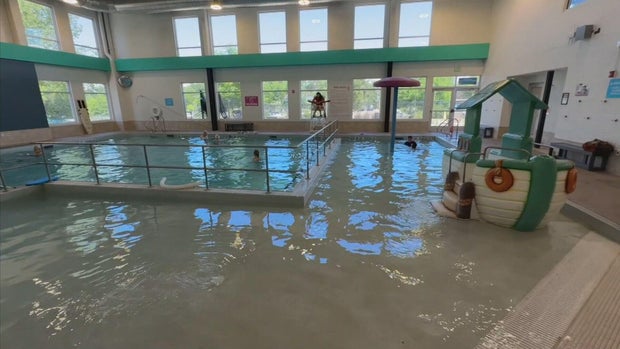
Swimming lessons aren't the only component of safety.
"We are available to go into schools and provide that dry land safety around water education. Just providing those fundamentals of asking for permission and the basic life-saving skills," said Walker.
They teach parents, too.
"We have an approach that we call Water Watchers. We actually create badges that we can give to parents and to other adults, and when you hold that Water Watcher badge, your only job is to watch whoever is in that body of water," Walker shared.
It keeps people focused when a moment's inattention can cause heartbreak.
"It's your responsibility to give that badge to the next adult. Because most of the drownings that happen, there is an adult present," Walker explained.
She suggests families ensure an adult is watching when on or near the water.
"Sometimes it is the older sibling that's there. Sometimes it's a cousin, a family friend. And we put that responsibility on somebody else," said Walker.
Some statistics are frightening to parents.
"Interestingly enough, 75% of drownings are boys. Boys tend to be a little more bold," Walker said.
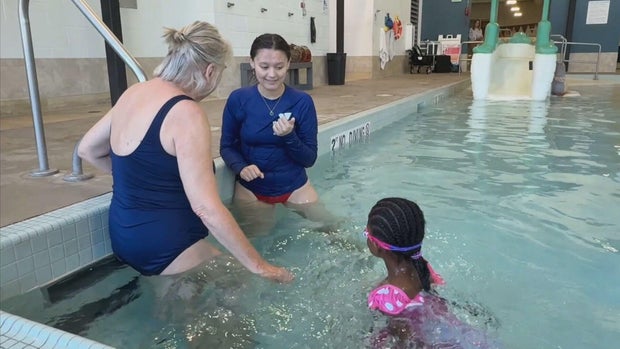
But with knowledge like swimming, the odds can change. Susan Lawson was at the YMCA with her granddaughter, 6-year-old Norah, on Monday.
Norah was having fun with the teacher and her grandmother. They plan on getting her two lessons a day for five days.
Norah has been in the water, but Lawson wants her granddaughter, whom she loves, to improve her swimming skills.
We go to the beach a lot. We want her to be confident," Lawson said. "She just hasn't fostered that inclination to breathe in the way that you need to breathe to be safe. So that's the objective of this week."


