One of the strongest El Niños in recorded history still possible to help Colorado with snow this winter

If you are hoping for powder days in the mountains and a few big snowstorms for the Front Range, we are still on track for the chance of enhanced El Niño driven snow this winter for parts of Colorado.
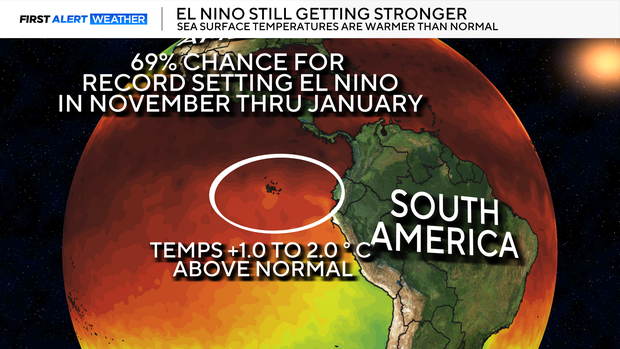
Forecasters at the National Oceanic and Atmospheric Administration have released new information that supports the previous outlook for the potential for a very strong El Niño. In July through early August, El Niño has strengthened with sea surface temperatures rising more than 1.0- 2.0 degrees Celsius. This sets the stage for a 90% chance of a very strong El Niño for the fall/winter stretch of 2026/27.
In fact, if this El Niño warming continues into the winter, when it is expected to peak, there is a 69% chance it could be stronger than previous events going all the way back to 1950, including the all-time record-setting El Niño of 1982/83!
It is important to remember, however, that a strong El Niño doesn't automatically guarantee a record-setting winter of snow in the central Rockies. What it does do is stack the deck for more available moisture for snowstorms that do develop.
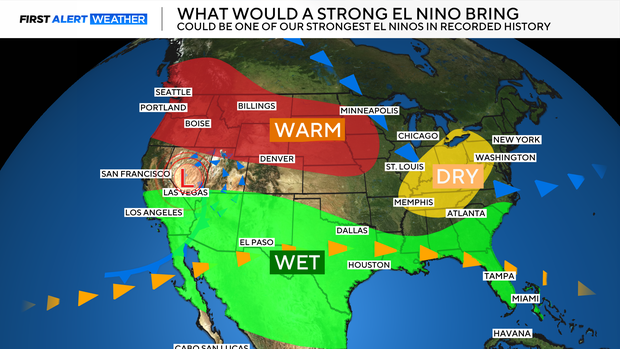
During many El Niño charged winters, the storm track shifts farther south, allowing a surge of Pacific moisture to reach parts of the Southwest and southern Rockies more often. This tends to boost the chances for normal to above-normal snow in places like Wolf Creek, Telluride, Purgatory and the San Juan Mountains.
In order for Denver and the Front Range to benefit from a strong El Niño, there have to be other ingredients that come into play for the snow to pile up. The best setup for a big Denver snow is winter moisture flowing in from the southwest mixing it up with a cold, low pressure storm system that sets up somewhere near the southeastern corner of Colorado. This will create a Front Range upslope flow east of the mountains.
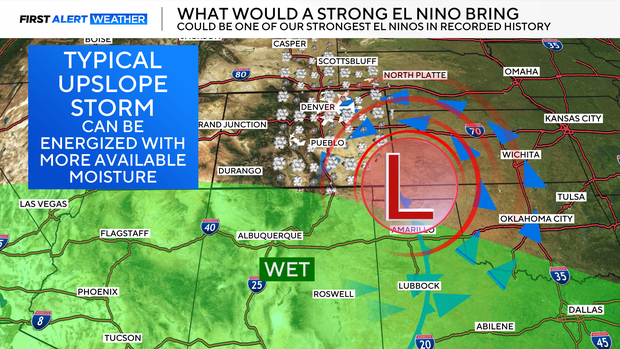
But, everything has to line up perfectly to create this scenario. For example, if you have the El Niño push of moisture in place but not the cold low, you don't get the snowstorm, and vice versa: no moisture and a cold low could limit any good snow production.


