Horrific crashes in Colorado mountains inspire harsher penalties for impatient drivers
A new Colorado bill increasing penalties for dangerous passing and repeat speeding violations is headed to the governor's desk, after a deadly year on mountain highways helped inspire lawmakers to act.
Senate Bill 26-035 increases penalties for drivers who illegally cross double yellow lines to pass vehicles and adds tougher consequences for repeat speeding violations. The bill also directs the Colorado Department of Transportation to prioritize additional signage in high-crash areas.
The push for the legislation came directly from emergency responders in Colorado's mountains, including Grand County EMS crews who say they are tired of responding to horrific head-on crashes on rural highways.
"We needed to figure out a way not just to continue responding to these crashes, but also see what we could do to preemptively prevent these crashes," said Austin Wingate, chief of Grand County EMS. "These are our calls that nobody wants to run."
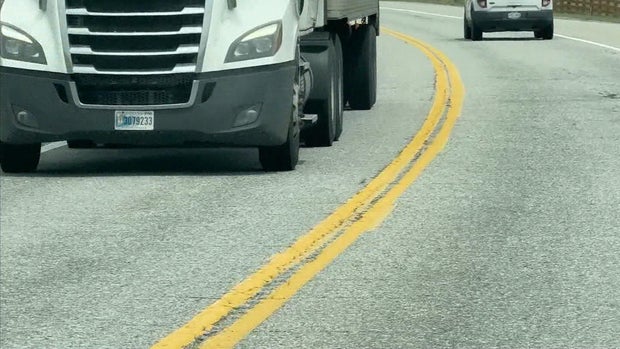
Wingate said the scenes paramedics encounter after head-on crashes are hard to forget, and while it's clearly worse for the victims of the crash, the consequences are far-reaching.
"Often the scenes that we find ourselves on are scenes that will remain in our memory and our crews' memories for the entire rest of their lives," he said.
The legislation was sponsored by state Sen.s Chad Clifford and Dylan Roberts, who said the idea originated after conversations with EMS providers in his district following a series of deadly crashes.
"We've seen some horrific tragedies on our roads here in Summit County and Grand County and all over rural Colorado, where people are causing head-on collisions when they're passing on a double yellow," Roberts said.
According to Roberts, Grand County experienced its deadliest year on record for roadway fatalities in 2025, with many involving head-on collisions.
"One crash caused the death of five family members, five people, all in one car, who were killed instantly, including young kids," Roberts said.
Under the bill, illegally passing in a no-passing zone now carries six points against a driver's license instead of four. The legislation also creates escalating penalties for repeat speeding offenses and drivers caught going more than 100 mph. Roberts says the goal is not simply punishment, but deterrence.
"Some of these things need to have consequences and they need to have steeper consequences," he said.
For people living along highways like Colorado Highway 9 north of Silverthorne, the dangers are familiar.
"There's a lot of accidents. A lot of head-on collisions," said Sandra Garcia, who lives near the highway. "I've had a few very close calls myself."
Garcia said aggressive drivers often become impatient on mountain roads and attempt risky passes to get around slower traffic.
"They don't want to go at that speed. They want to go faster," she said.
EMS crews say there is a reason those double yellow lines exist in the first place.
"They (are there because you have a) limit to your visibility. They('re a sign of a) limit to oncoming traffic reaction time," Wingate said. "And when that goes wrong, the consequences exponentially increase. Head-on collisions almost always result in serious injury and often fatalities."
The bill passed the Colorado legislature with bipartisan support and was formally sent to the governor on May 22. It's expected to be signed into law Wednesday.
Supporters acknowledge tougher penalties alone will not stop every dangerous driver, but they hope the law sends a message before more families are devastated on Colorado highways.
"Laws are important. We need those," Wingate said. "But if nobody knows about them, they can't really be effective."


