La Niña will likely return, but what that means for Colorado's snow is still a coin flip

Winter is coming fast to Colorado's mountains, and meteorologists and climatologists say a La Niña pattern could shape how much snow we'll see -- especially in the northern ranges.
La Niña happens when ocean waters along the equator in the Pacific cool down, shifting global weather patterns.
"What La Niña refers to is a sea surface temperature in the Pacific Ocean where you have cooler than normal waters off the coast of South America," Peter Goble, Assistant State Climatologist with Colorado State University explained.
That shift often strengthens the northern jet stream, meaning wetter, snowier conditions for the northern Rockies, from Steamboat Springs down toward Winter Park. But here's the catch: Colorado sits right in the middle of the country's weather tug of war, meaning the weather pattern might miss us altogether IF it does form.
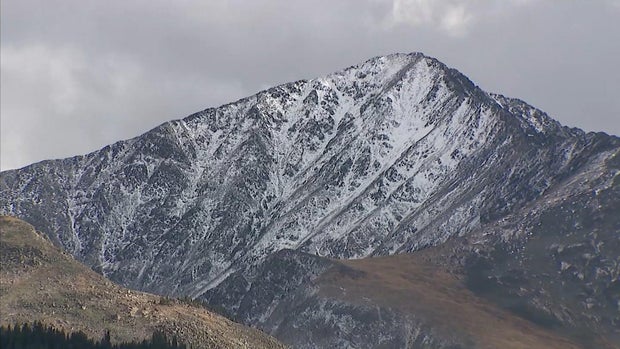
"We tend to get better predictions in the Pacific Northwest and the desert Southwest," Ethan Greene, Director of the Colorado Avalanche Information Center said. "Colorado's kind of right in the middle. If those (bands) move a little north or south, that'll have a big impact here."
So while the International Research Institute forecasts about a 70% chance of La Niña developing this winter, that doesn't guarantee big snow totals for Colorado (as much as we would like it to.)
"That's better than a coin flip, but it's not something you can bank on," Goble said. "The Eagles probably had at least a 70% chance of beating the Broncos yesterday, and we saw how that went."
Still, if La Niña does set up, Goble said it could favor northern ski resorts for above-average snowfall while keeping southern Colorado slightly drier.
And, as Greene noted, no matter the pattern, avalanche forecasters focus less on La Niña and more on day-to-day snowpack conditions.
For now, the takeaway is simple: expect snow. How much, as always, will depend, regardless of the La Niña.
You can check out the Colorado Climate Center's overview of average precipitation at climatechange.colostate.edu (see Figure 2.1)