Denver Water asks customers to stick to watering restrictions, hopes residents "work even harder at conserving"

Denver Water says its customers are using less water than they were this time last year, but officials warn conservation efforts are still falling well short of what is needed as the drought persists.
The utility notified its 1.5 million customers of watering restrictions in March after severe drought conditions prompted a drought alert.
Since then, customers have reduced water use by about 5%, according to Denver Water.
"We're seeing customers doing a good job with our request to reduce water use," Denver Water spokesperson Todd Hartman said. "But with this hot, dry weather, we really need to see our customers do an even better job."
Denver Water's goal is to reduce water demand by 20% below the five-year average. Hartman said current conservation levels are not enough to meet that target.
"We're going to be asking people to work even harder at conserving water for the rest of the watering season," he said.
So far, Denver Water has focused on education, sending thousands of reminders to customers, and making hundreds of in-person visits to encourage compliance with watering rules. The utility also asked residents to report potential violations.
"We've seen about 4,000 submissions from the public pointing out concerns with other people's water use," Hartman said.
As the peak watering season continues through July and August, Denver Water plans to increase enforcement. Customers who repeatedly violate watering restrictions could receive written warnings and fines ranging from $250 to $1,000.
"We've given people an opportunity to learn the rules," Hartman said. "Now it's time that people follow them. If they're not, and we can document that, unfortunately, we'll have to warn them and fine them."
Current restrictions prohibit outdoor watering between 10 a.m. and 6 p.m. and limit irrigation to designated days based on a property's address.
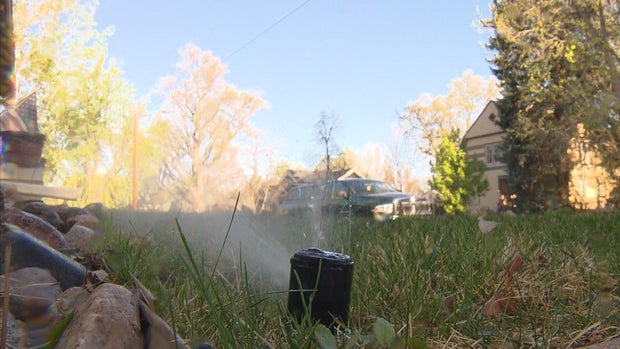
Hartman said one of the most common problems is homeowners running sprinkler systems immediately after rainfall.
"It is extraordinarily wasteful to be running your sprinklers the morning after an event like that," he said.
Hartman adds that people should turn off their irrigation system timers when it rains.
Although recent monsoon storms have helped reduce water demand, they have done little to replenish reservoirs. Denver Water says reservoir storage is about 77% of capacity, well below normal for this time of year.
Hartman said small conservation efforts can make a meaningful difference.
"Everything people do now to save water, whether it's something as simple as keeping your sink off while you're shaving or turning your sprinkler system off after a rainstorm, really helps keep water in those reservoirs," he said. "It'll make life better for folks next year."


