More Colorado homeowners are replacing thirsty lawns with drought-friendly landscapes

As Colorado faces some of the driest soil conditions in the country, more homeowners are trading traditional grass lawns for drought-tolerant landscaping in an effort to conserve water and lower their utility bills.
Landscapers say demand for xeriscaping has surged this summer as drought conditions intensify and water restrictions become more common.
"I've seen a lot more requests because of the drought," said Shaun Cherry, owner of Cherry Bomb Landscaping. "There's a lot more people wanting drought-resistant plants and rocks. It's not just throwing rock down."
Cherry said this year has been unlike anything he's experienced.
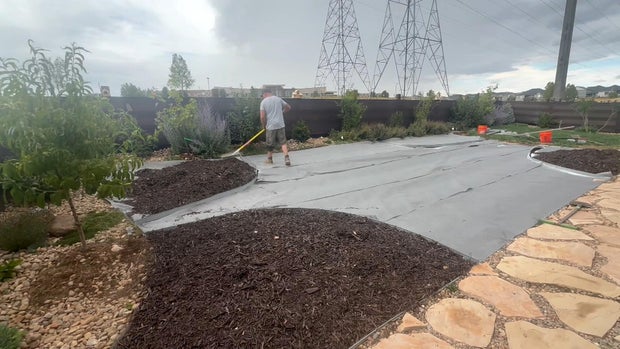
"This year has been ridiculous," he said. "A lot more people are asking for it. It's more creative than just looking at grass, and it's a lot easier to maintain as well."
The growing interest comes as Aurora Water warns Colorado is experiencing exceptionally dry conditions.
"The U.S. Drought Monitor says Colorado actually has the driest soils in the entire country right now," said Aurora Water Deputy Director of Internal and External Affairs Shonnie Cline. "Any moisture we're getting is quite literally getting sucked up into the ground."
Cline said outdoor irrigation use has dropped by nearly 20% compared to last year, but the city is still losing significant amounts of water to evaporation and dry soils before it ever reaches reservoirs.
Amanda Jones recently transformed the front yard of her home into a xeriscape after watching her lawn struggle through the drought.
"The biggest part was water conservation," Jones said. "We've always just tried to be part of the solution and not the problem. And just the amount of money that you spend dumping into trying to save your grass."
Jones participated in East Cherry Creek Valley Water & Sanitation District's Water Wise program, which helped offset the cost of removing her lawn and replacing it with drought-tolerant plants.
After incentives, she said the project cost about $3,000.
She expects the investment will quickly pay for itself.
"We're only using a quarter of the amount of water that we were before," Jones said. "My water bill was around $300, so we're going to be saving a ton of money there. Not having to mow is going to save. My husband's excited about that. Not having to pay for seeding, fertilizing and all of the stuff you have to do to try to keep your yard up."
She estimates her family spent more than $1,800 over the past two years simply trying to keep their grass alive.
Interest from neighbors has already been growing.
Jones said after posting photos of the project online, many people stopped by to ask about the landscaping process, rebates and whether their homeowners association allows xeriscaping.
"I think it's so much prettier than just the grass," she said. "The kids got to help pick different plants and flowers, so it's more meaningful."
Cherry believes drought-friendly landscapes are becoming the new normal in Colorado.
"I think this is the way of the future," he said. "I don't even put sod in right now. If somebody wants sod, I tell them to wait until fall or try to talk them into a dryscape instead."
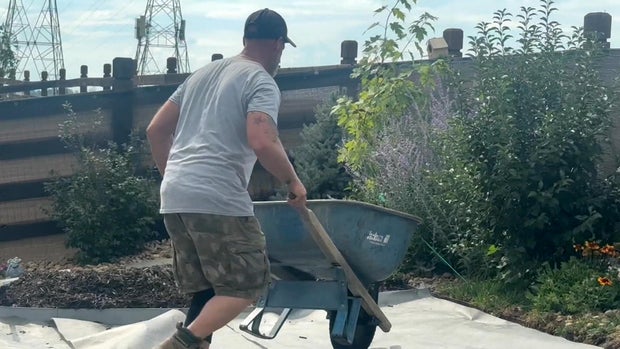
He said homeowners can also benefit financially over time because xeriscaped yards require far less watering and maintenance than traditional lawns.
Get more info on Aurora Water Wise.


