Colorado's Hanging Lake Trail fully reopens after years of reconstruction following fire and floods

After years of construction, one of Colorado's most iconic hikes is finally fully restored. The Hanging Lake Trail in Glenwood Canyon officially reopened this week following a nearly $5 million reconstruction effort that rebuilt large portions of the route after the Grizzly Creek Fire and flooding that followed.
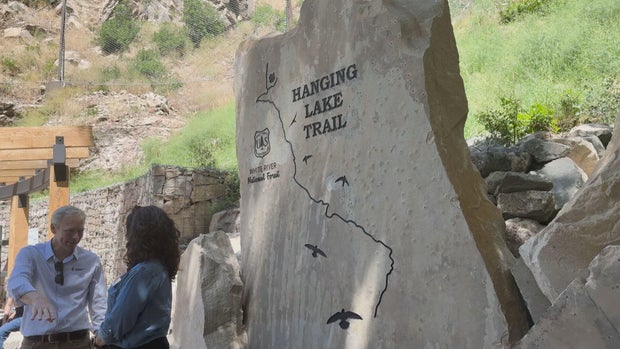
The project, led by a partnership of federal, state and local organizations, was designed to create a trail capable of withstanding future disasters while preserving the experience that has made Hanging Lake one of Colorado's most popular destinations.
Before the closure, Hanging Lake attracted more than 72,000 visitors annually and generated an estimated $4.6 million for the local economy. Today, access remains controlled through a reservation system that allows 615 visitors per day, and reservations frequently fill up. "We've created something stronger, more resilient, and more inspiring than what existed before," said Bunni Maceo with the U.S. Forest Service during Thursday's ribbon-cutting ceremony.
The work was extensive. All seven bridges along the trail were replaced, a new boardwalk was added near the lake, and crews reconstructed large sections of trail damaged by debris flows and flooding. According to Eagle-Holy Cross District Ranger Leanne Veldhuis, crews removed 325 tons of rock by hand to create the trail's new stone staircases.
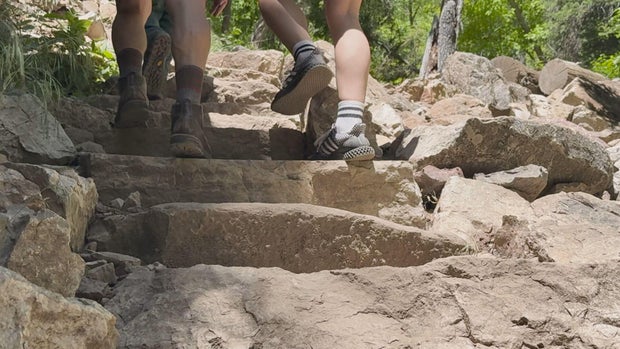
The challenge was finding a way to improve durability without changing the character of the hike. "I think the most challenging thing is that just by the nature of where we are, it's a very constrained corridor," said Scott Gorgon of trail design firm Contour Logic. "We had to figure out how to make it more durable, better handle the level of use and have that capacity, yet still make it really fun and not feel like a sidewalk."
Designers studied previous mudslides, debris flows and rockfall zones while mapping out the reconstruction. Keeping the trail familiar but better defended against the changing situation of the area was important.
"We wanted to make sure that we didn't alter the historic route or change the experience too much," Gorgon said. "How do we make it hold up better and handle 1,300 footfalls a day, yet still feel like the rugged place that it is?"
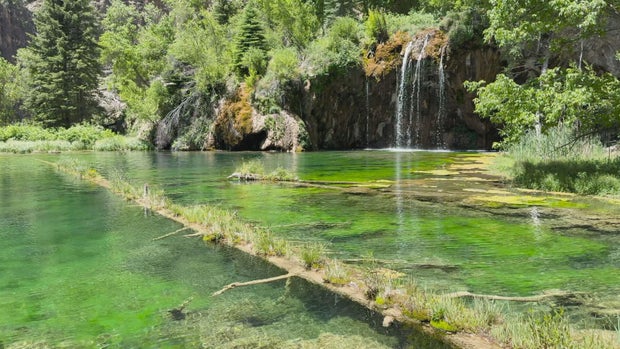
The result is a trail built for the future while still leading visitors to the same emerald waters and waterfalls that have made Hanging Lake a bucket-list destination for generations of Coloradans. For Gorgon, who spent nearly five years working on the project, the real test will come later.
"It's crazy to think that we've been working almost five years and 100 trips up," he said. "I actually look forward to coming back in a few years when I don't remember every part of the trail and just being like, 'okay, does it feel right?'"