Aerial attack: Colorado fire forecasters look to airborne fleet for help

Anticipating a challenging summer wildfire season, forecasters with Colorado's Division of Fire Prevention and Control are preparing to rely heavily on a pair of state-owned aircraft -- both to detect fires early and to assist in fighting them once they ignite.
Jeff Rasmussen, Colorado's Chief of Fire Planning, said the planes have "shown over time the power of intelligence and information," underscoring their growing role in the state's wildfire response strategy.
Colorado owns two Pilatus PC-12 single-engine turboprop aircraft, which Rasmussen said are capable of reaching anywhere in the state in about an hour and can remain in the air for roughly six hours at a time. The first of the two planes was purchased in 2014.
As wildfire behavior becomes increasingly complex, Rasmussen emphasized a data-driven approach.
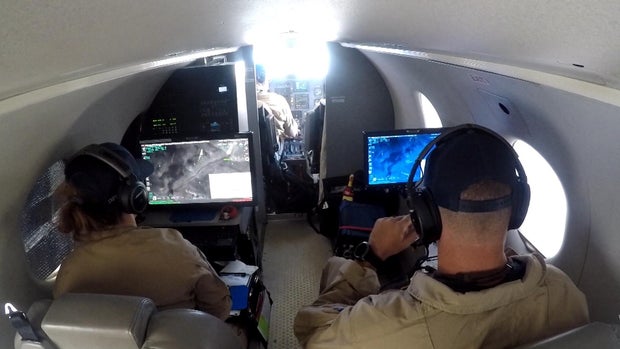
Each aircraft is staffed by a pilot and two technicians who conduct real-time fire mapping from 15,000 feet above ground, providing what officials call "wildfire intelligence." Equipped with infrared cameras, the planes can detect heat signatures invisible to the naked eye -- often identifying small fires before they escalate into major incidents. Video shared by the Division with CBS Colorado demonstrates how this technology has successfully spotted tiny fires before they grew into large conflagrations.
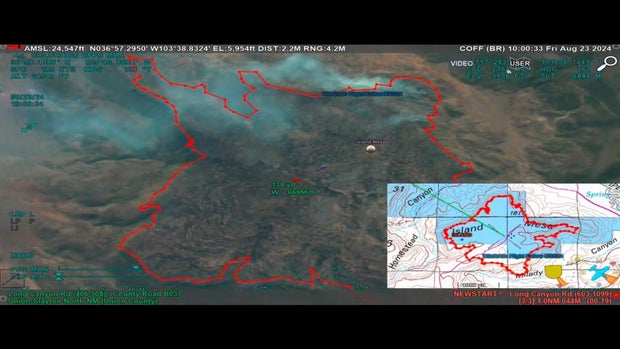
Currently, the aircraft operate two to three days a week. However, as fire activity ramps up in May and June, they are expected to be airborne every day. Rasmussen described the planes as some of the "best tools" available to the state, helping ground crews make faster, more informed decisions.
Concerns about the upcoming fire season extend beyond technology. Peter Vidmar, Intelligence Unit Chief at the Colorado Division of Fire Prevention and Control, warned that current conditions mirror those seen in 2000 and 2002 -- both landmark wildfire years in the state.

In 2002, the Hayman Fire burned 138,000 acres southwest of Denver and destroyed 133 homes, serving as a stark reminder of what is possible under extreme conditions.
"Snowpack at a record low is a concern," Vidmar said, noting that warm temperatures and a lack of moisture could contribute to a longer-than-normal fire season.
Given those risks, Vidmar urged homeowners in fire-prone areas to take action now. He recommended mitigating fire risk around properties, becoming familiar with evacuation procedures, and preparing critical documents and valuables in advance in case evacuation becomes necessary.