Carbon monitoring data from Colorado State University shaky as federal budget looks to cut NASA funding
A research scientist at the Cooperative Institute for Research in the Atmosphere at Colorado State University studies carbon monitoring data from two NASA satellites to make more precise climate change predictions for decades to come. Those satellites are now at risk of losing funding in the upcoming proposed budget for the 2026 fiscal year.
Senior scientist Chris O'Dell calls these satellites his babies. For more than 20 years, he's developed and worked on the Orbiting Carbon Observatories.
"I'm always trying to look for new ways to use the data and to make the data itself more accurate," O'Dell says.
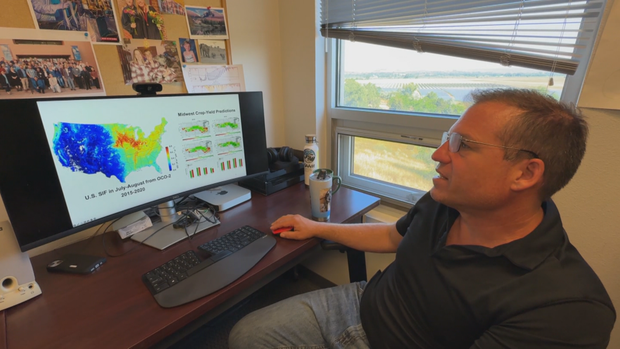
When OCO-2 was launched in 2014, its mission was to beam back data to researchers by measuring how much of the sunlight reflected off the Earth is absorbed by carbon dioxide molecules in the air. OCO-3 was launched in 2019 as an attachment to the International Space Station. O'Dell says these instruments gather data that is difficult to attain from the ground in many parts of the world that are important to the carbon cycle, like the Amazon and High Arctic. And with carbon measurements constantly changing, these precise data are groundbreaking.
A happy accident came about when scientists working on the OCOs found that with "our instruments, we can actually tell on a specific day if they're doing photosynthesis or not, and that's really important. You can use it to predict crop yields if you fly overhead enough." Although it's very new, the United States Department of Agriculture has started to incorporate the data. "It's just starting to be integrated now."
But the Orbiting Carbon Observatories' future is now murky. President Trump's fiscal year 2026 NASA budget request states that both will close out and end next year.
"It's a little bit painful, especially because they are functioning satellites, and they're really bringing down a lot of useful data, about emissions over cities that we can see for the first time directly," O'Dell says.
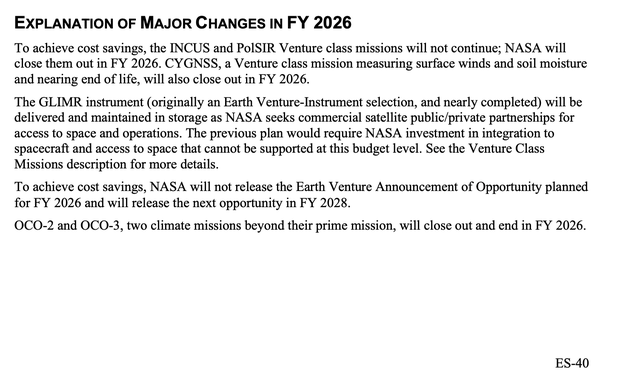
O'Dell says his team got a directive to plan for a mission close-out in case they lose funding. OCO-3 would likely be turned off and remain on the ISS. But the free-flying OCO-2 would likely be destroyed by the same atmosphere it's meant to monitor.
"You actually have to bring it down out of the atmosphere or out of the orbit. (It) will then burn up in the atmosphere," O'Dell says, meaning his life's work could literally go up in flames. Taking away federal funding would cripple research at CIRA.
Diana Furchtgott-Roth, the director of the Center on Energy, Climate and Environment at the think tank Heritage Foundation, says the private sector would take over.
"We need to take a very serious look at what the government has to do and what it doesn't have to do," she says. "Technology is making constant progress, and private companies can take over. And we should let them, because our government expenditures are going up. (Funds) need to be spent in other ways."
According to the Treasury Department, the U.S. has accumulated $37 trillion in debt throughout the nation's history, and the federal government has spent $1.34 trillion more than it planned for in fiscal year 2025. "It's like putting things on our credit card and expecting other people to pay for it," Furchtgott-Roth tells CBS News Colorado.
She points to companies like Disney.
"As technology catches up, private companies are going to be able to do jobs that the federal government didn't use to do," she says. "We need to be figuring out how we are going to get healthier balances for our children and grandchildren, so we do not tax them in the future with bills that we should have been paying ourselves."
Disney partnered with Weatherbug and Weatherstem to forecast day-to-day weather at its parks. Weatherbug uses Severe Weather Alerts notifications that are issued by the National Weather Service, which uses data from the National Oceanic and Atmospheric Administration. Both of those agencies are also at risk of losing funding.
The budget approval has a deadline of Oct. 1, or there will be a government shutdown. CBS Colorado reached out to the White House and NASA, neither of which would comment on the proposed cuts since the budget has not been finalized by Congress.
However, Dan Powers, a science advocate and the executive director of the nonprofit CO-LABS, says privatization isn't practical.
"Who's going to step in and do this instead, with some rationale of it being faster, cheaper, better, etc.? The government agencies that provide daily assessments, research, and information sharing--it would be like going back to before any (current) technology existed as a resource to the country," Powers says.
But Furchtgott-Roth is confident that companies can take charge.
"We have the most advanced universities in the world," she says. "People from all over the country want to come and do research here in the United States, and I'm not concerned about losing our competitive advantage" (to other countries).
Were that the case, though, O'Dell would have to think about plan B: "I would certainly look at all my opportunities. Going overseas or working in the private sector would probably be two pretty high items on the list. I mean, I hope that doesn't happen. I have every faith that I think we're not going to lose this funding. But if the worst were to happen, yeah, I would (leave the country)."
O'Dell estimates both satellites could continue functioning into the 2030s, and he says the lion's share of their costs has already been spent. "It cost about $750 million (in) taxpayer dollars to design, build, and launch the OCO instruments."
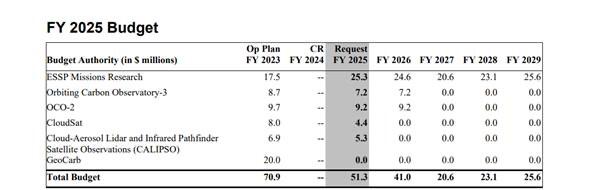
It costs must less per year to run them. The budget for the two satellites was $16.4 million for fiscal year 2025.
O'Dell wants to be able to continue with the work of the OCOs.
"It's been the greatest pleasure of my life, actually, getting to work on these missions, getting the public's trust," he says. "It makes you feel really good, maybe how you might feel as, you know, your child was really successful in high school or college or something."