Colorado National Guard members support response efforts at wildfires, on the ground and behind the scenes

As firefighters battle multiple wildfires across the state, members of the Colorado National Guard are playing a critical role both on the ground and behind the scenes, supporting fire crews, law enforcement and emergency managers.
More than 80 Colorado National Guard members were mobilized earlier this month to support response efforts at the Aspen Acres Fire in Pueblo and Custer counties. The deployment included members who assisted local authorities with traffic control points, road closures, and security in evacuated areas.
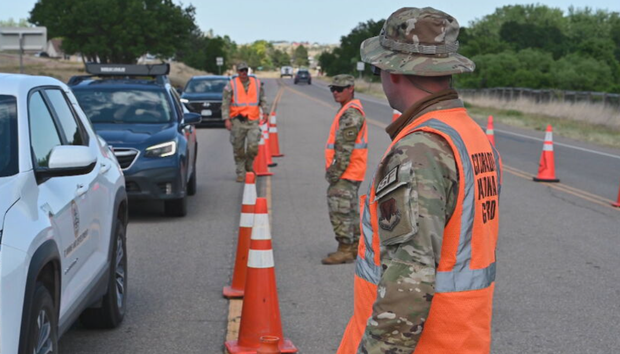
For Staff Sgt. Jaime Serrano with Security Forces out of the Greeley Air National Guard Station, his experience was unlike any mission he'd seen before.
"It was kind of intimidating to be honest with you," Serrano said. "All the areas around were burned."
Serrano spent a week helping secure evacuation zones and assisting local agencies as the fire devastated hundreds of homes.
"That is very sad, but at the same time, it is rewarding to go out there and help them in a way," he said.
The support mission, he explained, allows local first responders to focus on the emergency itself.
"They don't have enough people. The National Guard does," Serrano said. "Once we get activated, we can come and help them."
But wildfire response is about more than what's happening on the ground. Hidden from public view is a specialized CONG program called FireGuard, which tracks wildfires across the country using federal satellite imagery, weather information, and advanced mapping technology.
Capt. Greg Wagner, the CONG officer in charge of FireGuard, said the program began as a pilot project in California in 2018 before expanding to Colorado in 2020. Today, teams based in both states support fire managers throughout the United States and Canada, combining data from federal partners -- including NASA and NOAA -- along with other intelligence sources to detect fire activity, map fire perimeters and monitor growth in near real time.
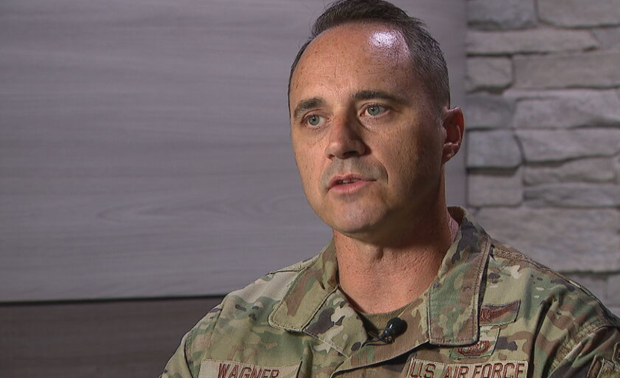
"A lot of those data sources are real-time or near real-time," Wagner said. "We're ingesting things from terrestrial systems as well as overhead satellite-based systems."
After identifying fire activity, analysts incorporate weather, terrain and other factors to provide a clearer picture of where a fire is located, how large it has become and where it may be spreading.
"We're currently the only system in the country, really in the world, that's able to provide the services that we do, and our bread and butter is really that persistent coverage," Wagner said.
Unlike aircraft that may provide only a few snapshots of conditions each day, FireGuard continuously monitors fires and can provide updates much more frequently.
"On a typical fire scene, you may have an aerial platform like a drone or an aircraft that's able to give a perimeter," Wagner said. "Those happen maybe once, twice, three times a day at most. We're there to provide our updates every 10 minutes, and we do that 24/7/365."
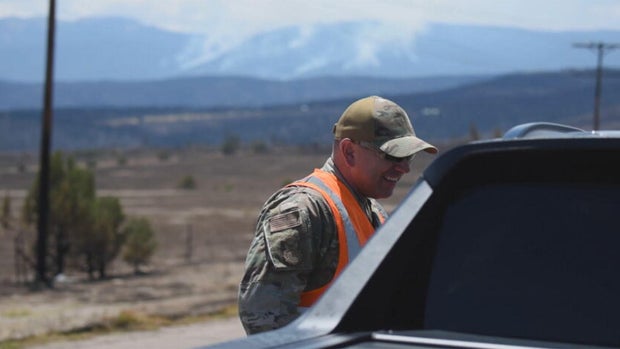
The Colorado-based team consists of Army and Air National Guard personnel and is funded by the U.S. Forest Service. Wagner said analysts monitor nearly every detectable wildfire in the country at all times, with increased focus on states experiencing significant fire activity.
"Right now, Colorado, Utah, they are two big states that we have heavy scrutiny on and really an increased focus," he said.
FireGuard's capabilities proved especially valuable during the Marshall Fire in December 2021, when extreme winds prevented aircraft from flying.
"Without having the intelligence platforms available to give that real-time data, we were the only service available there that allowed any sort of intelligence at all as to where that fire was at and how big it was getting, and where it was actually going," Wagner said.
Wagner said the mission has had a tangible impact on emergency response efforts.
"It's been very rewarding for me personally to be on this team because we have saved lives," he said.
From CONG members staffing roadblocks and protecting evacuated neighborhoods to analysts tracking fire behavior from operations centers hundreds of miles away, both missions share the same purpose: helping protect lives and property during some of Colorado's most dangerous disasters.
As for Serrano, he's already ready for the next call.
"I couldn't tell if we're going to be deployed or not, but I can tell you something," he said. "I will volunteer for the next one. I'm ready."


