Aurora police chief calls deadly police shooting "tragic," says officer feared for his life
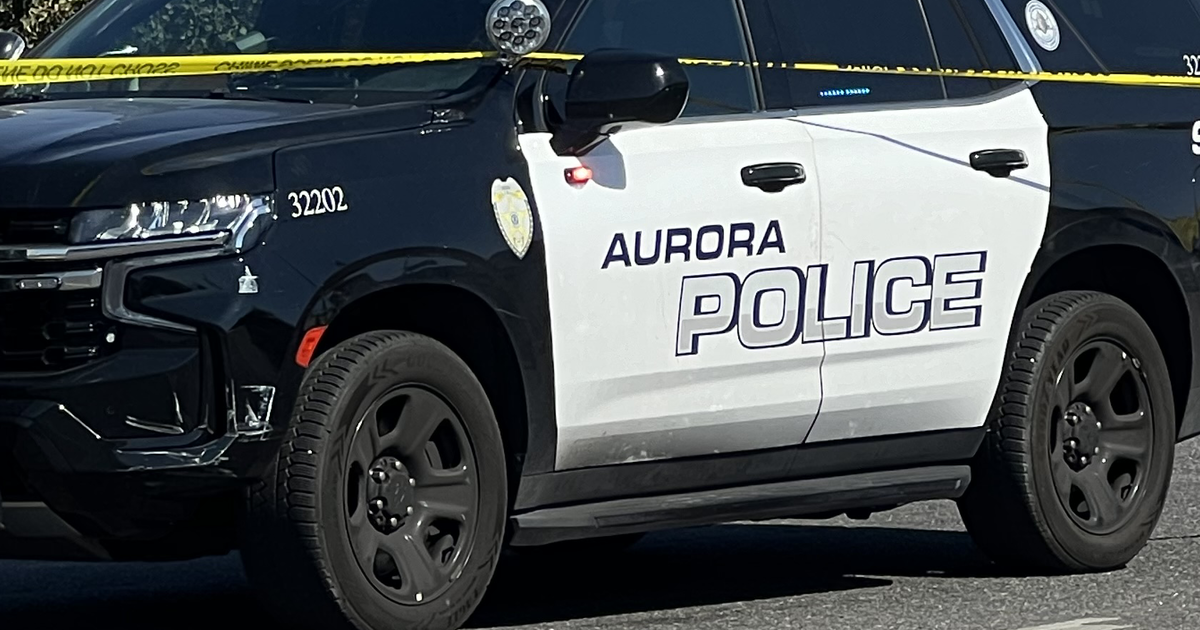
Aurora Police Chief Todd Chamberlain on Tuesday said the deadly shooting by an Aurora police officer over the weekend was tragic, but that the man who was killed made the officer fear for his life. It's the latest shooting of a Black man by an Aurora police officer to cause an uproar among some community members.
Chamberlain said that the man, later identified as 37-year-old Rajon Belt-Stubblefield, tossed a handgun before approaching the officer with raised fists. Chamberlain said the officer, who has not yet been publicly identified, was in a physical struggle and attempted multiple de-escalation tactics before shooting Belt-Stubblefield.
"An officer is not paid to get injured or beaten in the middle of the street. Their duty is to protect themselves and the public so that they can continue to serve," he said at a news conference on Tuesday.
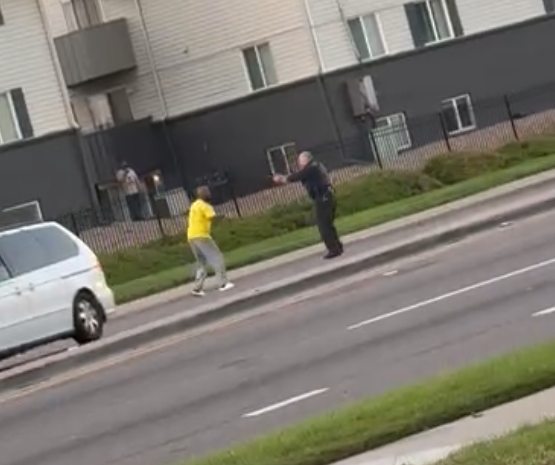
The shooting happened Saturday evening after APD said an officer who was doing traffic enforcement tried to stop a vehicle near 6th Avenue and Billings Street. The driver of that vehicle, Belt-Stubblefield, crashed into two cars, got out of his car, allegedly tossed a handgun, and "advanced aggressively towards the officer," Chamberlain said.
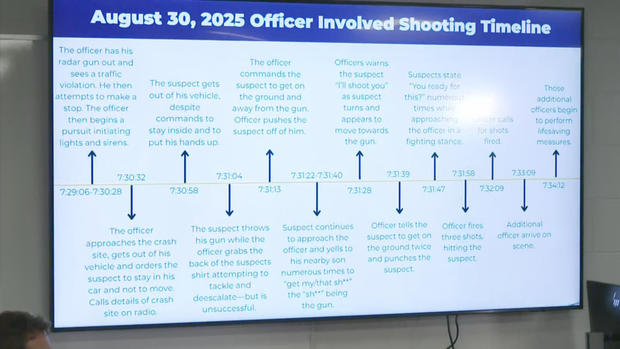
In total, the incident lasted about two minutes from the time Belt-Stubblefield crashed to the time the officer shot him, a timeline from the department shows.
Chamberlain said the officer fired between one and three shots, based on video of the shooting, the audio of which made the total number unclear.
Chamberlain said that's one of several things that will be revealed by the investigations, one of which is being handled by the 18th Judicial District's Critical Incident Response Team, and the other of which is being conducted by Aurora police's Internal Affairs Unit.
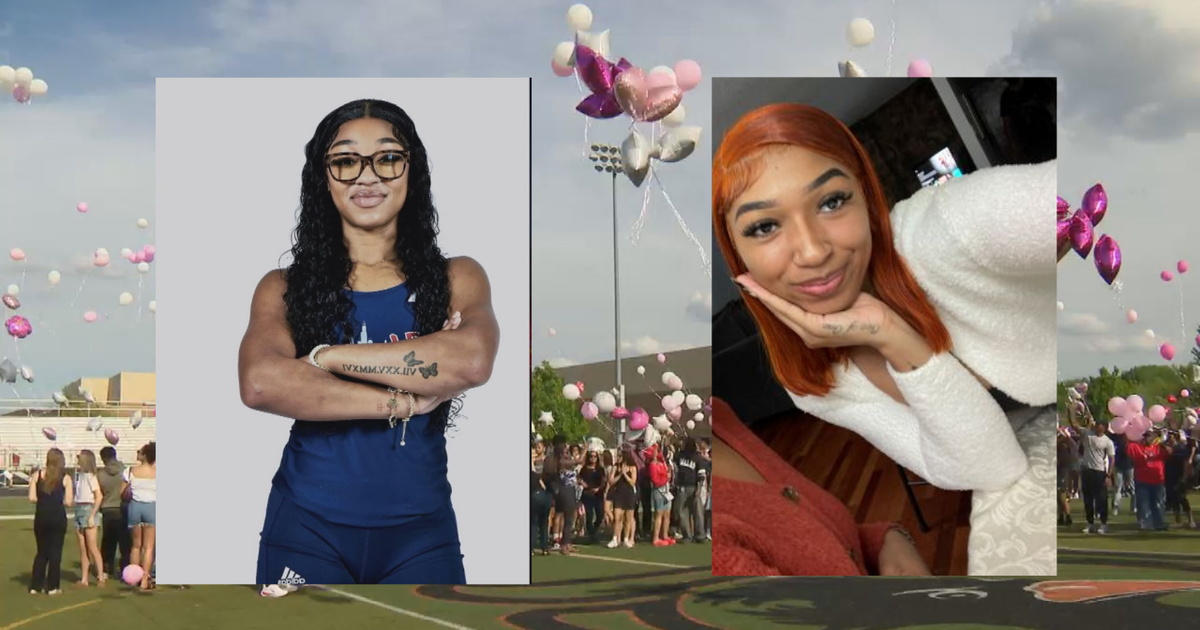
"Why did you have to kill him? You could've tased him," a woman told CBS News Colorado at a vigil for Belt-Stubblefield on Sunday. "You could've done anything else."
At one point, the officer was on the ground, but Chamberlain said he wasn't sure if he fell or was pushed.
When asked by a reporter on Tuesday why the officer didn't attempt less-than-lethal means before shooting Belt-Stubblefield, Chamberlain said the officer struggled to deploy his baton while attempting verbal de-escalation, and that de-escalation is a "two-way street" that involves officers and the people they interact with.
One witness, Robert Berg, said the officer gave Belt-Stubblefield several opportunities to comply, but that he didn't deserve to be killed.
"I saw him die right in front of my eyes. It was horrible. It was the worst thing ever," he told CBS Colorado from the scene on Sunday. "It was just crazy. You do not deserve to die."
Chamberlain said the officer and his family have been receiving threats, and so he will not be identified yet. He did say that the officer had previous use-of-force incidents, but wouldn't expand on them.
The officer has not yet been interviewed by investigators as of Tuesday afternoon. Chamberlain said the timeline for that is normal and in compliance with state law to allow the officer time to sleep and meet with attorneys.
The Aurora Police Department has been under scrutiny from the public and state officials in the past several years for the police killings of Kilyn Lewis, an unarmed Black man who Aurora SWAT officers were trying to arrest on an outstanding attempted murder warrant, and Jor'dell Richardson, a 14-year-old Black boy who had a BB gun in his waistband when an Aurora officer shot him. It's also the subject of several lawsuits, including a recent one by the family of Rashaud Terrelle Johnson, who an Aurora officer shot and killed earlier this year.
"The Black community is scared, and even me, as a legislator, if I end up getting pulled over for speeding or something, I would be fearful," Democratic state Rep. Jamie Jackson said, amid a call for more transparency and accountability from APD. "I have a Black son who is 22 years old, and I fear for his safety in Aurora, and I know that I'm not alone in feeling that way."
In the Colorado's legislative session next year, Jackson said she's considering new legislation in response to this incident.
The department entered a consent decree with the Colorado Office of Attorney General after the 2019 killing of Elijah McClain, an unarmed Black man, at the hands of Aurora police officers and paramedics. An investigation by Colorado Attorney General Phil Weiser found "Aurora Police has a pattern and practice of racially biased policing, using excessive force, and failing to record required information when it interacts with the community."
State law requires police departments to publicly release body-worn camera footage of police shootings after a period of time, but only after it's been shown to the deceased's family. Police officials did not offer a timeline for that release, but several screenshots.
Cellphone video of the shooting taken by witnesses has been posted on social media, but a longtime friend of Belt-Stubblefield is asking community members to stop sharing those videos.
"We've seen enough of it, man," he said. "We understand what's going on, and we just want to- for the privacy of the family, please stop sharing it."