Lindsay Clancy trial prosecutors aim to prove she manipulated doctors so "she would be the victim," expert says

There was no court Tuesday in the Lindsay Clancy murder trial due to an unrelated scheduling conflict.
After just one day of testimony in the prosecution's case in chief, the motive prosecutors shared with jurors started to become clear. They allege that Lindsay Clancy was a "meticulous, manipulative" mother who chose to take the lives of her three children when she felt like life was too overwhelming and she was losing control.
Clancy was "somebody extremely controlling, meticulous, and manipulative," according to the opening statement from prosecutor Shanan Buckingham.
"The days were laid out with specificity. Strict schedules. Food planned out carefully. Sleep schedules to the minute," she said. "When she no longer had a nanny to watch the baby, do laundry, tidy the house, follow her schedule ... When she was responsible for it all, it was hard. It was hard for her to maintain control."
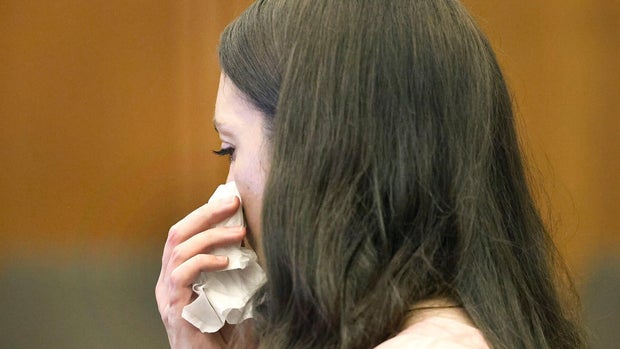
Legal expert on Lindsay Clancy trial
WBZ-TV legal analyst Jennifer Roman said she's not sure that point will resonate with jurors.
"Will a jury accept that a mother of three young children who was feeling overwhelmed would find that the only resource, the only remedy to this would be taking her children's lives and then trying to kill herself?" Roman said. "Is that going to land with them? We've got, no doubt, jurors who are parents. Whether the children are currently older or they're currently young, they can remember, if they're not in it right now, how overwhelming it can be to be a parent to a young child, never mind two or three children."
In order to prove Clancy is guilty of murder beyond a reasonable doubt, prosecutors will need to prove that she committed the murders in a premeditated deliberate way or with extreme cruelty, and that she was not insane – as her defense team claims – or that she could understand that her actions were wrong.
Roman explained that prosecutors could attempt to prove either or both theories of first-degree murder, but proving a lack of criminal responsibility – because of mental health issues – will be an uphill battle.
Patrick Clancy to resume testimony
Proving that Clancy was not suffering from insanity could be especially challenging after the early testimony of her ex-husband and father of the children, Patrick Clancy. He was the first witness called by prosecutors and offered emotional testimony about Lindsay's repeated attempts to get mental health treatment in the months leading up to the children's deaths.
"Definitely felt like all of that questioning, that lengthy questioning about her mental health treatment, the number of times she had asked for treatment, her cries for help was making the defense's case for them," Roman said. "I think the point that I'm hoping the prosecution's going to button up for us, is that she was asking for that help as a pretext, right? She was asking for the help, but then when she was being given the help, she wasn't accessing it, and that was intentional, that was deliberate on her part."
Prosecutors made that point by showing that Lindsay only took a fraction of the pills inside her prescription bottles, and refused some treatment or didn't finish inpatient programs where she was admitted to get help.
"It's a subtle point, but if it can be proven or at least inferred that that's what was happening, that gives the jury one more step to believing that she was manipulating and controlling and planning and premeditating for quite a long time," Roman said.
"It didn't just happen the day of the murders," she added, explaining prosecutors' theory of the case. "It was happening beforehand. She was setting it up so that she would be the victim. And that, if [the prosecution] can sort of close that link and close that loop, I should say, I think will be powerful for the jury. I don't know if they'll be able to do it, but that seems to be where they're going."
Patrick Clancy will be back on the stand Wednesday morning for more testimony.


