How Boston health clinics are using ketamine to help treat mental health. "It's worth it."

Many people struggle with getting mental health care, whether it is too slow for their recovery or just not accessible to them. Lumin Health, a Ketamine clinic in Boston's Fenway neighborhood, hopes to change that.
Linda Deveraux has struggled with depression most of her life, turning to therapy and prescription medications with no luck.
"The side effects alone will discourage you, like the weight gain, the nausea, the constipation, the fogginess," Deveraux said. "Sadness, hopelessness, fatigue, sleeping all the time, not being interested in doing anything pleasurable or anything. It was hard. The struggle is real."
So her medical provider recommended ketamine therapy and her mental state finally started to improve.
"Everything feels lighter, lighter, like I pushed that, you know, my best friend, my sadness, best friend off my shoulder, he's not there anymore," she explained.
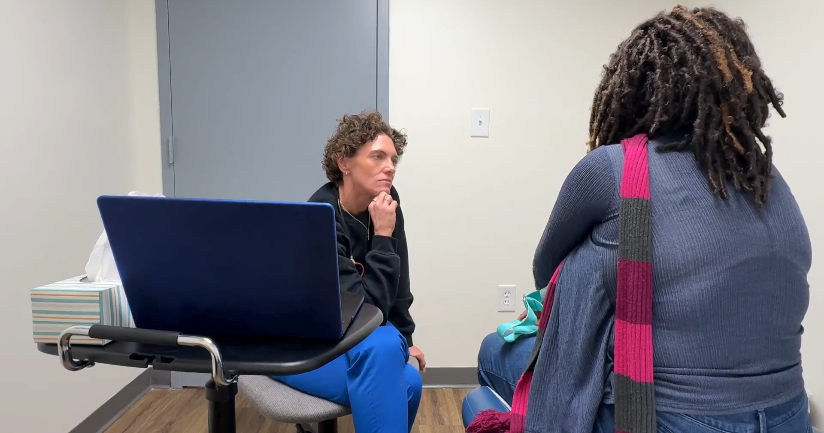
The medical director at Lumin Health, Dr. Aakash Sathappan, explained that ketamine therapy doesn't come with many side effects.
"In general, the treatment is well tolerated. There are some time-limited side effects; most people feel a little bit tired, a little bit drowsy, perhaps a bit dizzy after treatment. That tends to wear off with time," Dr. Sathappan said.
But the treatment comes with misconceptions and a stigma, following its connection to Matthew Perry's sudden death in 2023. Dr. Sathappan explained that Perry's addiction problems likely led him to be quickly hooked on the drug. He emphasized that supervision is key when getting treated with ketamine.
"The treatment does impair you, similar to another substance like alcohol," Dr. Sathappan said.
"I think the biggest misconception is that ketamine is either purely a biologic or purely this thing that's meant to give you a trip. It's neither. It's really a combination of both of them," said Dr. Benjamin Yudoff.
It works by using a low dose to block certain signals in your brain, helping nerve cells form new connections.
"It allows people to reconnect with a version of themselves that's often lost with depression," Dr. Sathappan said. "We think that the treatment is basically creating biological conditions to help the brain grow and restore in a way that was once damaged with depression."
Dr. Sathappan said that the stimulation of the brain can help lead to changes in mood, behavior, energy levels, and overall outlook on life. He emphasized that ketamine is a treatment, not a cure.
"They want something that works quicker. They want something that works more reliable. They don't want to feel the same way that they have for the past three, four, five years. They have goals. They have desires. They have dreams. And they want something that might actually compel a different kind of change," Dr. Yudkoff explained.
Deveraux is ready to embrace that change, even if it means she has to continue the treatment for the rest of her life.
"You have to be 100% committed to this. For me, it's worth it, like I'm in this because I have not felt like this for so long," she explained.
If you or someone you know is struggling with mental health, you can reach out to NAMI Massachusetts by calling them at 617-580-8541 or visiting their website.