Opioid crisis response remains a focus for Baltimore City leaders

Baltimore City's response to the ongoing opioid crisis remains a focus for city leaders, as they met to discuss ways to address the open-air drug market on Wednesday morning.
The meeting, which included city council members, healthcare providers, and community advocates, comes two weeks after the Penn North neighborhood experienced its third mass overdose incident.
The group discussed the ongoing challenges, service gaps, and explored policy solutions to enhance the city's collective response to opioid addiction and overdose prevention.
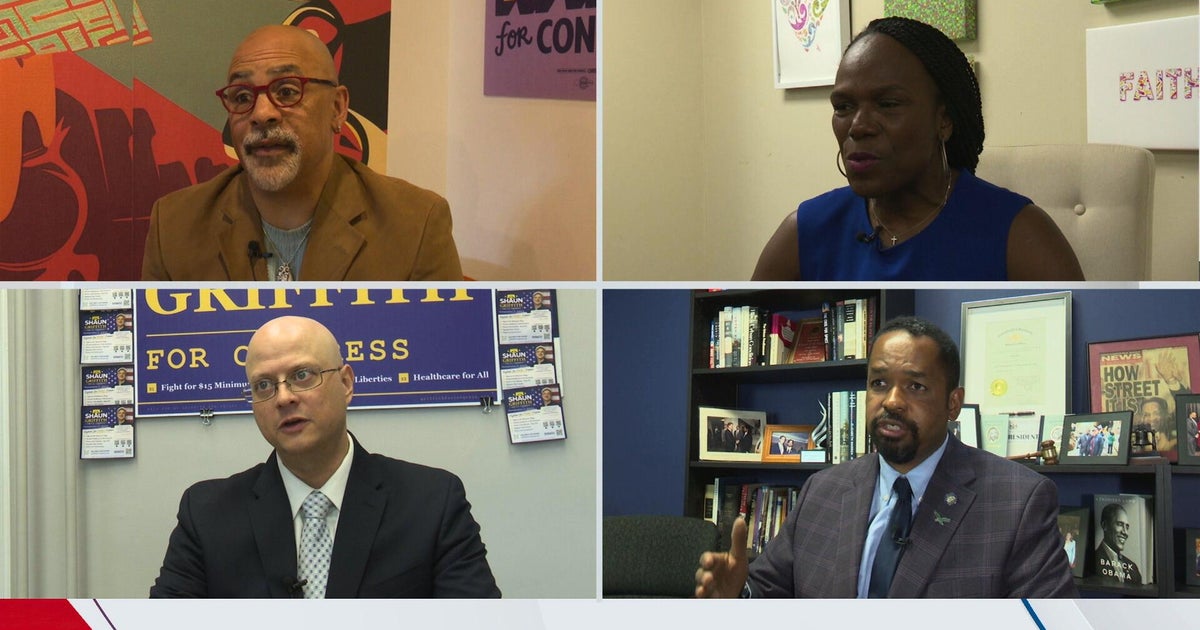
"In short, we're dealing with a drug market where they are constantly changing," said Baltimore City Health Commissioner Dr. Michelle Taylor. "There are different synthetics. There are different ways that they're trying to, you know, keep people in this circle of substance use."
"We've got to figure out something more than just policing our way out of it," said James Torrance, Baltimore's 7th district council member.
"Because we understand that all levels of government are going to have to be engaged in this process," added Phylicia Porter, Baltimore's 10th District (D) council member.
Baltimore leaders hope to address open-air drug markets, vacant homes and structures, improve city-wide alert systems, and fully reimplement 24/7 mobile outreach teams.
Their goal is to foster a more collaborative response to address the broader overdose epidemic.
"We have to be able to sustain true recovery, and that's what we're looking for, not only just from the bandage perspective, but really looking at the root causes," Porter said.
Third mass overdose in Penn North within four months
On Oct. 8, 11 people overdosed in Baltimore's Penn North neighborhood, according to police.
Officers said state and local first responders saw several people showing signs of an overdose around 11:38 a.m. that morning. Narcan was administered to multiple people.
The hospitalized victims, six men and one woman, ranged between 30 and 60 years old in age. They were treated for non-life-threatening injuries.
Outreach teams responded to the scene and distributed harm reduction supplies, including Narcan, test strips, safe-use kits, and other resources in the community.
In July, a total of 32 people were hospitalized after two mass overdoses were reported in the Penn North neighborhood.
The first incident on July 10 sent 27 people to the hospital, first responders said.
Crews initially responded to the area of Pennsylvania and North Avenues for multiple reported overdoses. When they arrived, a community member led them to more unresponsive people.
Five people were taken to a hospital in critical condition, and the others were in serious condition, officials said.
About a week later, five more people overdosed in the same community, police said.
"Because the last time, while everyone was running around, oh, my God, oh my God. Now you look, that's just us," said Linwood Hargrove, an outreach and residential coordinator at Powell Recovery Center.
Hargrove is back in Baltimore's Penn North neighborhood, nearly two weeks after it experienced its third mass overdose incident, to remind his neighbors that he and his friend Rico will always be here to help.
"Got to get their mind clear first," said Rico Reed, who is a recovery volunteer. "So they can gain a sense of clarity, and then they can start focusing on doing what's right for them, themselves, and stuff like that."
"I learned in all these years to be consistent. If I'm going to do something, go all in, don't just start and then don't finish it," Hargrove said.
Baltimore to respond to opioid settlement appeal
Meanwhile, the city of Baltimore says it intends to respond as drugmakers McKesson and Cencora are appealing a $152 million settlement in Baltimore City's lawsuit against them.
In December 2024, a jury in the Circuit Court for Baltimore found that the drug distributors were responsible for contributing to the opioid epidemic in the city.
The jury originally ordered McKesson to pay $192 million and Cencora to pay $74 million, for a total of $266 million in damages.
In June 2025, a circuit court judge reduced the total award, calling the original figure "shocking." In August, the City of Baltimore accepted the lowered amount of $152.3 million.
McKesson and Cencora filed an appeal of the reduced judgment on October 1. This move seeks to overturn the $152.3 million award, which has not yet been finalized or disbursed to the city.
"The City is aware of the defendants' appeals and will respond in the appropriate judicial forum. We will continue fighting to ensure justice for Baltimore residents harmed by the opioid crisis," the city said in a statement.
Opioid restoration fund to community organizations
The Mayor's Office and the Office of Overdose Response released a timeline, allowing community organizations time to prepare their submissions before the application opens.
The full application process begins on October 23 and can be found at this website.
The grants will be awarded in three tiers. Some groups could receive as much as $500,000. Applications will be evaluated based on need and impact.
Grant funds aim to boost access to low-barrier social support services and mobile treatment—particularly in areas disproportionately affected by overdose.
Here's the tier system for how the grants will be distributed:
- Tier 3 (up to $500,000) will be for increasing the availability of low-barrier mobile treatment services, especially for areas that are disproportionately affected by overdose but may not have the necessary number of services to meet the need. Tier 3 funding must include robust harm reduction services, the mayor's office said.
- Tier 2 (up to $250,000) is for increasing access to a full array of low-barrier harm reduction services, which include naloxone distribution, drug checking, syringe service programs, wound care, and other evidence-based strategies. Tier 2 funding must include robust harm reduction services.
- Tier 1 (up to $50,000) is for increasing access to low-barrier social support services, including housing, transportation, food assistance, education, and employment for people who use drugs and people with substance use disorders.
The city's public health and environment committee said they plan to follow up with many of the topics they discussed during Wednesday's hearing on a month-by-month basis.