Voting rights groups mobilize in Southern redistricting fight after Supreme Court ruling: "We're used to struggle. We're used to fighting."
Voting rights advocates across the South say a new chapter in the fight over political representation is unfolding following a series of court decisions and redistricting battles that could reshape congressional maps before the 2028 election cycle.
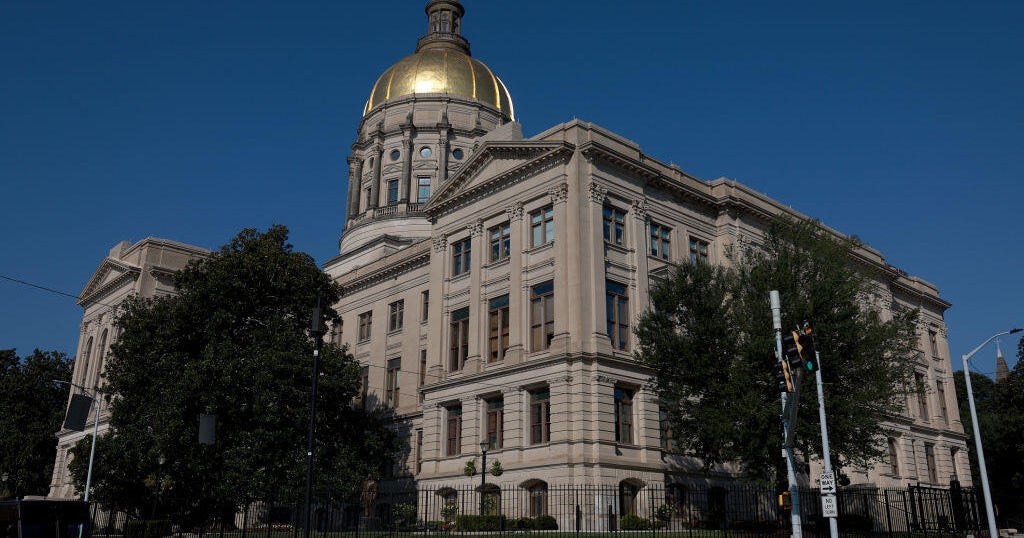
In Georgia, Gov. Brian Kemp had called a special session of the General Assembly beginning June 17 to address congressional redistricting after a recent U.S. Supreme Court ruling expected to require changes to the state's electoral maps.
However, in correspondence obtained by CBS News Atlanta, Georgia House Speaker John Burns, Speaker Pro-Tem Jan Jones, Majority Leader Chuck Efstration, and additional Republican leaders informed Governor Brian Kemp that the legislative session will instead prioritize delivering tax relief and formalizing the suspension of the state's gas tax
As the special session convenes, a broader regional debate over voting rights, representation and political power is taking place across the South.
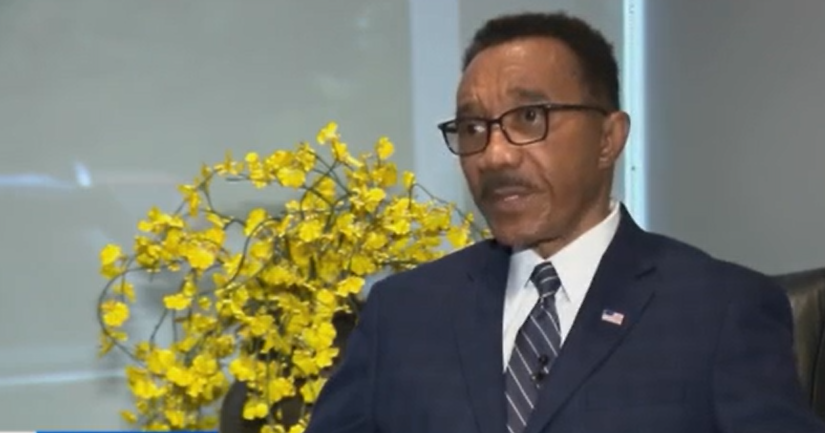
"There's a redistricting arms race happening across the country," U.S. Sen. Raphael Warnock said in recent remarks, arguing that court decisions affecting voting rights have intensified efforts to redraw political boundaries in several states.
But while voting rights groups say the latest Supreme Court decisions reaffirm the importance of protecting minority representation, state lawmakers like Sen. Greg Dolezal saw the ruling as a chance to return to what he described as "traditional" redistricting principles.
"Yeah, so what the Supreme Court clearly told us is that racially gerrymandering maps is unconstitutional. And Georgia was in a posture back when we did our last redistricting where we were forced by a judge to create majority minority maps, which the only way that you can do that is by looking at people solely through the lens of race. And that is what the Supreme court told us is un-constitutional, and so when we come back to redraw our maps, we will return. Not to racial gerrymandering but to what is referred to as traditional redistricting principles, communities of interest, county jurisdiction lines, natural boundaries like boundaries of water or highways as being the things that divide people into districts, not solely race, which is the current posture of Georgia's maps," Dolezal told CBS News Atlanta in a previous interview with the state senator, before the legislature changed plans Wednesday.
Meanwhile, civil rights groups and many legal scholars counter the Supreme Court's ruling, arguing that the constitution does not prohibit the consideration of race in redistricting altogether.
Instead, they argue, the decision affirms that race can and sometimes must be considered in order to protect minority voting power, as required by the Voting Rights Act.
They warn that eliminating majority-minority districts or ignoring racial demographics could dilute the influence of Black and Latino voters, threatening decades of progress toward fair representation across the South.
Southern universities become part of broader voting rights campaign
While Georgia was not among the states that immediately redrew congressional maps following the Supreme Court's decision in Louisiana v. Callais, civil rights organizations have increasingly included the state in a broader campaign focused on Black political representation.
The NAACP recently launched its "Out of Bounds" campaign, a national initiative encouraging Black athletes, recruits, fans and alumni to reconsider athletic and financial support for major public universities in states the organization says have weakened or threatened Black voting power.
Supporters of the campaign argue that decisions affecting political representation can influence policy outcomes on education, healthcare, economic development and criminal justice. Critics contend that universities and athletic programs are being drawn into political disputes that should be resolved through the legislative and judicial process.
The effort has also received support from some members of the Congressional Black Caucus, who have argued that major athletic institutions should play a more active role in opposing what they view as efforts to weaken Black political representation.
Voting rights groups prepare for next phase
The debate comes as voting rights organizations across the Deep South prepare for what they describe as a long-term fight over representation and voter engagement.
Leaders from Alabama, Louisiana, Tennessee, Florida and Mississippi gathered June 3, during a virtual briefing hosted by the Groundwork Project and Southern Leadership for Voter Engagement to discuss the impact of recent court rulings and redistricting decisions.
The conversation came just hours after the Supreme Court allowed Alabama to move forward with a congressional map that eliminates one of the state's majority-Black districts in the 2026 midterms, a ruling advocates argue could have consequences far beyond state lines.
Advocates said the focus is shifting beyond legal challenges and toward helping voters understand changing district boundaries, election procedures and voting requirements.
"We have to keep reminding this country that the South is not just where democracy is being attacked. The South is where democracy is being defended," said Anneshia Hardy, executive director of Alabama Values.
Participants described growing confusion among voters whose districts may have changed as maps are redrawn and litigation continues across multiple states.
In Louisiana, Cree Matlock, director of government affairs and policy for the Power Coalition for Equity and Justice, said community organizations have worked to educate residents following rapid changes to congressional maps.
"People are confused. Are we having an election? Are we not? Will my vote count?" Matlock said. "It was manufactured chaos."
Tennessee advocates reported a similar experience, saying lawmakers moved quickly after the Louisiana v. Callais decision.
"We know this is not a policy fight. It's a fight about power," said Matia Powell, executive director of Civic Tennessee.
Organizers in Florida and Mississippi said many voters are less focused on court rulings than on practical questions about where they vote and whether they remain in the same district.
"When the court issues a ruling about voting rights, about representation, most people don't know what that means for them," said Juanica Fernandes, executive director of State Voices Florida. "They don't know that their district has changed."
What comes next
According to the Associated Press, redistricting battles are unfolding in several other states, with both Republicans and Democrats seeking opportunities to gain political advantage through revised congressional maps.
For voting rights groups, however, the immediate challenge extends beyond courtroom fights and legislative debates.
Organizers say their focus remains on ensuring voters understand any changes that could affect where, when and how they cast ballots.
"We're used to struggle. We're used to fighting," said One Voice Mississippi Executive Director Nsombi Lambright. "People don't want to hear a legal brief in a community meeting. They just want to know what they can do."
As Georgia resumes the special session, advocates on all sides agree on one point: the debate over representation in the South is far from settled.