MAJOR GARRETT:
00:00:00
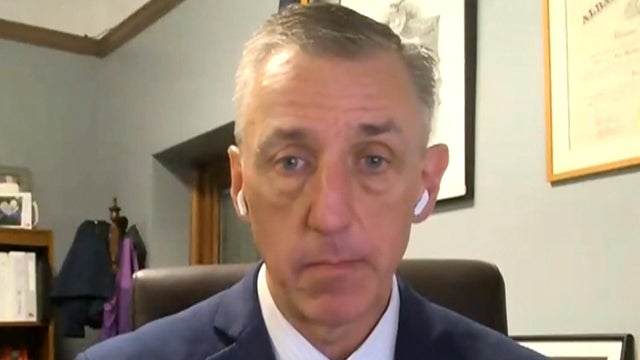
I am joined now by the Special Master for the 9/11 Victim Compensation Fund, Allison Turkel. The fund has awarded more than $18 billion since reopening in 2011. Allison, we are all at this 25th year commemoration of 9/11, reacquainting ourselves with so many aspects of the story. One lesser understood or lesser appreciated part of that story is the Victim's Compensation Fund, which has had two lives. Explain to my audience the first and now second life of that fund. Absolutely. So shortly after September 11, 2001, they started the first, what we call, VCF1, the first Victim Compensation Fund. And that was primarily to pay the people who perished that day, both in the buildings and in the airplanes, as well as people who were critically injured. And that fund, run by a special master, also was part of the United States Department of Justice Civil Division. And it was in place from 2001 until 2004. And I can take a look here. I'll let you know. The VCF1-- so it closed in November 1 of 2004. And when VCF1 closed, it reported that 97% of the families of deceased victims who might otherwise have pursued lawsuits for years received compensation. In total, that fund distributed $7.049 billion to families of the 2,880 people killed in the September 9/11 attacks and to 2,680 individuals who were injured in the attacks or in the rescue effort shortly thereafter. In 2004, VCF1 closed. And there was not another VCF until 2011. The statute actually passed in 2010. And we called that VCF2. And that came about due to the efforts of advocates who were advocating on the part of people who had become sick from exposure to the toxins at all three crash sites. And so, since the time that the VCF reopened in 2011, that's the numbers that you have given of how much money we have released. We have received over 110,000 claims and paid out to about 77,000 claimants. And as of August, just last month, we continue to receive over 800 new claims a month. So it really does indicate, one, unfortunately, there are still people who are becoming ill or becoming sicker or dying as a result of their exposure but also the need for the VCF to continue. In 2019, which is a critical year for the VCF, VCF2 became permanent. And we will be here until 2090. And we have as much funds are necessary to pay every eligible claimant.
MAJOR GARRETT:
00:03:10
And Allison, what is the source of those funds?
ALLISON TURKEL:
00:03:13
So those funds are taxpayer dollars. And they are interesting funding by the statute. They are outside the appropriations process. So a good example of why that's relevant is that when there's a government shutdown, that does not affect us at all. We continue to function. We are open every day.
MAJOR GARRETT:
00:03:35
Allison, we are sticklers for definitions here at The Takeout. I'm a stickler for definitions. And I wonder, is awarded the right word? We do say awarded when we talk about compensation. There probably are some others. But we're OK with saying awarded.
MAJOR GARRETT:
00:03:52
And how does someone apply? And what is the process by which that application is judged? So the very first thing that somebody needs to do, if they were present at one of the three crash sites, is to register. Registration is easy. It doesn't take a lot of time. Folks can get on to our website at www.vcf.gov and give really basic information that preserves their right to file a claim in the future, should they become sick. If they become sick, and there's a little bit of different rules for what we call responders and survivors, but folks go to the World Trade Center Health Program which is part of the CDC. And they run a health program. And if they have a certified physical injury or illness as determined by the World Trade Center health program, they will get certified. And if they have a certified illness, then they can apply to the VCF. Our information is available on our website. As I mentioned, we have a fantastic helpline that will help folks as well if they want to put through their application. And they do not need an attorney. People do use attorneys. And that's fine. But it is not necessary to use an attorney to submit a claim.
MAJOR GARRETT:
00:05:16
And Allison-- I'm sorry. Let me jump in because some people might assume, well, I wasn't a first responder. I wasn't a tradesperson who was assigned to be part of the cleanup. But that doesn't mean you're not eligible. So a great question. It really varies by site. So for the site in Shanksville, Pennsylvania, where Flight 93 came down, it was a very limited site there that the people that were involved were really the responders and the people who cleaned up-- victim services people that responded, law enforcement, firefighters, and other folks involved. And that site was open for a short period of time. At the Pentagon, there were the folks who, like you said, responded. They're uniform first responders. But there were also people who were in the building itself who were injured. And so they are eligible. They were eligible in VCF1 if they perished. And so now people who are becoming ill as a result of their exposure, they would also be eligible. And then the larger group that we're talking about really are those in what we call the New York City exposure zone. And the New York City exposure zone is below Canal Street and from river to river. And there, the first responders you talked-- the people who did the cleanup, reporters, the people that responded, people who helped to rebuild the area, put together wires and phone lines and all those things and remove the debris, but also people who lived, worked, or went to school in that area as well-- people who had a significant visit in that area as well and may be exposed to the toxins that were down there. We have a time period for each of these locations for people that they had to have been exposed for. But if they are found to have had a World Trade Center Health Program certified illness, then they come to us with that. And we make a determination as to whether they were present there. And there's different legal ways that we go about doing that. One of the great things we do have is for some folks, we have relationships with businesses or unions or things of that nature. All of that information's available on our website. And those folks have a much easier time proving presence.
MAJOR GARRETT:
00:07:39
Allison, before I let you go-- Sure. I'm sorry. --before I let you go, one more time for my audience-- the website. Our website is www.vcf.gov. And let me give you our helpline number. We have a fantastic helpline. It is 1-855-885-1555. And they can call and ask any question. And they will help them. Allison Turkel, I appreciate the time very much. Thank you. You're welcome. Thank you.