MAJOR GARRETT:
00:00:00
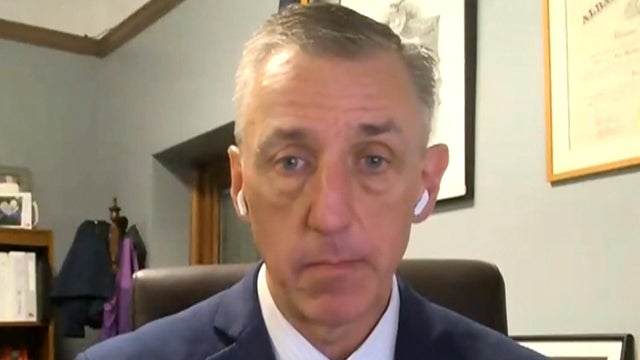
Former Homeland Security Assistant Secretary for Counterterrorism Sam Vinograd joins me now. She is also, we are quite happy to say, a CBS News contributor. Sam, something happened today that I want you to evaluate for my audience. The CIA declassified 71 presidential daily briefs, dating from February 13, 1998 to September 12, 2001. I went through them. They are categorized by a headline. By my count, 47 of the 71 in the headline had a reference to Osama bin Laden. What should we conclude from that? These are important declassifications, but it's important to put them in context as well. Intelligence is only as good as policymakers make it. You could have a smoking gun in an intelligence assessment, even 47 of them. But unless a president or whomever is consuming that intelligence takes it and puts it into action in some way, decides to devote more military resources to fighting al-Qaeda on the ground, puts more resources into finding Osama bin Laden, that intelligence does not go much further than the Oval Office. And, unfortunately, what we've learned today and what we learned through the 9/11 Commission and subsequent activities is that there were signs that this attack was going to happen. That's part of what makes it all so tragic. But the intelligence was not digested in a way, coordinated in a way, that led to actual action on the part of policymakers. Also, I came across a reference in an Atlanticarticle by Graeme Wood that we're going to talk about later in the program to a 2021 Brown University report, trying to put some accounting behind the war on terror. And they estimated at $8 trillion. What have we gotten from that $8 trillion, Sam? A very hard question to answer. I don't expect a comprehensive [INAUDIBLE], but I'd like you to take a stab. Let me take this two different ways. I spent the first year of my professional career in Iraq, working on a range of issues, addressing countering terrorism, finance, and the like. And I had colleagues that were killed. I had colleagues that came back suffering from PTSD. And so the true cost of the war on terror cannot be measured just in dollars.
MAJOR GARRETT:
00:02:02
Not at all. So certainly there's the opportunity cost of spending that amount of money on the war on terror versus elsewhere. There are the psychological and physical impacts of that war on hundreds of thousands of American, soldiers and civilians alike.
MAJOR GARRETT:
00:02:14
Impossible to quantify. In terms of what we've gotten from it, Major, I'll give you two answers to that. The first is we certainly did destroy many of the physical footholds that some of these terrorist groups previously had. Al-Qaeda has regained some territory, but largely speaking, physical territorial footholds has been diminished. However, what that led to for foreign terrorist organizations was a new model. Rather than having a hierarchical command and control structure, these groups now franchise. They have loosely affiliated contacts, and they're technologically enabled. They rely on the internet, encrypted channels to do the sorts of things that they did before when they had more land under their control. So the war on terror led to that. It certainly did also lead to some really unfortunate unintended consequences within this country when it comes to government surveillance, particularly against certain communities. And our level of vigilance. Do you have any anxiety, as some have expressed to me, that we are less vigilant than we were and less vigilant than we should be? Well, I think the threat has evolved. So certainly the war on terror, we can't prove a negative. There's classified information on how many plots were foiled. But we don't know if there would have been more 9/11s if we had not devoted the resources we did to the war on terror. Today, I think that the counterterrorism, intelligence and law enforcement community are more vigilant than ever. But today, the biggest threat we face is from lone actors that aren't affiliated with foreign terrorist groups, many of whom are Americans. And that's such a harder threat to find and stop. Excellent points all. Sam Vinograd-- Thanks.
MAJOR GARRETT:
00:03:51
--grateful to have you here.