North Texas Congress members discuss potential government shutdown

Republicans and Democrats in Congress are blaming each other if the federal government shuts down at 12:01 a.m. Wednesday, Oct. 1.
Funding expires at the end of the fiscal year on Sept. 30. While the House passed a continuing resolution (CR) to fund the government through Nov. 21, it failed in the Senate.
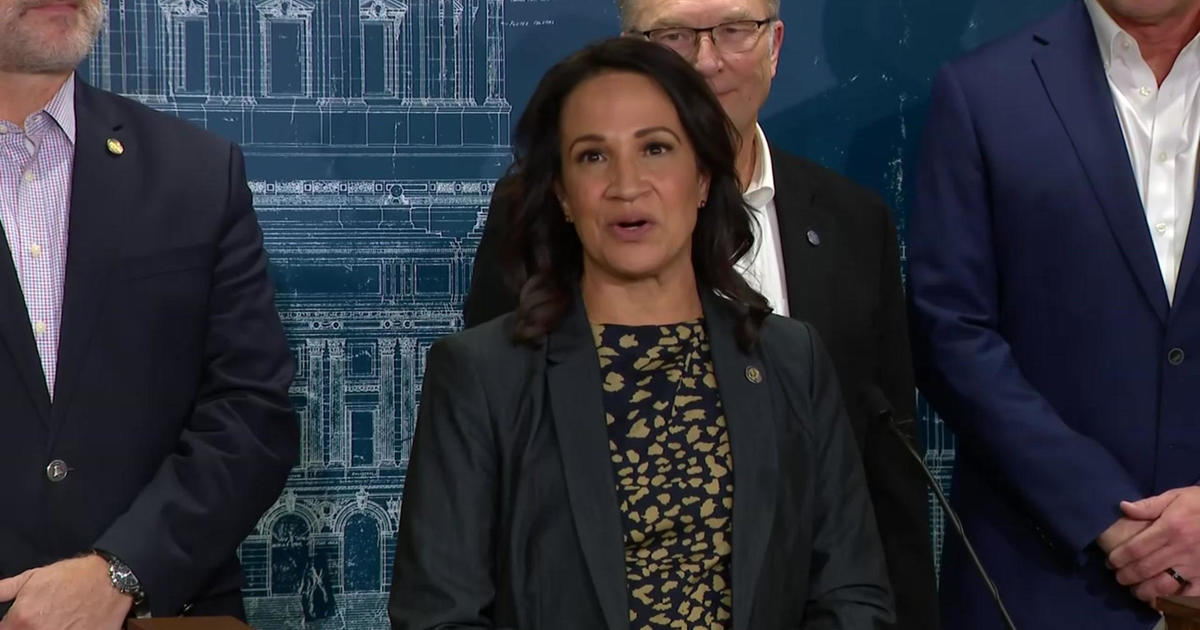
U.S. Representative Julie Johnson, D-Farmers Branch, told CBS News Texas that she believes a government shutdown is a sure thing.
"Oh, it's going to happen," Johnson said. "The Republicans are out playing golf. We were scheduled to be in session Monday and Tuesday, and Speaker Johnson told the Republicans not to come back. They canceled all House activities. I'm going back to Washington. I'll be there. I will be in D.C. ready to cast a vote, on a responsible budget that restores healthcare opportunities and benefits for the American people."
U.S. Representative Keith Self, R-McKinney, said the House, controlled by Republicans, is not to blame.
"It's not the Senate and House in this case. It is Chuck Schumer (Senate Minority Leader)," Self said. "The decision is his as to whether or not we're going to support the CR that the House passed. We did our job. We sent it to the Senate, whether or not he decides for the Democrats to support it. It's 100% Chuck Schumer." While Republicans have the majority in the Senate, 60 votes were needed to approve the funding.
Self voted for the continuing resolution.
"It is a clean CR. It has a little bit of additional money for security for the House, legislative branch, the Supreme Court, and the executive branch. But it is a clean CR, and it keeps the funding flat, going back to 2024. So that's why I voted for it, because that's what we need to do, is draw spending down."
Johnson voted against the CR.
"It's not a clean CR. It means it extends the existing budget that I voted against the first time," said Johnson.
As part of the continuing resolution, Democrats have pursued extending the Affordable Care Act's enhanced premium tax credits that are set to expire at the end of this year. Without an extension, the millions of people who buy their coverage as part of the ACA will see their costs increase. Republicans rejected including this in the continuing resolution.
Self said the tax credits were enhanced during the COVID era and meant to be temporary.
"COVID has been over for years now. Temporary has been over for years now. No Republican has ever voted for an Obamacare subsidy. Why would any Republican vote for this when it's a COVID-era, temporary subsidy? They expire at the end of the year. They need to expire," said Self.
"The ACA tax credits are a thing that Americans rely on," Johnson disagreed. "They rely on healthcare, and Texas, in particular, is a state that has really utilized those tax benefits that American people rely on and count on in order to acquire affordable health insurance. This deadline has been on the books for a very long time, and the Republicans, who are in complete control, have completely failed to lead and address this issue."
While some Republicans have pushed to end the subsidies, Senate Majority Leader John Thune, R-South Dakota, said last week that his party is open to negotiating the ACA tax credits but not for the continuing resolution to keep the government open.