Little Mexico: The historic Dallas neighborhood that built a community and left a legacy
Today, driving through what is now Uptown and Victory Park, it could be easy to miss the last few reminders of a once-booming Mexican American community. Luxury high-rise apartments and office buildings now tower over the area that was once called "Little Mexico".
Little Mexico was the best-known Mexican American barrio, or neighborhood, in Dallas, and was home to generations of Mexican Americans, many of whom went on to become leaders, business owners, and entrepreneurs who helped shape the city.
"It was a thriving community," Dr. Marta Torres said.
Torres is a board member of the Dallas Mexican American Historical League (DMAHL), a nonprofit organization dedicated to educating the public about the city's Mexican American history.
"Not only was it a community where people gathered for events," Torres said. "It was a vibrant social scene full of businesses."
But the story of Little Mexico starts long before the neighborhood became a cultural hub in Dallas.
A neighborhood built by immigrants
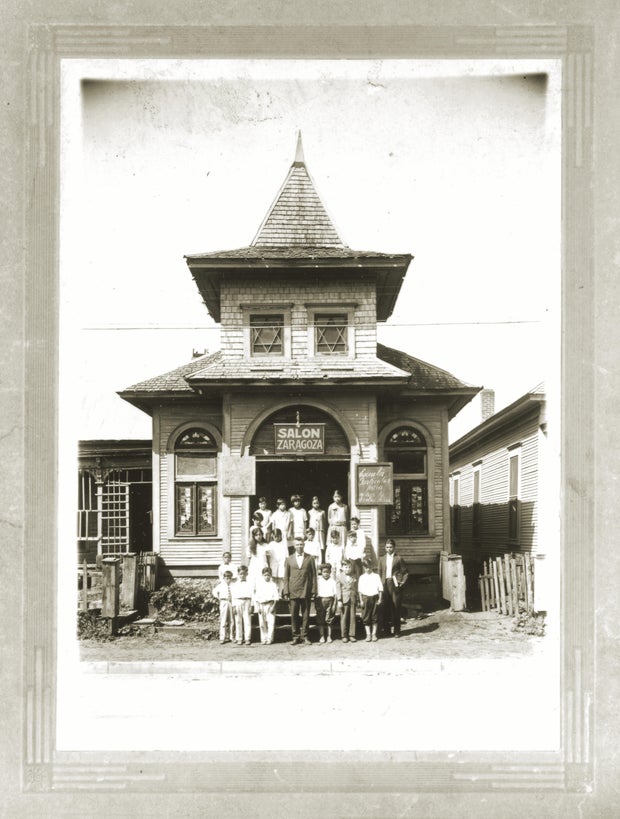
In the 1890s, poor eastern European Jewish refugees settled on the outskirts of downtown near the Trinity River. The area experienced frequent flooding and was a city-sanctioned red-light district, but it also offered inexpensive rent and was located near railroad and industrial jobs.
But by the early 1900s, the community within the 10-block neighborhood began to change.
"People were fleeing the revolution in Mexico between 1910 and 1918 and really settled in this area previously known as Little Jerusalem," Torres said. "Then it was called La Colonia, and then ended up with the moniker Little Mexico, or el barrio."
By 1920, many Jewish residents had begun moving to South Dallas, and the neighborhood became predominantly Hispanic.
Creating community
At its height, Little Mexico's population is estimated to have ranged from 7,000 to 10,000 people.
"The Colonistas, which is what they would call themselves, started to create sustainability," DMAHL board member Carina Arellano said. "That's done through something we continue today- which is la cultura, la familia."
Arellano says the importance of community and family is ingrained in Hispanic culture and has helped shape what Little Mexico has become.
"While [Little Mexico] is not authentically the place that they came from, it was a familiar place," Arellano said. "Those that settled in the area- sometimes you want to have the essence of the place you had to leave from, and Little Mexico definitely curated that."
The barrio was insular and independent in many ways – with its own housing, schools, churches, parks and businesses.
"It was a thriving hub of businesses and entrepreneurs who were setting up restaurants and stores," Torres said. "People really just sustained each other by supporting each other's businesses, giving back to the community, and establishing a true foothold in this area."
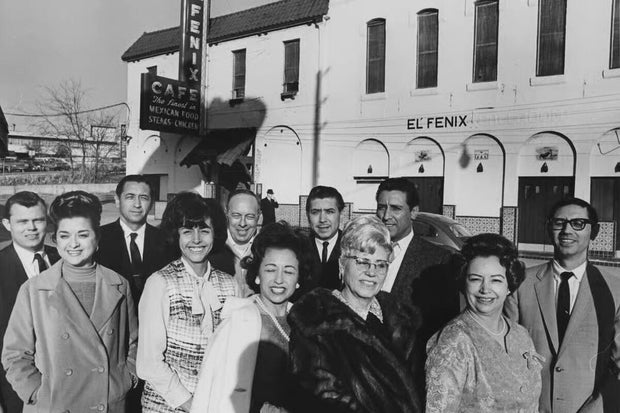
Several of Dallas' first Mexican-owned and operated businesses were established in Little Mexico, including El Fenix, which is now a Tex-Mex restaurant chain across the Dallas-Fort Worth metroplex. Its McKinney Avenue location has been open since 1918, making it the city's oldest continuously operating restaurant.
"Whether it be any kind of events or whatnot, I like to have something there at El Fenix," Arellano said. "It's a sense of ownership of what is still Little Mexico in the area."
In 1924, Maria Luna began selling homemade tortillas throughout the neighborhood, eventually growing the business into Luna's Tortilla Factory. The factory became a Dallas landmark in 2001 before relocating in 2007. Today, Luna's continues to supply tortillas to hotels and restaurants across Dallas.
While the entrepreneurial spirit helped Little Mexico succeed, business was only part of what made el barrio special. It was a tight-knit community – and at its center was Pike Park.
The heart of Little Mexico
"Historically, Pike Park was the first place where the community started to gather," Torres said.
Established in 1913, Pike Park became the centerpiece of the neighborhood. It was a place for celebrations, including birthday parties, religious celebrations, and holidays such as 16 de Septiembre (Mexican Independence Day) and Cinco de Mayo.
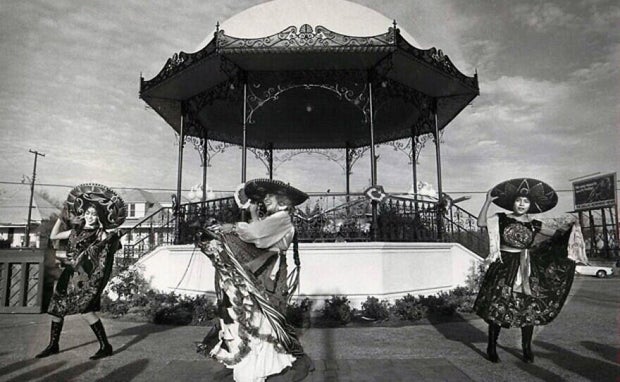
"It was a big fiesta," Arellano said. "The community would come together with different kinds of food and music. You would enjoy everyone in that same space."
As the community grew, so did Pike Park. It expanded to include a field house with showers, reading rooms, playgrounds, tennis courts, a baseball field and a swimming pool.
Fighting for justice
But Mexican American children were initially excluded from using the facilities.
"As early as the 1920s, they actually got the rights for Mexican American children to come and participate in the activities and to swim at the pool here," Torres said. "As the years went by, Pike Park became a place of not just social gathering- it also became a site for civil rights movements."
The park's history wasn't only defined by celebration – it also became a gathering place in moments of grief and protest.
On July 23, 1973, tragedy rippled through the Mexican American community when 12-year-old Santos Rodriguez was shot and killed by a Dallas police officer who tried to coerce him into confessing to a burglary by playing Russian roulette.
His death sparked outrage across the community and became a catalyst for Mexican American activism, with Pike Park, where Santos once played, becoming a place for protesting and organizing.
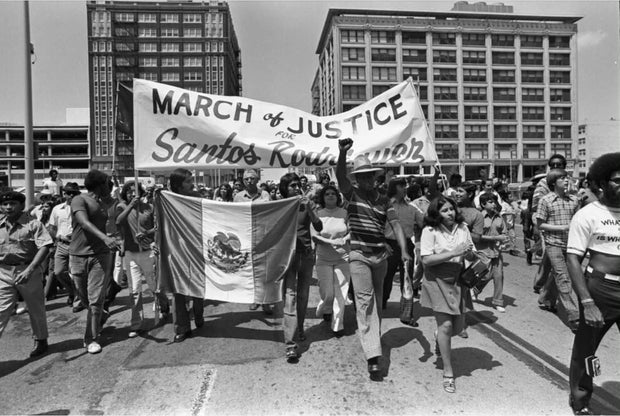
In 2022, Dallas dedicated a statue to Santos at the Pike Park Recreation Center, and the center was renamed the Santos Rodriguez Center.
Today, Pike Park and the recreation center are among the last physical reminders of Little Mexico. The park's significance was formally recognized in 2000 when the city designated it as a historic landmark.
"Pike Park is the last standing, complete whole, of what Little Mexico was," Torres said. "Right next to the park is another part that was developed in the 1950s for housing, but everything else, because of rezoning and reconstruction, has been lost."
A community divided
Little Mexico flourished into the 1960s, but the construction of the Dallas North Tollway, beginning in 1966, split the neighborhood in half and displaced many residents.
Torres says the biggest thing lost when the tollway was built was the access neighbors had to one another.
"Think about plopping a highway right in the middle of your community and how that creates not only distance between each other, but it also creates a true barrier where you can no longer support these buildings and businesses," Torres said.
The construction of the tollway, followed by rezoning and restructuring in the 1970s and 1980s, demolished homes, drove up housing costs, shuttered businesses, and contributed to residents relocating- permanently changing the makeup of the Little Mexico community.
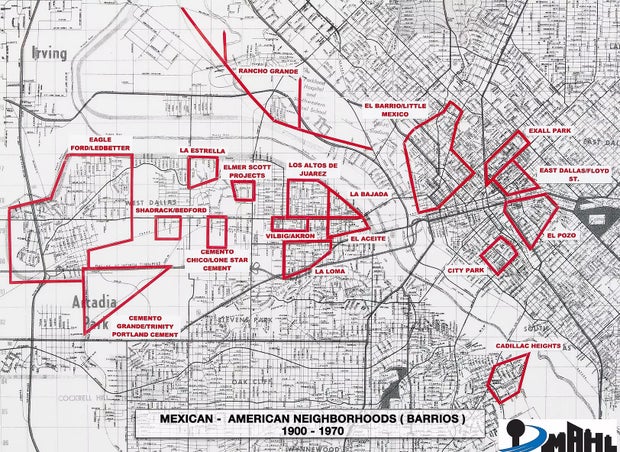
The children of Little Mexico
"The displacement definitely pushed people out," Arellano said. "But then you see them in the different barrios that were born after Little Mexico. It's like those barrios are the children of Little Mexico."
While Little Mexico is no longer what it once was, Arellano says she still feels its essence in parts of Oak Cliff, Pleasant Grove and East Dallas.
"It's different iterations of Little Mexico, but we're still standing," Arellano said.
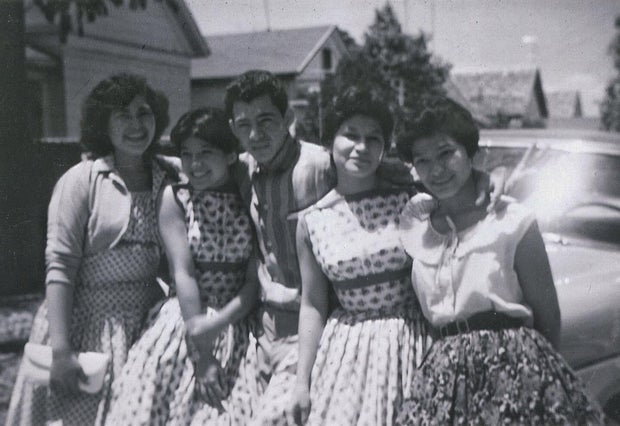
Organizations like DMAHL are working to preserve Little Mexico's history and make sure the story isn't forgotten.
DMAHL has programs and a community collection of artifacts documenting Mexican American history in Dallas.
"This is still living history for a lot of folks," Torres said. "People still have memories of being in the area when it was still Little Mexico."
Torres says preserving those memories can be as simple as staying curious and asking questions of the generations who came before you.
"You could be an amateur historian," Torres said. "That captures the history, so it's not completely erased or forgotten. There are so many things that people can find out right here in their backyard that you drive by and never really think about."