Garland police drone helps locate missing 14-year-old boy with autism

A law enforcement tool that's only been around for a few years may have spared a family heartbreak after their 14-year-old son with autism went missing.
Officers with the Garland Police Department's drone unit found the boy, and the department released video Tuesday of the search to demonstrate how useful drone technology can be.
The video comes as the department's drone program continues to grow.
It was the first day in the field for Officer Michael Crick's new customized police vehicle, specially designed for the department's drone unit.
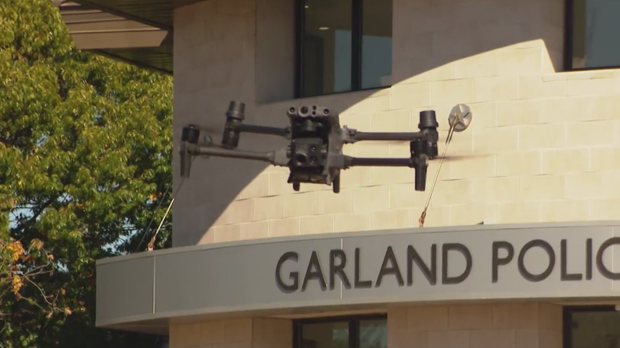
"So you'll be able to see what I'm seeing on the screen, which is what the drone is seeing," said Officer Michael Crick of the Garland Police Department.
Garland police have used drones since 2019, but the new vehicle shows how much the department has expanded its capabilities. It features a large foldout video screen that allows another officer to observe drone footage, along with multiple power ports and spacious storage compartments.
The technology helps officers locate missing people and wanted suspects. In some cases, it can make a critical difference.
On Tuesday, Garland police released video of a search last month for a 14-year-old boy with autism who disappeared into a wooded area near his family's home.
Crick quickly launched one of his drones and used its thermal imaging camera to locate the boy walking through rugged terrain. He said the drone found the teenager faster than officers could have reached him on foot.
"It definitely made sure that he got back home," Crick said. "It's always a rush. It's almost the same when you find them on foot looking."
Garland police now have eight drones of different sizes for different needs. Some can be operated using a virtual reality headset, giving officers controlling them a bird's-eye view of the area.
"I think they're absolutely amazing," Crick said. "I mean I'm an old dog trying to do new tricks out here, and I'm so ate up with them it's ridiculous."
Crick can now cover more ground using his headset than he could on foot during his 30-year career as a patrol officer.
He believes public backlash against drones over privacy concerns is misguided and that searches and rescues like the one last month demonstrate their value.
"They make the public safer. They make us safer," Crick said.