AI-generated videos of deadly Fort Hood shooting are spreading online. Here's what they get wrong.
Videos generated by artificial intelligence about the 2009 Fort Hood shooting, which left 13 people dead, are appearing in social media feeds. Some contain numerous factual errors.
A Facebook page called "Why Is It Like That?" posted a two-part series of AI-generated videos that purportedly depict the shooting and its aftermath. Both are riddled with mistakes and falsehoods.
Who is behind the videos?
The page lists an Austin address that belongs to a tattoo and piercing shop. CBS News Texas called the shop, and an employee who answered said she had never heard of the page.
A phone number listed on the "Why Is It Like That?" Facebook page belongs to an Austin home remodeling company. An email sent to the address associated with the page was returned as undeliverable.
CBS News Texas could not verify the identity associated with the page and it appears to be fake, much like the AI-generated videos people have been watching, sharing and commenting on.
Debunking AI-generated videos about 2009 Fort Hood shooting
One of the videos is titled "The Day Fort Hood Changed."
The caption reads: "A historical look into the events and investigation surrounding the 2009 Fort Hood tragedy. This video is intended solely for education, documentary and historical analysis purposes."
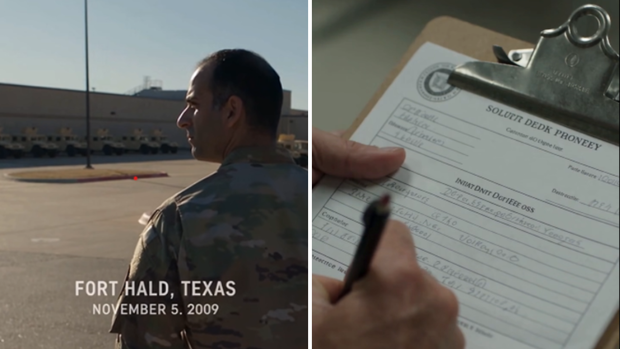
The video begins with Fort Hood misspelled and shows a man standing in front of a building with what appear to be Humvees parked outside.
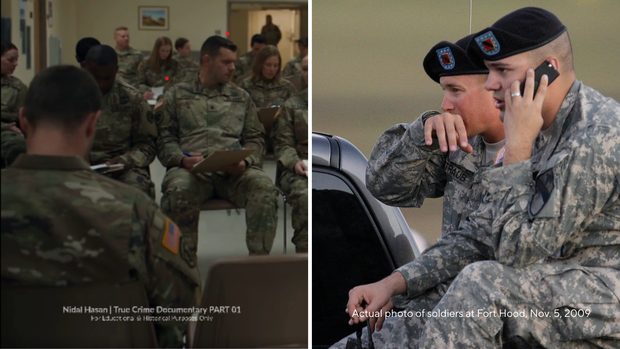
Next, it cuts to a room where soldiers sit in rows, wearing dark green camouflage uniforms with a newer pattern. In November 2009, soldiers at Fort Hood wore Army Combat Uniforms, or ACUs, which featured a gray-green pixelated pattern.
Later, the scene cuts to a clipboard covered in gibberish.
The video then shows a man portraying the convicted shooter, Nidal Hasan, opening fire inside the room before cutting to the exterior of a building with more gibberish on its sign.
A second video also contains numerous inaccuracies.
It begins with the shooting and shows firefighters entering the building while gunfire is underway. That is inaccurate. The first responders that day were police officers who encountered Hasan outside.
The video then shows soldiers rushing to help victims while wearing combat gear, another inaccuracy. Such gear is worn in combat, not as everyday attire on an Army post.
The video also depicts a woman portraying Sgt. Kimberly Munley running toward the scene inside a building.
At the time of the shooting, Munley was a member of Fort Hood's civilian police department. She was directing traffic nearby when the shooting began and rushed to the scene.
Munley encountered Hasan outside the readiness center. The two exchanged gunfire, and she was shot in the thigh and knee and wounded in her index finger.
But it was Sgt. Mark Todd, another civilian police officer at Fort Hood, who ultimately ended the shooting. He is not featured in the AI-generated video.
Todd rounded the corner of a building shortly afterward and ordered Hasan to surrender. The two exchanged gunfire before Todd shot and handcuffed Hasan, ending the rampage.
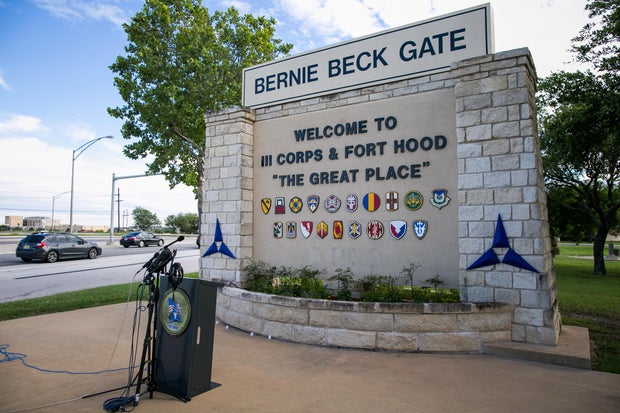
Fort Hood covers approximately 340 square miles, an area larger than New York City's five boroughs combined. The installation's front gate is about four miles from the readiness center where the shooting occurred, making the scene depicted outside the front gate in the video unlikely.
AI-generated videos continue to circulate
The videos have been viewed and shared numerous times. Both are labeled as "true crime documentaries," but CBS News Texas has been unable to trace them to a specific individual.
CBS News Texas has reached out to Fort Hood about the AI-generated videos and is awaiting a response.
The two videos are just a snapshot of the many AI-generated depictions currently circulating online.