Hispanic Heritage Month: the very first frozen margarita machine
Did you know the first frozen margarita machine was invented in North Texas?
Mexican American restaurant owner Mariano Martinez invented the frozen margarita machine, creating a piece of Dallas history now preserved by the Smithsonian.
If you've ever ordered a frozen margarita, there's a good chance you've enjoyed a little piece of Dallas history.
Before Mariano Martinez became known for his frozen margarita machine, he was a Dallas entrepreneur who sold everything he owned to build an authentic Mexican restaurant of his own.
Dallas had already produced two significant Mexican restaurant chains — El Fenix, founded in 1918, and El Chico, founded in 1940.
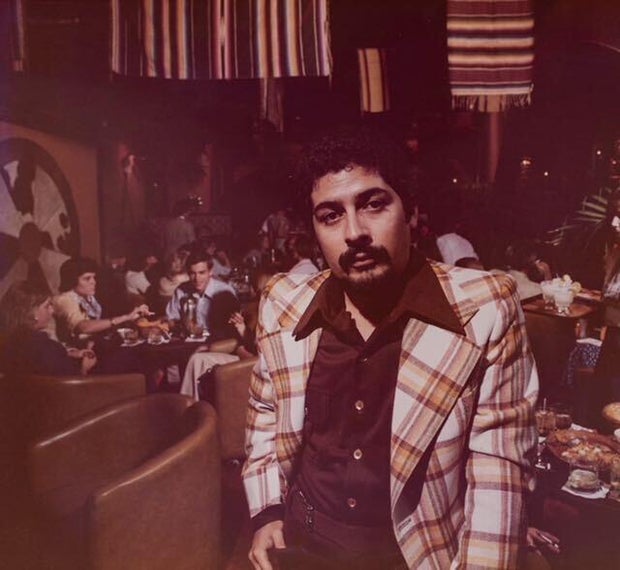
But Martinez wanted to create something different.
"In those days, Mexican restaurants could not make Mexican food alone," Martinez said. "I was the first Mexican restaurant to serve only Mexican food. I didn't have any chicken-fried steak, or fried chicken or spaghetti and meatballs. I wanted to elevate the experience."
History you can taste
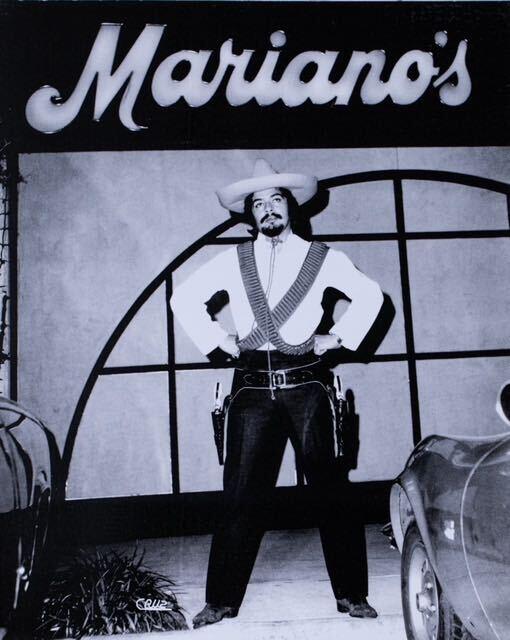
In 1971, Martinez opened his first restaurant, Mariano's Mexican Cuisine, at Old Town Shopping Center. He brought together the family culinary traditions he grew up with to serve his own take on Mexican food.
"My grandmother came from Monterrey," Martinez said. "My father came from San Antonio. It's like two kitchens at one table. If you want to have Tex-Mex, you can have Tex-Mex. If I want to have carne asada, which is from the recipes from Monterrey, then I can have carne asada."
He had the food menu figured out. But there was one thing he still needed: his father's secret margarita recipe.
"I remember saying, 'Wow, there's magic in that drink,'" Martinez said. "I was afraid to ask my father. He was so guarded with that recipe, and he would never share it. I would've been heartbroken if he said, 'No, I can't give it to you, son.'"
Martinez says his father's secret ingredient was simple syrup— and that it changed the profile of the margarita forever.
The problem that led to the invention
At the time, frozen margaritas were blended with ice, but Martinez says that process made it difficult to keep each drink consistent.
He remembered one customer in particular who made that clear.
"A customer stopped me and he said to me, 'You know how to make a margarita?'" Martinez said. "I said, 'yes, I do. The best in the world, my father's secret recipe.' And he said, 'Well, then I suggest you go tell the bartender because these margaritas are terrible. The first ones were okay. The second one didn't taste too much like the first, and the third one is terrible.'"
Martinez found the bartender on the verge of quitting; his hands were pruned from squeezing limes, while the restaurant bought every blender possible to keep up with demand.
Martinez was determined not to lose a valuable employee, so he begged the bartender to give him time to come up with a solution.
"I had a sleepless night," Martinez said. "The next morning, I stopped at a 7-Eleven store to get a cup of coffee, and I just saw the [Slurpee] machine sitting there, and I thought, 'I wonder if we could just do that.'"
Martinez didn't want to make Slurpees — he wanted to make frozen margaritas.
He found a mechanic and an old soft-serve ice cream maker.
"We bought [the ice cream machine] and took it apart and souped it up just like you would a car," Martinez said.
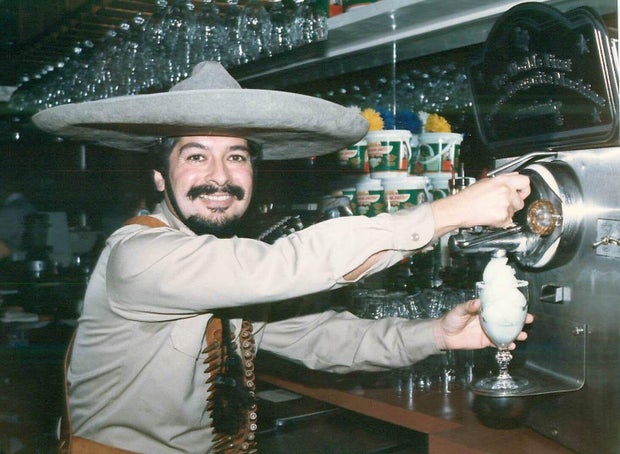
The next challenge was making the alcohol freeze. This is when he remembered the secret ingredient in his father's recipe: simple syrup.
"Simple syrup is you just take sugar and boil it down," Martinez said. "If you looked at a frozen margarita with a powerful microscope, it never freezes. It's like a gel cap. It encapsulates. The simple syrup forms a little coating and then the liquor is inside."
The innovation was born out of necessity, but it would become part of history.
From Dallas to the Smithsonian
The original machine churned out margaritas for decades before it was eventually retired. Martinez never patented his invention, and similar machines eventually spread far beyond Mariano's.
"I didn't have any money," Martinez said. "Second of all, I didn't have the time. All I cared about was what happened inside those four walls. I was just looking for a solution to make my first restaurant successful, and it found its way to restaurants in 47 different countries"
While Martinez wasn't focused on preserving his invention, others took notice.
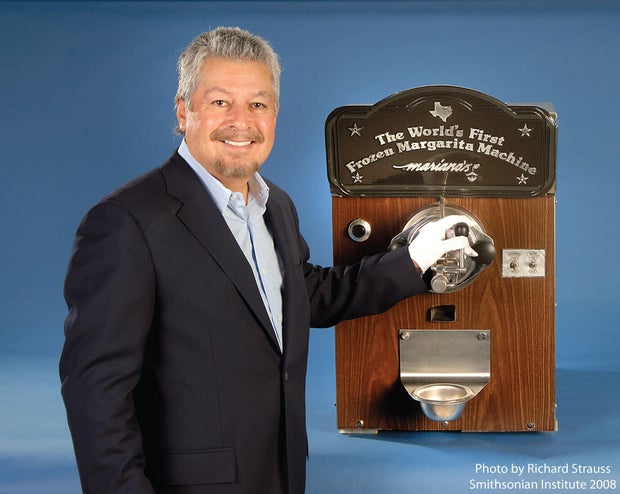
"I got a call from the Smithsonian," Martinez said. "She told me she spent three years researching my claim of being the world's first frozen margarita machine. She said, 'You're for real.'"
The original machine is now part of the permanent collection in the Smithsonian National Museum of American History in Washington, D.C., alongside other pieces of American culinary history, including Julia Child's kitchen.
A lasting legacy
The world's second frozen margarita machine — which Martinez calls "Maggie-rita," or Margarita's little sister — is on permanent display at the Dallas County Records Building.
To Martinez, his creation represents more than just a margarita machine. He sees it as a crossroads of Tex-Mex food and entrepreneurship, and the relationship between Mexican and American culture.
"It's going to be here in perpetuity," Martinez said. "When I'm gone, it'll still be here. People for years will still remember."
Fifty-five years after opening his first restaurant, Martinez owns five locations of two restaurant concepts — Mariano's Hacienda and La Hacienda Ranch — in Dallas, Addison, Frisco and Colleyville.
At 82 years old, Martinez says he still loves what he's doing and has no plans of retiring anytime soon.
"I hope that people that will watch this will say, 'Well, if he can do it, I can do it,'" Martinez said. "Sí se puede. Sí se puede. You can do it. You can do it."


