Dallas County investigates possible E. coli cases in children, potential link to State Fair of Texas

Dallas County health officials are investigating up to seven possible cases of E. coli involving children, some of whom have become seriously ill and required treatment in intensive care units.
Investigators are examining whether the illnesses could be connected to visits to the State Fair of Texas, particularly its petting zoo. However, health officials emphasize that neither the cases nor a connection to the fair has been confirmed.
"We have learned that there are multiple families that have very sick children in two different hospitals in the Dallas area," said Mary McGonigle-Martin, vice president of Parker's Promise, a nonprofit that supports families whose children have been hospitalized with serious infections such as E. coli.
Dallas County Health and Human Services Director Dr. Philip Huang said doctors alerted the county this week to possible cases of Shiga toxin-producing E. coli, a type of bacteria that can cause severe illness.
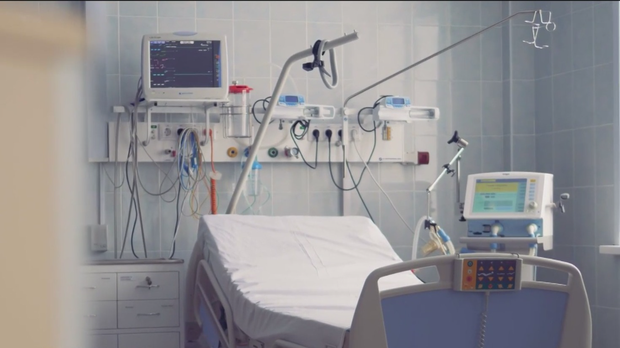
Huang said the doctors reported a potential common link among their patients: recent visits to the State Fair of Texas.
"They thought [it] might be associated with being at the petting zoo at the state fair," Huang said. "We are still trying to follow up on that, because we haven't seen or received all of the lab reports."
McGonigle-Martin said the families she is assisting also visited the fair's petting zoo before their children became ill.
Animals can carry E. coli in their intestines and shed it in their waste, potentially exposing people who come into contact with contaminated animals or surfaces.
"The animals carry a pathogen called E. coli in their intestines, and they shed it, and kids can become seriously ill," McGonigle-Martin said.
In a statement, the State Fair of Texas said it "has not received official notification of the reports, but takes guest health and safety seriously."
How serious can an E. coli infection become?
According to the Centers for Disease Control and Prevention, symptoms of an E. coli infection can include severe stomach cramps, diarrhea, and vomiting.
While many people recover without serious complications, some infections can lead to a potentially life-threatening condition known as hemolytic uremic syndrome (HUS), which can cause kidney failure.
McGonigle-Martin said families can face a frightening progression of symptoms when children develop severe complications.
"Your child starts out with vomiting and diarrhea," she said. "But then you transition from vomiting to diarrhea to acute kidney failure to being put on dialysis, and it's so difficult."
She said HUS can also affect the brain, potentially causing seizures or strokes.
For parents whose children are hospitalized, the uncertainty surrounding their recovery can be overwhelming.
"They're barely hanging on, psychologically and emotionally," McGonigle-Martin said. "You have to take it a day at a time, sometimes hour at a time."
Dallas County officials have not confirmed the suspected E. coli cases or established a connection to the State Fair of Texas. The investigation involves patients in Dallas County and elsewhere in North Texas.
For more information about E. coli, including symptoms and potential complications, visit the CDC's E. coli information page.


