Baby gets salmonella after pumpkin activity: what parents should know

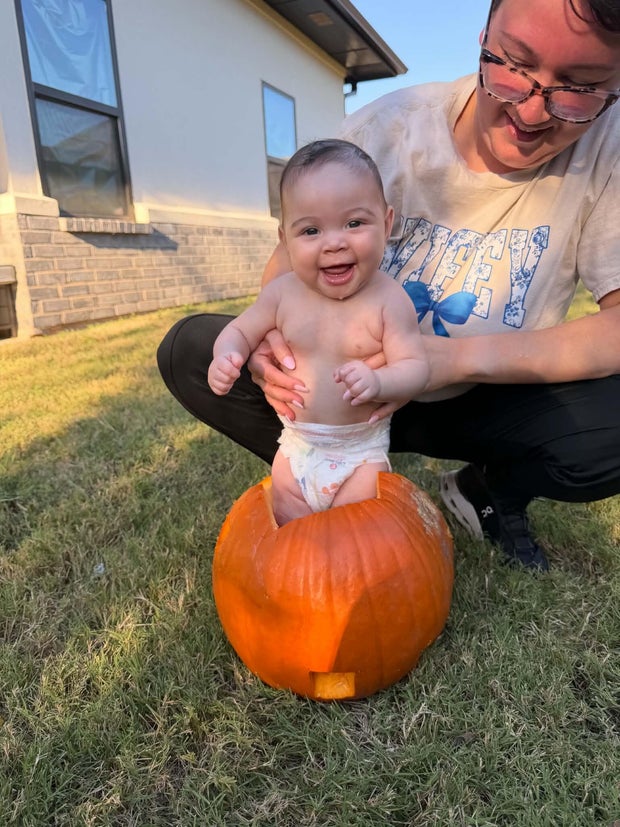
For families, October often means pumpkin carving and crafts, but one North Texas mom wants to warn parents about a risk that took her by surprise.
Briana Robertson said that a year ago, her daughter participated in a pumpkin activity at her daycare.
"The teacher scooped out the insides of the pumpkin and had the pumpkin seeds and guts in a ziplock bag, and my daughter was only 4 months old, so there wasn't much she could do other than touch the bag," Briana Robertson said.
Robertson said that about two days later, her daughter started vomiting, developed a high fever, and had severe diarrhea. She became so dehydrated that, at one point, she was unresponsive.
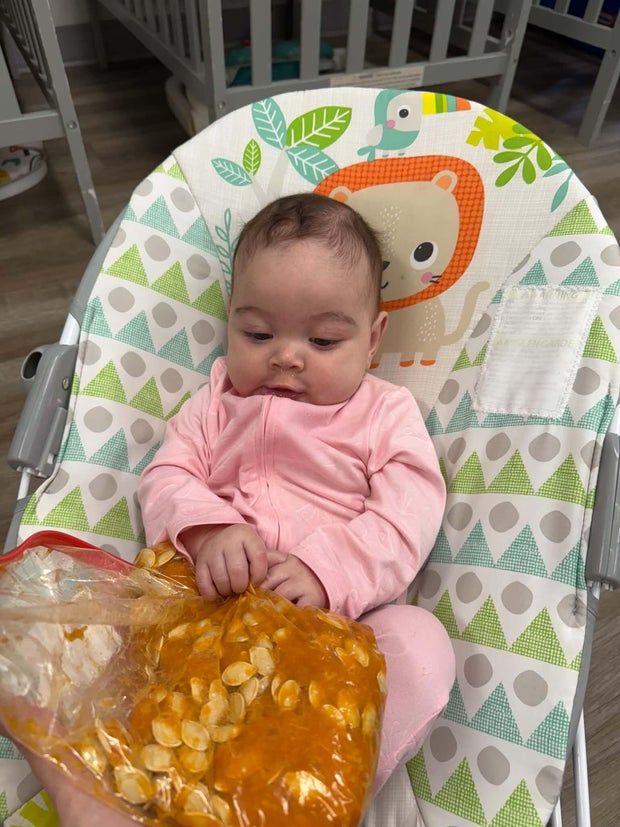
"Her symptoms started at 6:45 that morning. By 12 that day, she was being admitted," said Robertson. "And the fact that they didn't really have answers at first was scary because you just see your four-month-old lying there, severely dehydrated, purple, and there's nothing that anybody can do until they know how to treat her."
Robertson said after several tests, her daughter tested positive for salmonella. At the time, she wasn't eating table foods, so Robertson said doctors determined the pumpkin exposure was the most likely source.
"I was shocked. Like, I was completely shocked," she said. "I never would have thought that she could have gotten salmonella from a pumpkin."
The FDA says fresh produce, including pumpkins, can become contaminated with the harmful bacteria through contact with soil, water, and during handling.
Over the summer, a salmonella outbreak linked to pumpkin seeds infected 81 people in France, hospitalizing six. However, Robertson said doctors told her a case like her daughter's is rare.
"They actually said that they've never had an infant or child come in with a severe case of salmonella due to pumpkins," she said.
But still, she wants to share her story to encourage parents to take precautions.
Pumpkin safety tips
Carving pumpkins are a different variety from the pie pumpkin and are not truly designed for eating.
Once pumpkins are carved and sit at room temperature for over two hours, they are in the danger zone, meaning they can be dangerous if eaten.
Robertson said she's been told it's always a good idea to:
- wash the outside of pumpkins before cutting into them
- wash hands before and after handling them
- sanitize any surfaces or utensils they touch.