U.S. to begin Strait of Hormuz blockade
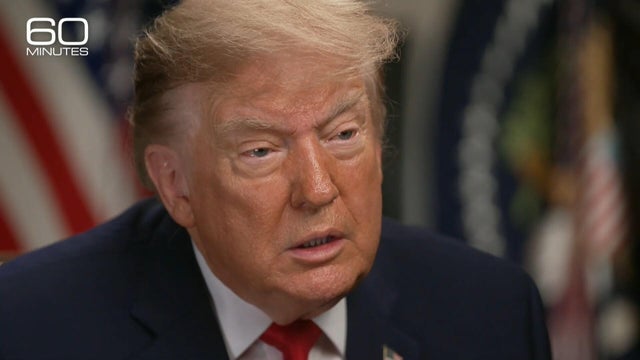
After marathon peace talks in Pakistan with Iran resulted in no deal, President Trump says the U.S. will blockade the Strait of Hormuz to ships doing business with Iran. Weijia Jiang reports.
Watch CBS News
After marathon peace talks in Pakistan with Iran resulted in no deal, President Trump says the U.S. will blockade the Strait of Hormuz to ships doing business with Iran. Weijia Jiang reports.

The Trump administration is ratcheting up attacks on environmental protections that Make America Healthy Again followers hold dear.

Missed the second half of the show? Rep. Mike Turner and IMF Managing Director Kristalina Georgieva join. Plus, Anthony Salvanto breaks down the latest CBS News poll.

GOP Rep. Mike Turner of Ohio defended the president's handling of the Iran war, saying he is focused on preventing Iran from obtaining a nuclear weapon.

Democratic Sen. Mark Warner of Virginia did not rule out voting for a supplemental funding request for the Iran war, saying "I'll take a look at anything," while adding that President Trump should have sought congressional authorization before the conflict.

Vice President JD Vance spoke in Islamabad, Pakistan, where he participated in negotiations with Iranian officials over the ongoing conflict.

U.S. officials are meeting Iranian and Pakistani officials in Islamabad on Saturday in direct talks, the White House says. CBS News' Haley Ott has more on the global reaction to the two-week ceasefire.

The latest polls indicate that Viktor Orbán, an international ally of President Trump, and his Fidedz party are trailing the rival Tisza party.

Negotiators for the U.S. and Iran are set to gather this weekend in Pakistan's capital for peace talks. But the fragile 2-week ceasefire is at risk if both sides can't agree amid Israel's ongoing conflict with the Iranian proxy group Hezbollah in Lebanon. CBS News' Elizabeth Palmer and Sam Vinograd have more.

President Trump expressed confidence on Friday as senior members of his administration prepared for in-person peace talks with Iran. Vice President JD Vance said he believed the negotiations will be "positive" before boarding his flight to Pakistan. CBS News political reporter Zak Hudak reports.

Israeli Prime Minister Benjamin Netanyahu said, "There's no ceasefire in Lebanon," and that Israel will continue striking the Iranian-backed militant group Hezbollah. However, Netanyahu authorized direct talks with Lebanon starting next week in Washington, D.C. Ed O'Keefe reports.

Stocks jumped and oil prices fell on Wednesday following President Trump's announcement of a two-week ceasefire in the war with Iran. CBS News senior business and tech correspondent Jo Ling Kent has more.

The ceasefire with Iran is subject to what President Trump called the "complete, immediate and safe opening" of the Strait of Hormuz, which on Wednesday, Iran said is closed. The White House said those claims are false. Weijia Jiang reports.

Less than 24 hours after the ceasefire with Iran was announced, it's in danger of coming apart. Israel launched a huge offensive against its old enemy, the Iranian-backed militia Hezbollah, on Wednesday. Elizabeth Palmer reports.

An Iranian news agency linked to the country's military reported on Wednesday that traffic through the Strait of Hormuz was suspended, which would violate the ceasefire agreement reached with the U.S. on Tuesday. According to the Iranian news organization, the suspension of traffic is over Israel's continued attacks on Hezbollah in Lebanon. The White House says the reports that the Strait is closed are false. CBS News' Imtiaz Tyab and Ed O'Keefe report, and Will Todman, a senior fellow in the Middle East program at the Center for Strategic and International Studies, has more.

Retired U.S. Army major and military analyst Mike Lyons joins CBS News 24/7 to break down some of the key negotiation points of the two-week ceasefire agreement between the U.S. and Iran.

President Trump's former adviser and CBS News contributor H.R. McMaster joins CBS News 24/7 Mornings to weigh in on the two-week ceasefire deal between the U.S. and Iran.

President Trump said Tuesday that he agreed to a two-week ceasefire between the U.S. and Iran, but Iran still appears to be in control of shipping traffic in the Strait of Hormuz. CBS News' Nancy Cordes and Elizabeth Palmer have the latest.

President Trump on Tuesday announced a two-week ceasefire in the Iran war with Iran temporarily agreeing to reopen the Strait of Hormuz as part of the deal. Nancy Cordes reports.

The Office of Personnel Management is asking insurers that cover federal employees and retirees to hand over details about their medical visits, their pharmacy claims, and more.

President Trump said he agreed to a two-week ceasefire with Iran on the condition that the country would open the Strait of Hormuz. Aaron MacLean has more. Weijia Jiang, Elizabeth Palmer and Aaron MacLean have more.

President Trump said he agreed to a two-week ceasefire with Iran if the country agrees to open the Strait of Hormuz. Aaron MacLean has more.

President Trump ramped up his threats against Iran on Tuesday morning, saying "A whole civilization will die tonight" on social media. Meanwhile, the U.S. military struck Iran's Kharg Island in an overnight attack, a U.S. official confirmed. CBS News' Nancy Cordes and Elizabeth Palmer have more.

President Trump has threatened the Iranian regime with mass destruction of its power plants and bridges if there is no deal to reopen the Strait of Hormuz by his Tuesday evening deadline. Nancy Cordes and Major Garrett have the latest.

Two more drug-making giants, Abbvie and Genentech, will start selling popular medications on the White House's discounted pharmaceutical site as soon as Monday.