Read the 14 points of the agreement between Iran and the U.S.
The agreement, as read by senior U.S. officials, allows Iran to immediately begin exporting oil and petroleum products.
Watch CBS News
The agreement, as read by senior U.S. officials, allows Iran to immediately begin exporting oil and petroleum products.
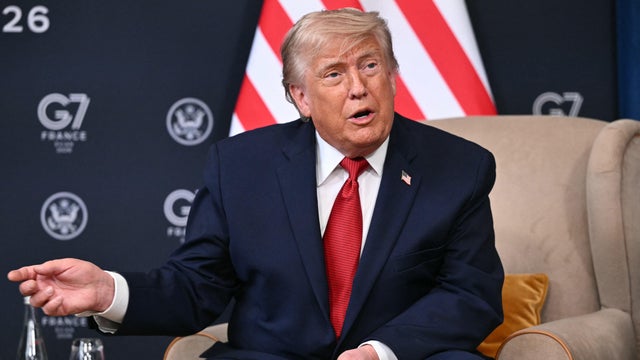
President Trump warned he could order new strikes if Iran's leaders "don't behave." The U.S. and Iran signed the memo of understanding remotely, a White House official said.

A White House official tells CBS News that President Trump and Iranian President Masoud Pezeshkian remotely signed a memorandum of understanding to end the Iran war. Eric Lob, associate professor of politics and international relations at Florida International University, joins with analysis.

After months of war and days of secrecy, U.S. officials dictated the text of President Trump's much-touted deal to end the war with Iran. It would reopen the Strait of Hormuz and would "reaffirm" that Iran "shall not procure or develop nuclear weapons." But in exchange, Iran could get billions in cash benefits. Nancy Cordes reports.

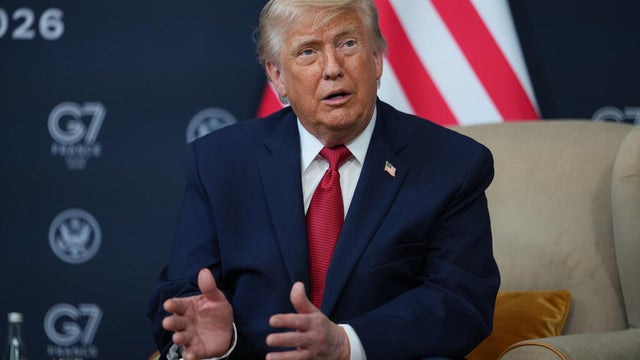
President Trump signed the 14-point memorandum of understanding with Iran Wednesday in France, putting the agreement into effect, a U.S. official tells CBS News. CBS News' Imtiaz Tyab and Aaron MacLean have more.
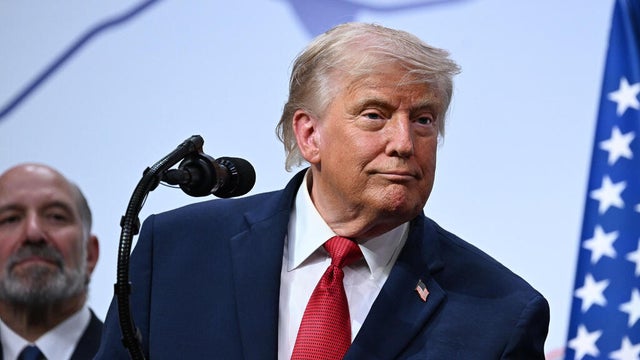
The Obama-era Iran deal was packed with technical details and specific requirements limiting, but not shutting down, Iran's nuclear program. President Trump's new agreement is more of a framework, and it's not final yet.

President Trump on Wednesday jokingly said he'll blame Vice President JD Vance if the preliminary deal with Iran falls through. Political strategists Matt Whitlock and Kendra Barkoff Lamy join with analysis.

Oil prices are falling as the end of the war with Iran seems in sight. Arjun Murti, partner at the energy firm Veriten and the author of the Substack newsletter "Super-Spiked," joins to break down when you can expect the pain at the pump to ease.

Senior U.S. officials dictated the U.S.-Iran memorandum of understanding on a call with reporters Wednesday. CBS News' Nancy Cordes and Samantha Vinograd have the latest.

The Federal Reserve unanimously voted Wednesday to keep interest rates unchanged. It was the first rate decision under the new chair, Kevin Warsh. CBS News MoneyWatch correspondent Kelly O'Grady has the details.

New details are coming to light about what's inside the memorandum of understanding between the U.S. and Iran, including what Iran can and cannot do in their nuclear program. Jon Alterman, a global security expert for the CSIS, joins CBS News to discuss.

Speaking to reporters in Paris, France, on Wednesday, President Trump criticized the United States-Mexico-Canada Agreement, saying he would "rather not have" it. Mr. Trump signed the trade deal during his first term.

President Trump met with Indian Prime Minister Narendra Modi at the G7 summit, and emphasized that the two had a "very good" conversation despite past tensions between the two nations. CBS News' Ed O'Keefe has more context.
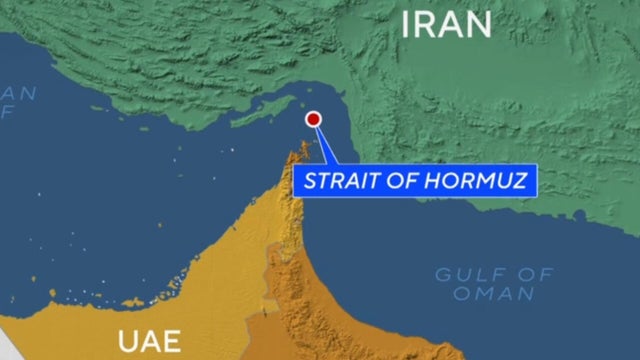
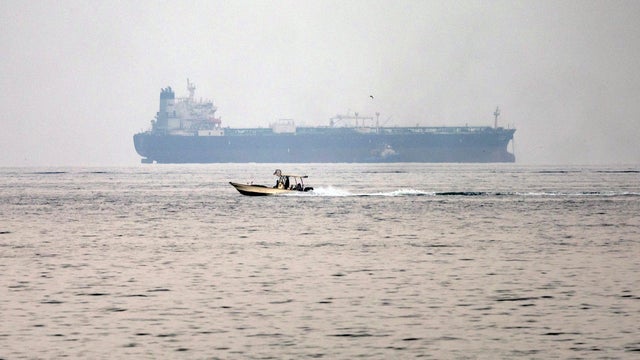
President Trump said the Strait of Hormuz will reopen within "the next day or two." Semafor climate & energy editor Tim McDonnell explains why global energy trade will never be the same, even when the strait reopens.

President Trump held a news conference Wednesday at the G7 Summit in France, addressing a variety of issues. Following the president's remarks, Weijia Jiang, Nancy Cordes and Olivia Rinaldi provided context.

President Trump took questions Wednesday on the Iran deal, the situation in the Middle East and several other topics. CBS News' Weijia Jiang, Nancy Cordes and Olivia Rinaldi have more.

"We want to tell the American people what's in this deal," Vice President JD Vance said on "CBS Mornings," adding that the public can expect to see the contents of the deal between Wednesday and Friday. Ed O'Keefe reports, and Imtiaz Tyab has more on President Trump's comments about Israeli Prime Minister Benjamin Netanyahu.
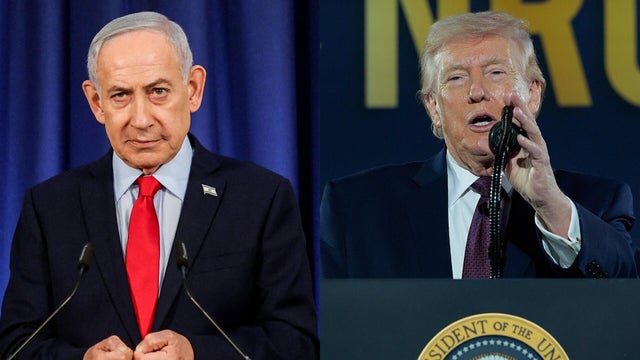
President Trump rebuked Israeli Prime Minister Netanyahu's handling of Israel's conflict with Hezbollah in Lebanon. CBS News' Imtiaz Tyab explains, and Olivia Rinaldi reports on the global reaction to the U.S.-Iran deal from the G7 summit in Paris.

Vice President JD Vance told "CBS Mornings" the details regarding the Iran deal will be released on Friday at the latest and discussed why the framework hasn't come out yet. Vance claimed the deal is "a good deal for the American people," adding the Strait of Hormuz will open "immediately."
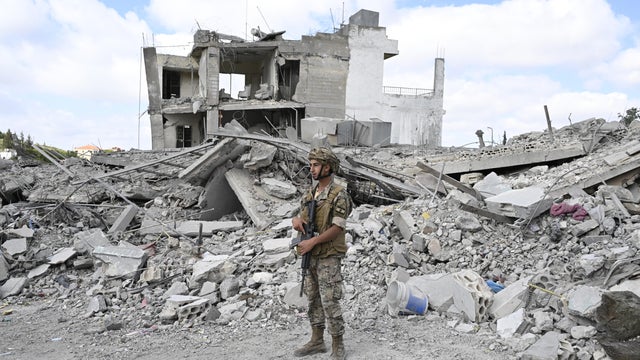
Iran's foreign minister says Israeli troops can't remain in Lebanon under the pending deal with the U.S.

Lawmakers on Capitol Hill are calling on the White House to release the text of the tentative deal reached with Iran to end the war. Both Democrats and Republicans have said they are eager to see the details. CBS News national security analyst Aaron MacLean has more.

In this extended interview, CBS News chief Washington correspondent Major Garrett sits down with Democratic Sen. Raphael Warnock of Georgia to discuss the Iran war, voting rights and morality in America.

President Trump praised Iranian leaders while slamming his greatest ally in the Middle East, Israel, at the G7 summit on Tuesday. Nancy Cordes has more details.

Iran's World Cup team coach says it was ordered to leave the U.S. and return to its training base in Mexico only a few hours after opening its politically charged tournament with a draw.

Sen. Raphael Warnock of Georgia has been viewed as a rising star in the Democratic Party since he beat Kelly Loeffler for her Senate seat in 2021. CBS News chief Washington correspondent Major Garrett sat down with Warnock to discuss his new book, "The Crooked Places Made Straight," the Iran war and more.