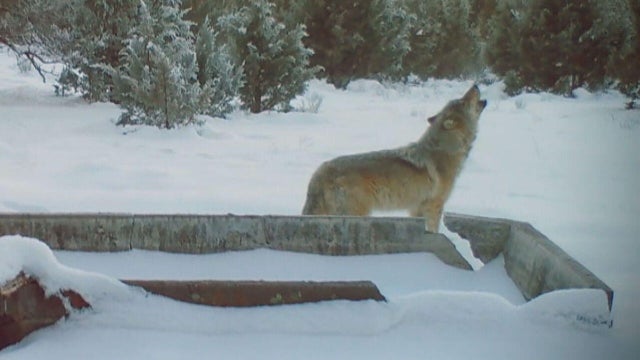
As wolf packs grow in California, cattle ranchers face mounting losses
Once nearly extinct in the United States, wolves are making a comeback in California. Cattle ranchers are feeling the impact.
Watch CBS News
Once nearly extinct in the United States, wolves are making a comeback in California. Cattle ranchers are feeling the impact.
So far, the only people to come down with bird flu got it from animals. Dr. Jon LaPook reports on how research is underway to keep bird flu from mutating into a form that could spread from person to person.
Over the next century, three of four coastal communities will face the threat of saltwater contaminating drinking and irrigation water because of rising sea levels, according to NASA. It's already happening along the Delaware Bay on the East Coast. CBS News national environmental correspondent David Schechter has more.
President Trump has vowed that his tariffs will ultimately benefit America's farmers, but at least one farmer feels otherwise. John Boyd, President of the National Black Farmers Association, joins "America Decides" to discuss the tariffs' impact and how the government could help farmers.
Less than 24 hours after tariffs went into effect, President Trump announced a 90-day pause on most of his new tariffs and lowered "reciprocal tariffs" to 10%. However, tariffs on China have increased to 125%. As trade tensions escalate, U.S. farmers say they are caught in the middle.
China has responded to President Trump's import taxes with a 34% retaliatory tariff on all U.S. goods entering China. One industry that could be hit hard is farming, where exports account for roughly 20% of U.S. agriculture production. John Boyd, farm owner and president of the National Black Farmers Association, joins to discuss the impact.
President Trump says economic turbulence will be temporary after his tariff announcement, but businesses and farmers are already making drastic moves to navigate the uncertainty ahead. CBS News' Weijia Jiang and Lana Zak have the latest.
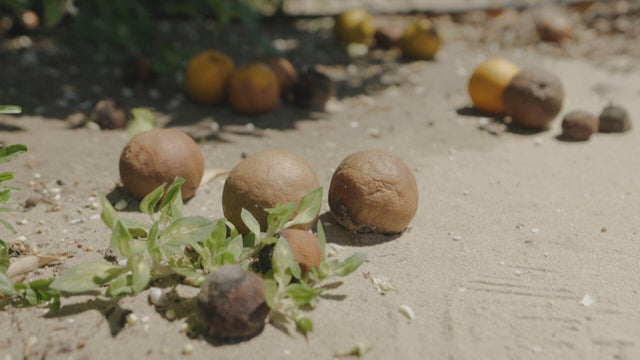
Already decimated by a disease called citrus greening, Florida's orange groves can't seem to catch a break.
Small farms have been hit hard by the growth of large agriculture operations. Scores have gone out of business. For African-American farmers, it's even more dire: In the last 100 years, they have lost almost 90% of their acreage, an estimated $326 billion worth of land. One small-town Texas woman has found a way to keep her small business competitive.
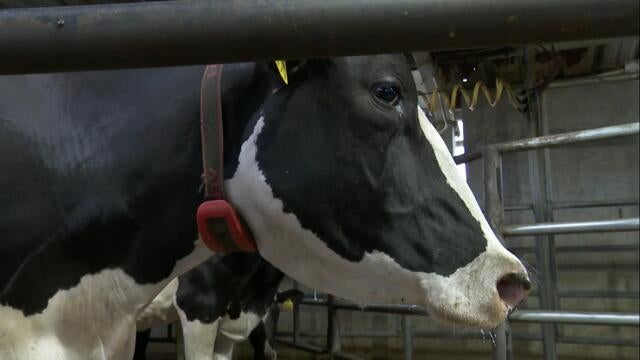
California has over 1,100 dairy farms, two-thirds of which have been impacted by the bird flu outbreak. A leading suspect is contaminated milking machines. Dr. Jon LaPook reports.
Trump says he'll offer White South African farmers "safe refuge" as U.S. citizens, but do they actually want it?
The board of directors at a "National Milk Producers Federation" meeting this week said immigration, alongside tariffs, is the number one challenge facing dairy farmers. CBS News immigration and politics reporter Camilo Motoya-Galvez reports on the connection between immigration and food prices. Caleb Ragland, a farmer from Kentucky, joins "The Daily Report" to discuss tariffs' impact on American farmers.
A study by the National Milk Producers Federation, a group which advocates for dairy producers, indicates that eliminating immigrant labor would lead to a 90% increase in retail milk prices.
At a time when college is unaffordable for many, some schools are re-imagining higher education, shifting their curricula from general knowledge to providing free training for specific jobs. Mark Strassmann reports from Merced, California.
President Trump's policies in the early days of his second term are creating uncertainty across the country. Cuts he's making in foreign food aid could have a major impact in America's heartland, where much of the food is grown. Nikole Killion and Skyler Henry report.
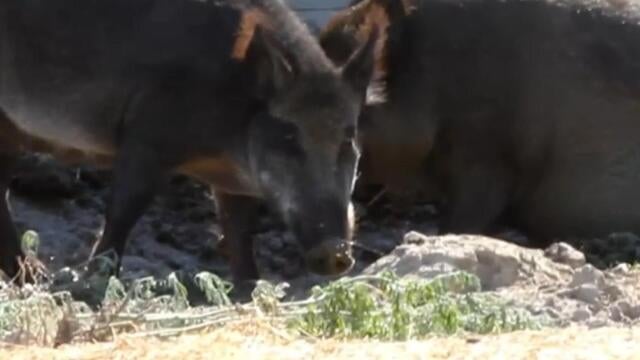
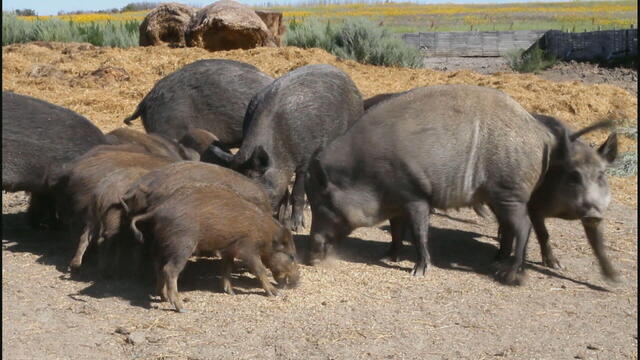
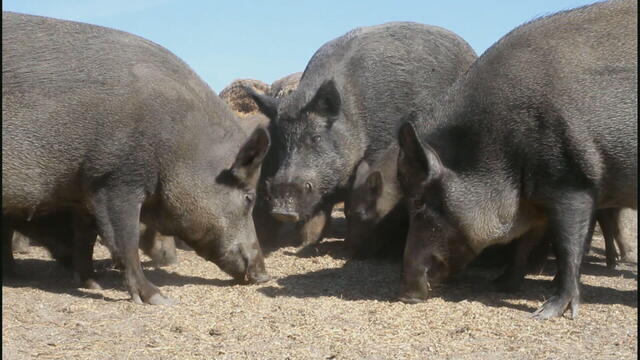
On the U.S.-Canada border, there's an epic battle between man and beast going on -- and it seems the beasts are winning. Large wild hogs are wreaking havoc on ranches and farmland on both sides of the border. Adam Yamaguchi reports.
According to the Department of Agriculture, more than 40% of the country's farm workers are undocumented immigrants. Camilo Montoya-Galvez traveled to a dairy farm in Wisconsin to report on the tension between cheap labor and the Trump administration's immigration crackdown.
One expert says these so-called "super pigs" — wild boars that were deliberately bred with domestic pigs – are an "ecological trainwreck."
The U.S. border with Canada is under new scrutiny, with both countries focused on increased migration as well as drug and weapons smuggling. But another concern is rising, especially among farmers and ranchers: so-called "super pigs." Adam Yamaguchi explains.
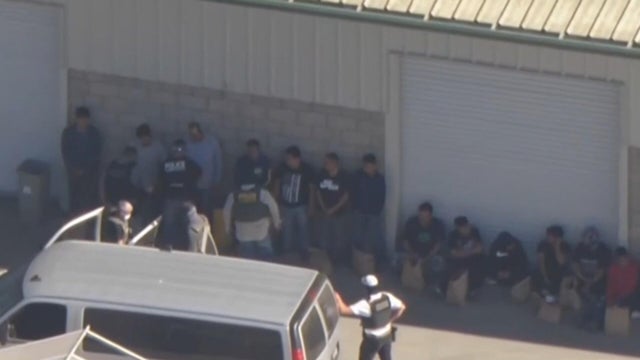
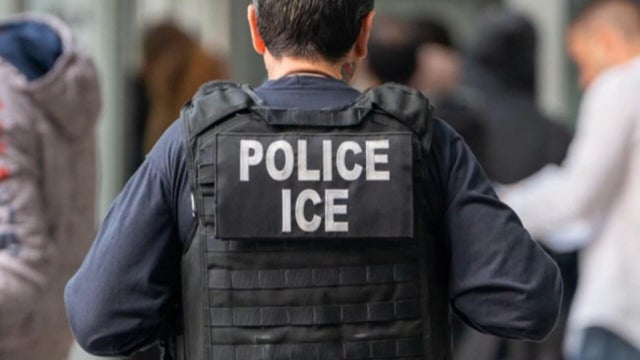
President Trump spent much of his campaign vowing "mass deportations" of undocumented immigrants, and the first weeks of his term have been marked by public displays of immigration enforcement. It could pose a blow to multiple parts of the country's food supply chain, including the dairy industry, where more than half of the national workforce is undocumented.
Among the first Americans to feel the effects of the last trade war with China were farmers. While China's latest round of retaliatory actions does not target agriculture, some are preparing for the worst. Kelly O'Grady explains.
About 42% of U.S. farm workers are undocumented, and Trump's plan to deport millions of migrants could uproot the industry's workforce.
Bird flu, climate change and rising costs are just a few of the issues threatening the U.S. farming industry. Now, President Trump's mass deportation plan could add to the challenges. Nancy Chen spoke with farmers who are voicing their concerns.
President Trump's immigration plans to curb illegal crossings and increase border security could negatively impact farmers in the U.S. already navigating turbulent changes in the industry. CBS News' Nancy Chen reports.
Before temperatures dip to single digits, the cranberry bogs at the Lee Brothers Cranberry Farm will have to be flooded to keep the fragile buds from drying out.