Robot reveals more on what's eating away at Antarctica's "Doomsday Glacier"
A small, pencil-shaped robot gave scientists new insights about the Thwaites ice shelf and why it's melting so quickly.
Watch CBS News
A small, pencil-shaped robot gave scientists new insights about the Thwaites ice shelf and why it's melting so quickly.
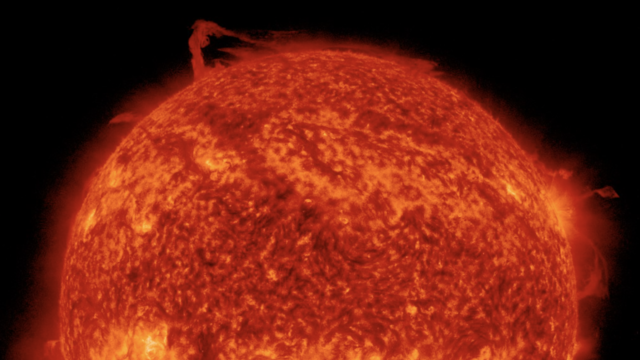
One space weather physicist said that the polar wind that swept up the plasma was moving "insanely fast" – at about 60 miles a second.

Telescopes in Hawaii and Chile have discovered a dozen new moons around Jupiter, bringing the total to 92 moons -- more than any planet in our solar system.

Some 3,450 buildings have collapsed, according to the Turkish government, in the quakes that have killed thousands.

The new moons were discovered using telescopes in Hawaii and Chile, and their orbits were confirmed with follow-up observations.

An outbreak of stony coral tissue loss disease threatens to destroy 20 of the 45 species in the world's third-largest coral reef.

The world's third-largest coral reef just off the Florida Keys was once a vibrant habitat for millions of plants and animals. But an outbreak of stony coral tissue loss disease is threatening to destroy it. Scientists are trying to regrow the coral in a lab hundreds of miles away to save it. Manuel Bojorquez takes a look.

The cloned animals are capable of producing 18 tons of milk a year, or 50% more than a typical American cow.

As the Western megadrought continues, investors have been buying up land to secure the water rights that go along with them. Ben Tracy takes a look.

Investment firms are showing a growing interest in an increasingly scarce natural resource in the American West. For some, that's concerning.