NASA's Kepler Mission Finds New World In Habitable Zone 1,400 Light Years Away
NASA's Kepler Mission may have found our cousin with the confirmation of the first Earth-size planet in the "habitable zone" around a sun-like star.
Watch CBS News
NASA's Kepler Mission may have found our cousin with the confirmation of the first Earth-size planet in the "habitable zone" around a sun-like star.

In a voyage a decade in the making, NASA's New Horizons spacecraft swept by Pluto Tuesday. As cheers went up inside NASA's Mission Control, hundreds of people partying at Chabot Space and Science Center were cheering as well.
We've made it to Pluto by NASA's calculations, the last stop on a planetary tour of the solar system a half-century in the making.

As NASA's unmanned New Horizons spacecraft closes in on a nine-year journey to Pluto, the first clear picture of the icy dwarf planet with its largest moon has made it back to earth.

NASA's New Horizon remains on track for it's historic flyby of Pluto next week after recovering from a subtle timing glitch that knocked the probe out of contact with Earth on Saturday.

A photo of the International Space Station passing in front of a dazzling full moon could put Lucas Films' special effects to shame.
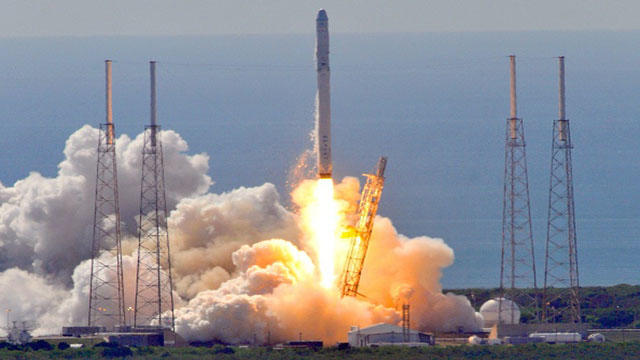
An unmanned SpaceX rocket carrying supplies and a first-of-its-kind docking port to the International Space Station broke apart Sunday shortly after liftoff.

SpaceX stands ready to launch a much-needed load of supplies to the International Space Station this weekend on the heels of a failed supply run by Russia.

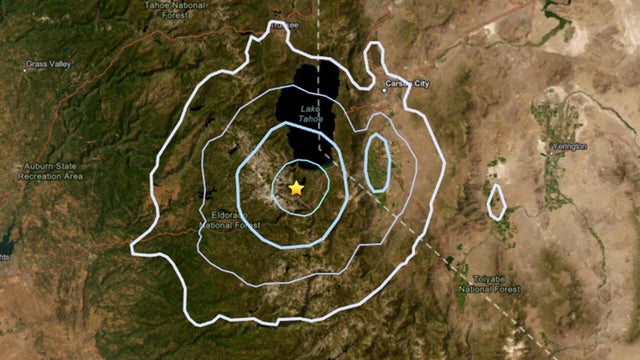
No buildings have been damaged, but the mountain town of Markleeville remained on standby Wednesday for possible evacuations, according to the Bureau of Land Management. Several campgrounds have been evacuated, and two highways have been closed.

The moon can appear almost haunting when just a sliver clings above us here on Earth. But if we could watch the night sky above Saturn we would often be able to see several of the semi-dark orbs reminding us of our tiny place in the solar system.

A sunspot erupted this afternoon creating a powerful solar flare bathing earth in electromagnetic radiation, and causing temporary disruptions in some radio communication, according to SpaceWeather.com, while a solar storm continues to rage.

The data was presented this week as part of an international public-private partnership called Climate Services for Resilient Development.

A three-person crew from the International Space Station landed safely in the steppes of Kazakhstan on Thursday after a longer-than-expected orbital stint.

NASA scientists are still baffled over exactly what's causing Ceres, the largest body in the main asteroid belt between Mars and Jupiter, to radiate mysterious bright spots from its cratered surface.

NASA researchers have found deposits of glass on Mars that may have preserved evidence about past life on the red planet.

Two-and-a-half months after cosmonaut Alexey Leonov became the first human to walk in space, NASA astronaut Ed White floated out of his cramped Gemini 4 capsule 50 years ago Wednesday to become the first free-flying American in orbit.

This is the fourth X-37B mission for the military research program, which is shrouded in secrecy.

The dwarf planet Pluto may be more than 3.6 billion miles away from the sun, but it's certainly not alone.

Planes could soon be ditching the jet fuel for electricity.

In a meta moment science nerds can only dream of, astronauts at the International Space Station watched Stars Wars Monday to celebrate May The Fourth.

Sound from space captured by microphones aboard a NASA student balloon experiment has scientists baffled.

The tables have turned on some techies in Mountain View. Well-paid tech workers who pull in six-figure incomes are being forced to pack up and can't find a place to stay.
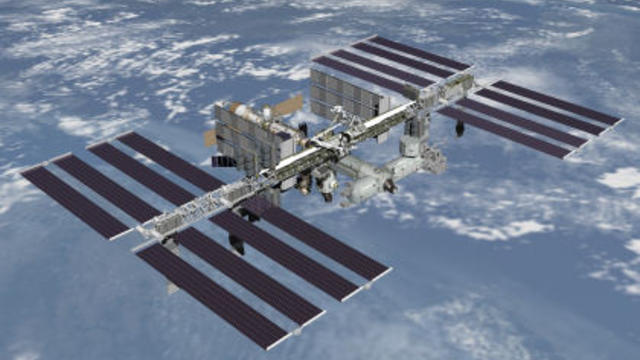
A Russian drone space freighter is out of control and out of communication after launching toward the International Space Station with 6,000 pounds of fuel, oxygen, water, and other supplies.

Earth Day is just around the corner, so we rounded up some of the most beautiful photos and images of our planet taken from space.

During a panel discussion discussing water sources in the universe, NASA Chief Scientist Ellen Stofan stated that she believes humans could come in contact with the first iterations of alien life by the year 2025.