Live Updates: U.S., Iran prepare for talks as shaky ceasefire holds, Strait of Hormuz traffic remains low
What to know about the Iran war today:
- U.S. and Iranian negotiators are expected in the Pakistani capital of Islamabad for high-stakes negotiations Saturday amid a fragile two-week truce. Key points of contention include Tehran's control of the Strait of Hormuz; Israel's ongoing conflict with Iranian proxy Hezbollah in Lebanon; and Iran's stockpile of enriched uranium.
- President Trump warned Iran to comply with the ceasefire terms or face large-scale U.S. attacks. Vice President JD Vance and senior envoys Steve Witkoff and Jared Kushner will attend the peace talks in Islamabad.
- Israeli and Lebanese representatives are expected to meet in Washington next week in a bid to deescalate cross-border strikes between Israel and Hezbollah, a State Department official told CBS News. But Israel and Hezbollah showed no signs of decreasing their attacks Friday.
Iowa farmer says cost of filling up has more than doubled since December
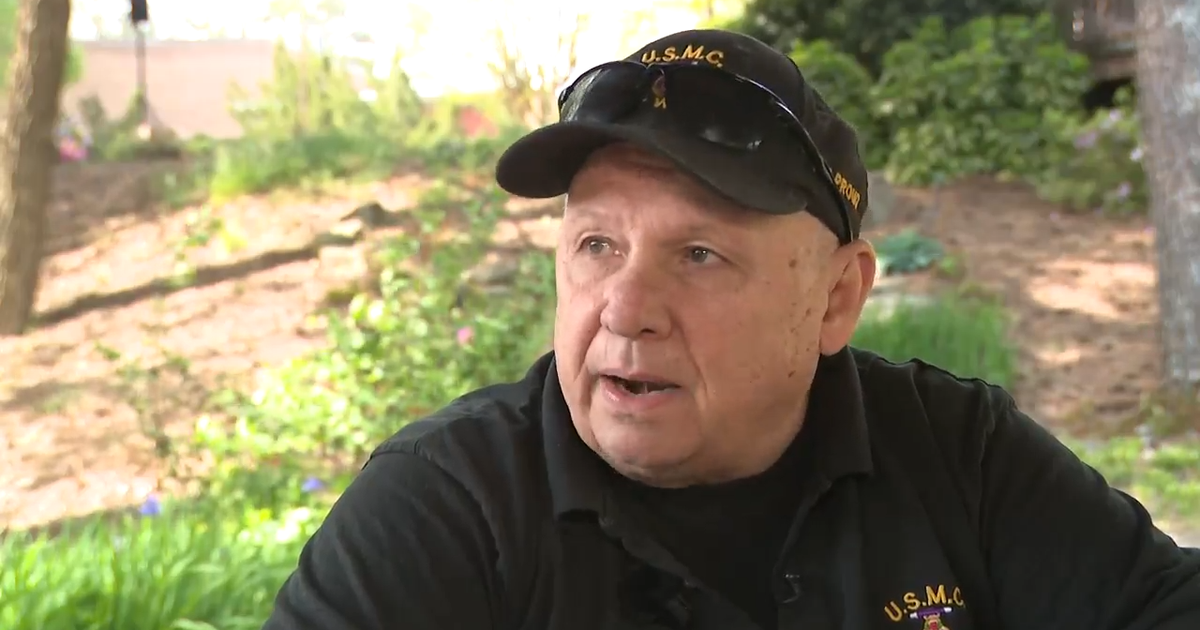
An Iowa farmer told CBS News the cost of filling up has more than doubled since the end of last year.
Joe Dierickx told CBS News' Lana Zak the price of farm diesel, which is its own category of fuel, has risen from $1.89 a gallon in December to $4.17.
"When I started in the '80s, that was probably the ultimate challenge of profitability, and it's kind of slipping back in to that," Dierickx told Zak. "We're not to the '80s style of unprofitability yet, but we're getting close. We're knocking on the door."
Dierickx has a 10,000-gallon tank for his tractors. Filling the tank went from around $18,000 to about $41,000.
Watch more from the interview here.
Israeli army says over 180 Hezbollah militants killed in strikes
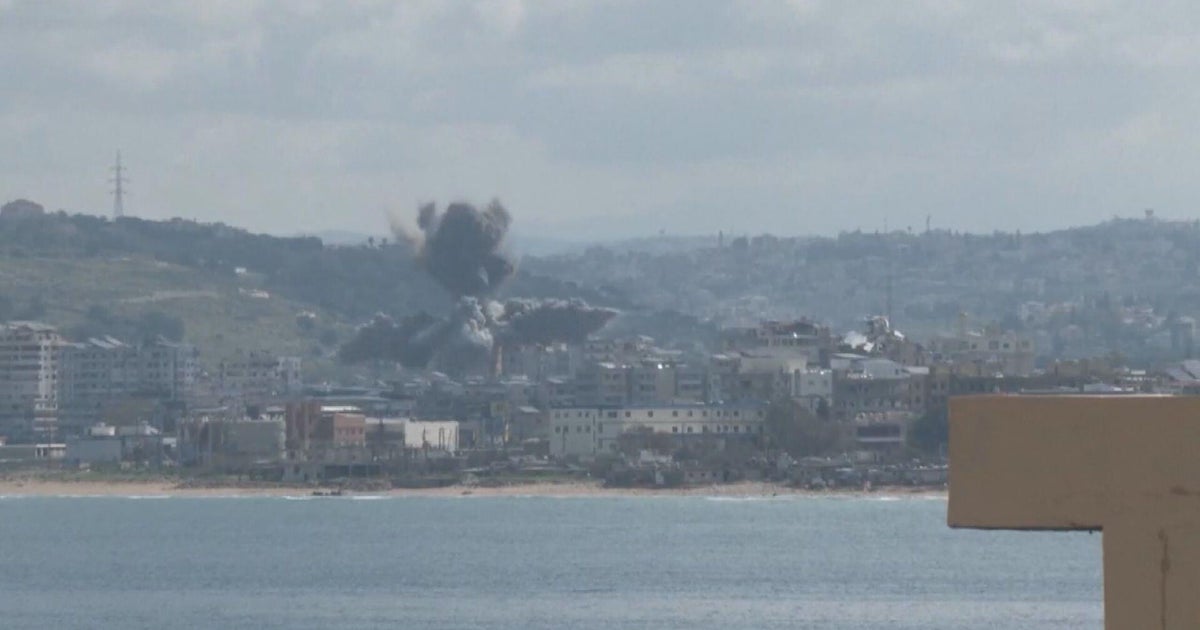
The Israeli military said Friday that airstrikes it carried out in Lebanon two days earlier killed more than 180 Hezbollah militants.
"Following an initial intelligence assessment ... it can be determined that the IDF eliminated more than 180 militants from the Hezbollah terrorist organization. The count is still ongoing," the military said.
Meanwhile, Lebanon's health ministry said Friday that the death toll from Israeli strikes across the country two days earlier was 357, up from a previous count of 303, while it said 1,223 more people were wounded.
Pope says "God does not bless any conflict"
Pope Leo XIV amplified his condemnation of the war with Iran on Friday, saying that "God does not bless any conflict" and certainly doesn't side with those who drop bombs.
Leo spoke during a gathering of top bishops of the Chaldean Catholic Church in Iraq, an Eastern Rite Catholic church whose clerics are in Rome to elect a new patriarch.
Leo said they were signs of hope "in a world marked by senseless and inhuman violence," especially in the lands of early Christianity that have been "desecrated by the blasphemy of war and the brutality of business, with no regard for people's lives."
He told them that no cause can justify the spilling of innocent blood, and he urged them "to proclaim clearly that God does not bless any conflict; to cry out to the world that whoever is a disciple of Christ, the Prince of Peace, never stands on the side of those who yesterday wielded the sword and today drop bombs."
Trump says "only reason" Iranians are "alive today is to negotiate"
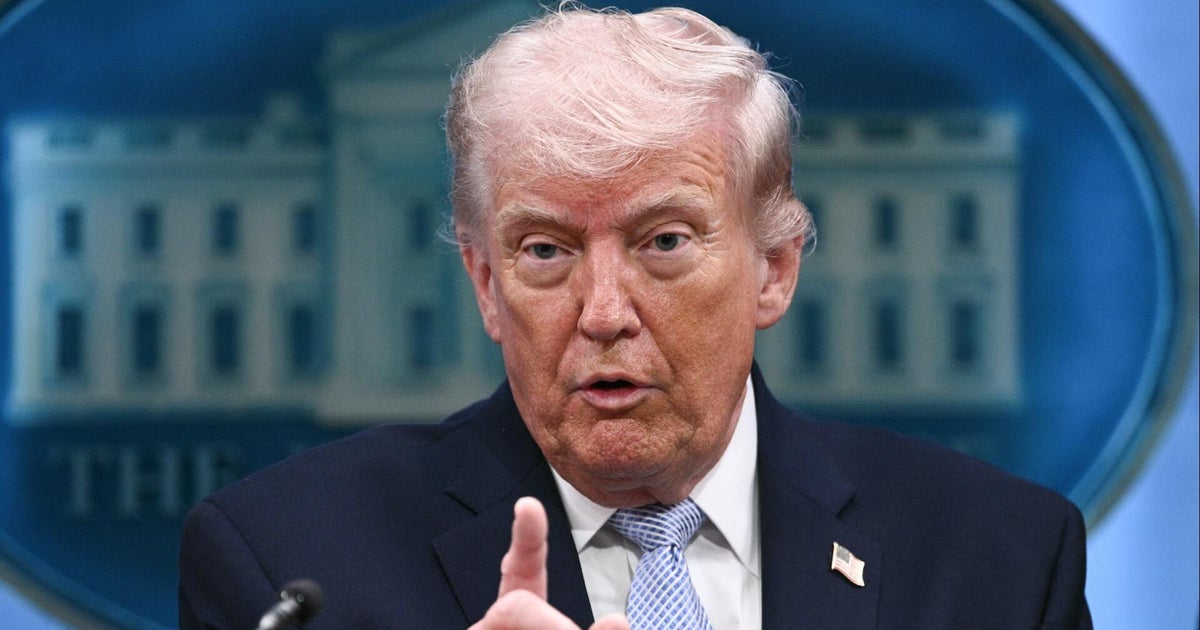
President Trump continued to criticize the Iranian regime on Truth Social as Vice President JD Vance was heading to Pakistan to lead U.S. negotiations with Iran.
"The Iranians don't seem to realize they have no cards, other than a short term extortion of the World by using International Waterways," the president wrote on Truth Social, referring to the Strait of Hormuz. "The only reason they are alive today is to negotiate!"
Mr. Trump has continued to threaten to use military force if Iran doesn't reach a peace agreement. He told the New York Post that U.S. Navy ships will be restocked with ammunition in case the talks don't go well.
The president also posted that the Iranians are better at public relations "than they are at fighting."
Stocks waver and oil prices hold steady ahead of talks
Stocks wavered on Wall Street and oil prices held steady amid the shaky ceasefire agreement between the U.S. and Iran.
The S&P 500 fell 0.1% in afternoon trading Friday, but is still heading for a second consecutive winning week. The Dow Jones Industrial Average fell 289 points, or 0.6%, as of 1:13 p.m. Eastern. The Nasdaq composite rose 0.2%.
Major indexes have been gaining ground over the last two weeks amid optimism that the war with Iran could be heading toward a resolution. The S&P 500 has erased most of its losses from March and is just 2.3% short of its all-time high set in January. The market is still prone to big swings on developments around the war.
Brent crude oil, the international standard, has gone from roughly $70 per barrel before the war in late February to more than $119 at times. Brent rose 1.1% to $96.98 Friday.
CBS/AP
Harris calls Iran conflict a "war of choice"
Former Vice President Kamala Harris called the Iran conflict a "war of choice" while speaking at an event in New York on Friday.
Harris, who was the Democratic nominee for president in the 2024 election, told the Rev. Al Sharpton at the National Action Network's convention in Manhattan that she was "unequivocally opposed" to the war.
"So he enters into this war, a war of choice," Harris said. "Remember, the man said, the man said he got rid of their nuclear arsenal. Obliterated it, he said. You know how he likes to use those kind of words. Obliterated it, which is not an ambiguous term. That means you took it out. Well, evidently he didn't do that."
Trump says U.S. warships are being reloaded with the "best ammunition" in case talks fail
With Vice President JD Vance en route to Islamabad for peace talks with Iran, President Trump told the New York Post on Friday morning that U.S. warships are being reloaded with "the best ammunition" to continue strikes if negotiations fail.
"We have a reset going," the president told the outlet. "We're loading up the ships with the best ammunition, the best weapons ever made — even better than what we did previously and we blew them apart."
"We're loading up the ships with the best weapons ever made, even at a higher level than we use to do a complete decimation," he added. "And if we don't have a deal, we will be using them, and we will be using them very effectively."
Asked if he thinks the talks will succeed, the president responded, "We're going to find out in about 24 hours. We're going to know soon."
A Strait of Hormuz toll would pose major economic and geopolitical risks, experts say
Reports that Iran is planning to charge ships a toll to traverse the Strait of Hormuz are raising concerns about the potential economic impact on oil and fuel prices.
For now, Iran has not officially implemented a toll for the strait, which would be unprecedented. But Tehran indicated this week that, under a long-term peace deal to reopen the strait, it would charge vessels a fee to guarantee safe passage, Reuters reported.
Analysts with investment adviser Capital Economics said in a report that an Iranian toll on ship traffic would give the country "de facto control over a critical artery for energy trade and introduce a new source of geopolitical risk to the world economy."
Iran's parliamentary speaker says Lebanon ceasefire must be achieved before Islamabad negotiations
Iran's Parliamentary Speaker Mohammad Bagher Ghalibaf said Friday that two conditions must be met for negotiations to proceed in Islamabad.
"Two of the measures mutually agreed upon between the parties have yet to be implemented: a ceasefire in Lebanon and the release of Iran's blocked assets prior to the commencement of negotiations," Ghalibaf said in a social media post. "These two matters must be fulfilled before negotiations begin."
Trump lauds Palantir's warfighting capabilities
Posting to Truth Social on Friday morning, President Trump praised Palantir Technologies' warfighting capabilities, suggesting the company's technology was involved in the war with Iran.
"Palantir Technologies (PLTR) has proven to have great war fighting capabilities and equipment. Just ask our enemies!!!" he wrote.
The president didn't specify which warfighting equipment he was praising. Last month, Iran threatened to target a number of U.S. tech companies, including Miami-based Palantir.
French energy giant says Saudi refinery offline after strikes
French energy giant TotalEnergies said Friday that it had shut down a major refinery on the eastern Gulf coast of Saudi Arabia after it was damaged during the war.
The Saudi energy ministry had announced Thursday "multiple attacks" recently on its oil and gas sites, including the SATORP refinery, a joint venture of TotalEnergies and the Saudi state-owned Aramco group.
No details on production impacts, nor the type of attack, were disclosed.
TotalEnergies cited only "incidents that occurred during the night of April 7 to 8, causing damage to one of the refinery's two processing trains."
No casualties were reported, and Total said both units were shut down as a precaution while assessing the damage.
White House says ships are proceeding through Strait of Hormuz at about 10% of normal pace
Kevin Hassett, director of the White House's National Economic Council, said futures markets were anticipating a "rapid reduction" in energy prices once the Strait of Hormuz operates normally. Right now, the strait is only operating at about 10% of normal pace, he said.
"There are boats going through right now, but at about 10% of the normal pace," he told Fox Business on Friday morning.
The White House is trying to assuage markets and consumers after the Consumer Price Index report released Friday found that inflation soared last month.
"As the administration ensures the free flow of energy through the Strait of Hormuz, the American economy remains on a solid trajectory thanks to the Administration's robust supply-side agenda of tax cuts, deregulation, and energy abundance," White House senior deputy press secretary Kush Desai wrote on social media Friday.
Ahead of ceasefire talks, security in Islamabad is tight
Police checkpoints, roadblocks and a heavy military presence have created a several-mile-wide security ring around the luxury hotel where top U.S. and Iranian officials are expected to meet on Saturday.
Few in Islamabad can remember a time when the Pakistani capital has been at the center of such high-stakes diplomacy.
And Pakistan is leaning into that moment, trying to show it can mediate negotiations of real global consequence, with digital billboards across the city branding these negotiations as "The Islamabad Talks."
U.S. inflation rate rises, triggered by global energy shock
A global energy shock triggered by the Iran war sent U.S. inflation soaring in March, with the Consumer Price Index rising at a 3.3% annual rate.
Economists had predicted inflation would jump nearly an entire percentage point from 2.4% in February to 3.3% in March on an annual basis, according to the average of six separate forecasts reviewed by CBS News. The CPI, a basket of goods and services typically bought by consumers, tracks changes in prices over time.
Inflation ran hot in March as a result of higher energy costs tied to the Iran war, which has constrained the flow of crude oil through the Strait of Hormuz, a critical chokepoint for global oil supply.
Vance leaves for talks in Pakistan, warns Iran not to "play us"
Vice President JD Vance left Friday morning for Iran talks in Islamabad. The vice president said President Trump gave his negotiating team "some pretty clear guidelines" heading into the talks.
"We're looking forward to the negotiation," Vance told reporters before leaving Washington. "I think it's going to be positive. We'll of course see, as the president of the United States said, if the Iranians are willing to negotiate in good faith. We're certainly willing to extend the open hand."
"If they're going to try to play us, then they're going to find that the negotiating team is not that receptive," he added. "So, we're going to try to have a positive negotiation."
The vice president said he'll take questions later in the trip.
U.K. prime minister says he's "fed up" with Putin and Trump affecting energy prices
U.K. Prime Minister Keir Starmer gave an update on his view of the ceasefire and the effects of the war in Iran in a wide-ranging interview with U.K. broadcaster ITN. Starmer was speaking from Bahrain during a trip to visit Gulf allies where he met with Saudi Crown Prince Mohammed bin Salman and United Arab Emirates President Sheikh Mohamed bin Zayed Al Nahyan.
On the reopening of the Strait of Hormuz as part of the ceasefire agreement, Starmer said, "There will be an element of wait and see. So some of the discussions in the last couple of days have been: Let's see what happens in two, three, four days. That'll begin to be the test. So it's not what people say on Day One or Day Two."
One lesson Starmer said his government had learned from the conflict in Iran is that the U.K. has to have energy independence.
"I'm fed up with the fact that families across the country see their bills go up and down on energy, businesses' bills go up and down on energy, because of the actions of Putin or Trump across the world," he said.
Starmer was asked about language used by President Trump that many found shocking, including his threat that a "whole civilization will die."
"I would never use those words, language like that, myself," Starmer said.
South Korea says it's sending special envoy to Iran, with focus on oil shipments
South Korea said the country's Foreign Minister Cho Hyun spoke over the phone with Iranian Foreign Minister Seyyed Abbas Araghchi on Thursday and emphasized "the need for the prompt and safe resumption of free navigation for all vessels, including Korean ships, in the Strait of Hormuz, taking the ceasefire as a momentum."
Cho said South Korea would send a special envoy to Iran to further discuss the situation in the Middle East.
South Korea routes around 70% of its crude oil imports through the Strait of Hormuz, according to the Center for Strategic and International Studies think tank.
As of April 2, 26 South Korean vessels remained stranded in the Persian Gulf, and South Korea is suffering some of the worst effects of the Iran conflict to its energy sector and economy of any non-combatant country, the CSIS said.
Strait of Hormuz still seeing significantly lower traffic despite ceasefire
Only about a dozen ships passed through the Strait of Hormuz in the first two days of the ceasefire agreement between the United States and Iran, far below the normal traffic level before the war, marine transit data shows.
As part of the agreement, which President Trump announced late Tuesday, Iran would allow vessels to cross through the channel, which is a crucial waterway for shipping about 20% of the world's oil supply.
On Wednesday and Thursday, at least 12 ships passed through the waterway, data from ship tracking company, Marine Traffic, shows. But that's just a fraction of the 129 vessels that transited the strait on an average day from Feb. 1 to Feb. 27, according to data from the U.N.'s Trade and Development organization.
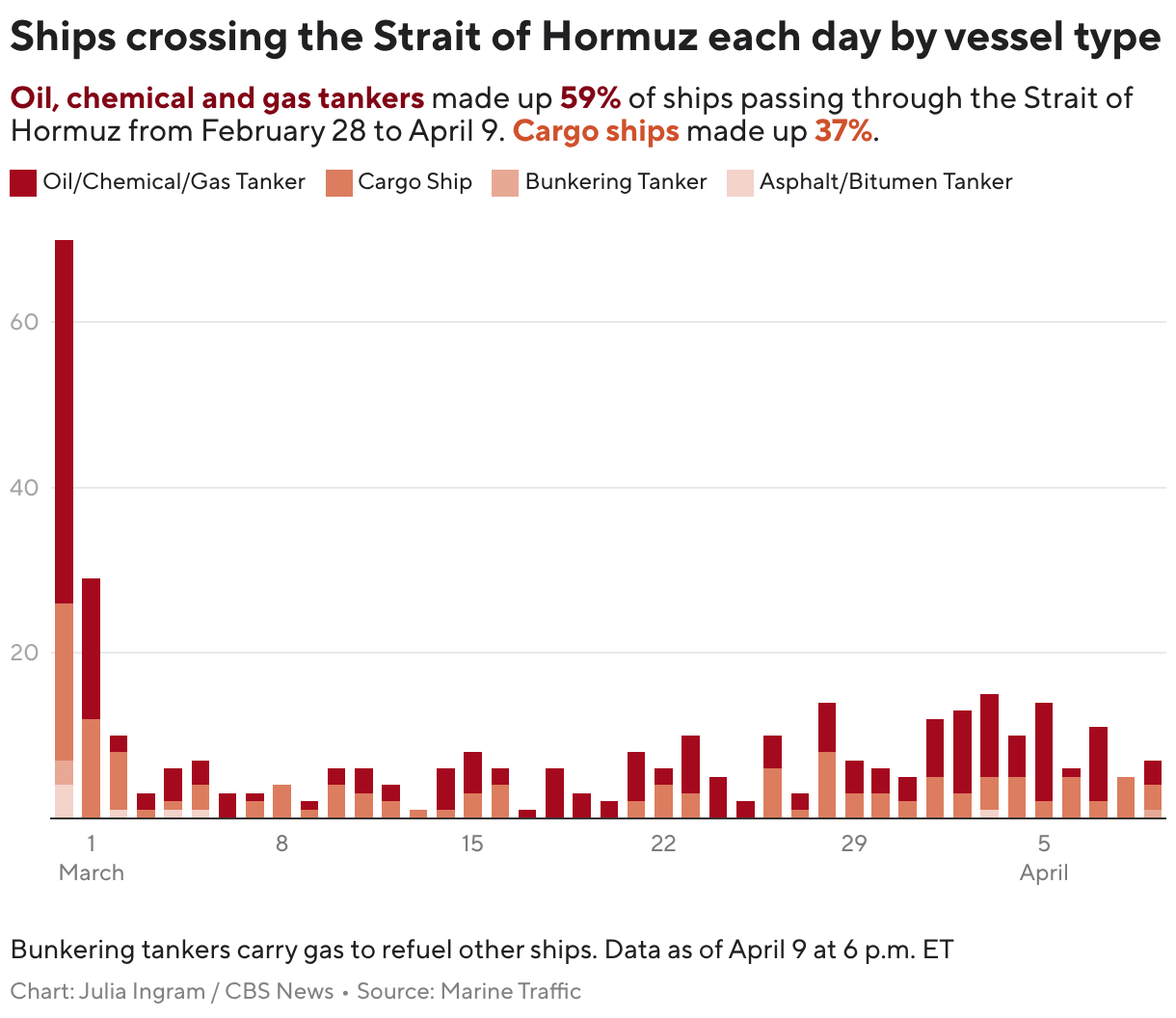
Only three of the ships that passed through since the ceasefire began were oil or chemical tankers, all passing on Thursday. All three are under U.S. sanctions for previously shipping Iranian oil. The rest were cargo ships.
Iran denies violating ceasefire in any way
Iran's powerful Islamic Revolutionary Guard Corps said in a statement Friday that Iran has "absolutely not carried out any launches toward any country during the ceasefire hours up to this moment."
"In recent hours," the statement continued, "various news agencies have published reports about drone and missile attacks on facilities in some countries along the southern shores of the Persian Gulf."
The IRGC asserted that "if these reports published by the media are true, they are undoubtedly the work of the Zionist enemy (Israel) or the United States."
The corps said if Iran does strike any targets, it would "openly and courageously announce it in an official statement. Any action not included in official statements of the Islamic Republic of Iran is unrelated to us."
Kuwait says Iran hit it with drone attacks despite ceasefire
Kuwait accused Iran and its proxies of launching drone attacks targeting it on Thursday despite the ceasefire, as Saudi Arabia said recent attacks damaged a key pipeline in the kingdom. The accusation from Kuwait's Foreign Ministry put new pressure on the ceasefire ahead of planned talks between the U.S. and Iran.
Saudi Arabia's state-run Saudi Press Agency, quoting an anonymous official, said its crucial East-West pipeline, which carries oil out to the Red Sea and avoids the Strait of Hormuz, was damaged in the recent attacks.
Iran's paramilitary Revolutionary Guard denied launching attacks on Persian Gulf states after Kuwait's announcement.
Such an assault would mirror the continuing pressure campaign Tehran is waging on the U.S. and its allies, particularly amid efforts to secure a ceasefire between Israel and Hezbollah.
Early Friday, Iran denied launching any strikes at all since the truce began.
-CBS/AP
Hezbollah announces more strikes on Israel
Hezbollah says it has carried out a total of 19 strikes on Israeli targets so far on Friday.
The group said it launched 72 strikes on Israel on Thursday, claiming it targeted military positions, settlements and border areas as deep as 20 miles inside Israel
Israel says it's still fighting in Lebanon with "great intensity"
The chief of the General Staff of the Israel Defense Forces, Eyal Zamir, toured southern Lebanon Thursday and approved plans for the continuation of Israeli operations there, according to an IDF statement.
"The IDF is at war. We continue to fight against the Hezbollah terrorist organization with great intensity," Zamir said.
"The primary arena of our fighting is here in Lebanon. We continue to deepen the ground operations and continue to strike Hezbollah. This is a very powerful operation; our troops are operating along the front lines and at depth."
Zamir said the assault by Israel and the U.S. against Iran had "cut off" Hezbollah "from its strategic artery in Iran."
"The Lebanese government understands more than ever the magnitude of the problem posed by the presence of a radical, fanatical terrorist organization on its soil," Zamir said.
He said the IDF's mission "is clear — to "continue deepening the damage and to continue weakening Hezbollah."
Read more about how Lebanon became a flashpoint in the war here.
Ukraine units downed Iran drones in "several" Mideast states, Zelenskyy says
Ukrainian military personnel shot down Iranian-designed Shahed drones in multiple Middle Eastern countries during the Iran war, President Volodymyr Zelenskyy said, describing the operations as part of a broader effort to help partners counter the same weapons used by Russia in Ukraine.
Zelenskyy made his first public acknowledgment of the operations Wednesday in remarks to reporters that were embargoed until Friday. He said Ukrainian forces took part in active operations abroad using domestically produced interceptor drones proven in countering Iranian-designed Shahed drones used by Russia in Ukraine.
"This was not about a training mission or exercises, but about support in building a modern air defense system that can actually work," Zelenskyy said.
Ukraine took part in the defensive operations before the tentative ceasefire in the Middle East was reached among Iran, the United States and Israel this week.
Zelenskyy didn't identify the countries involved but said Ukrainian personnel operated across several nations, helping strengthen their air defense systems. He previously said that 228 Ukrainian experts were deployed in the region.
In exchange, Ukraine is receiving weapons to protect its energy infrastructure, along with oil, diesel fuel and, in some cases, financial arrangements, he said.
Zelenskyy said the agreements would bolster Ukraine's energy stability and described the partnerships as something that would "be marketed" as Kyiv seeks to formalize and expand its defense export role.
"We are helping strengthen their security in exchange for contributions to our country's resilience," he said. "This is far more than simply receiving money."
Pakistan and France express concern over "serious ceasefire violations" in Lebanon, Pakistan says
The foreign ministers of Pakistan and France held a phone call Friday morning in which they discussed the "continued efforts toward a diplomatic pathway for lasting peace and stability in the region," according to a Pakistani readout of the call.
Both French Foreign Minister Jean-Noël Barrot and Pakistani Foreign Minister Mohammad Ishaq Dar, who is also the country's deputy prime minister, "expressed concern over serious ceasefire violations made in Lebanon and underscored the importance of full implementation and respect for the ceasefire," Pakistan's foreign ministry said.