What are the differences between hurricanes and nor'easters? Hey Ray!

We're still well within what is considered "hurricane season", so when a storm pushes from the Atlantic Ocean onshore, we get questions.
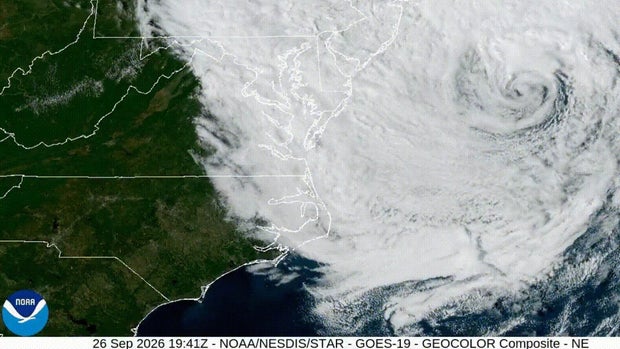
Lynda asked: "Hey Ray, what's the difference between a hurricane and a Nor'easter, because aren't we still in hurricane season?"
This is a great question because they're both intense areas of low pressure, but what makes them work is very different.
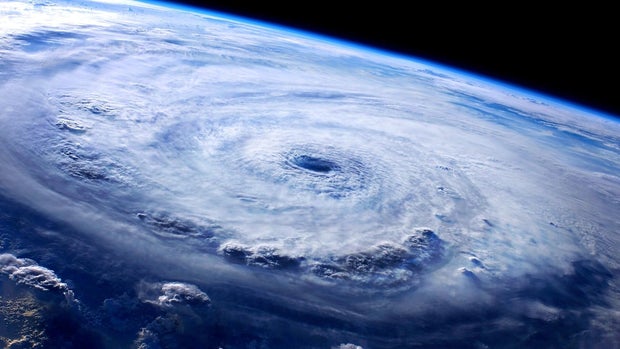
Let's start by defining the two. A hurricane is a tropical cyclone in the Atlantic, Caribbean Sea, Gulf of Mexico, or eastern Pacific, in which the maximum one-minute sustained surface wind is 74 mph or higher.
On the other hand, a Nor'easter is a strong low-pressure system that affects the Mid-Atlantic and New England States. It can form over land or over the coastal waters, causing strong wind gusts that can exceed hurricane force in intensity. A nor'easter gets its name from the continuously strong northeasterly winds blowing in from the ocean ahead of the storm and over the coastal areas.
These are both big storms; both can have destructive winds, and both can share the Atlantic Ocean, but they quickly stop sharing similarities after that.
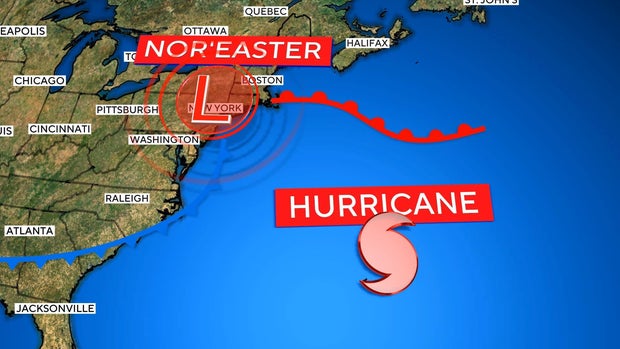
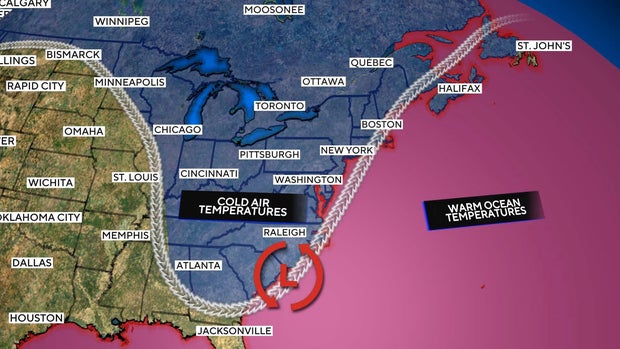
The key difference between the two is that a nor'easter has fronts and a hurricane does not. Hurricanes are what we call "warm-cored". They are fueled by warm ocean water temperatures.
Nor'easters are "cold-cored" and fueled by temperature differences created by frontal boundaries.
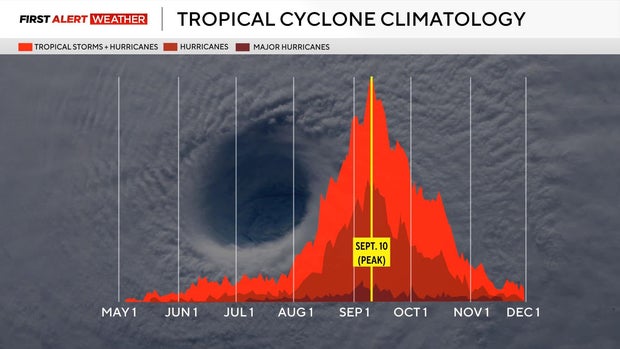
Hurricane season runs June through November and peaks in September, since the ocean temperatures peak in August and September.
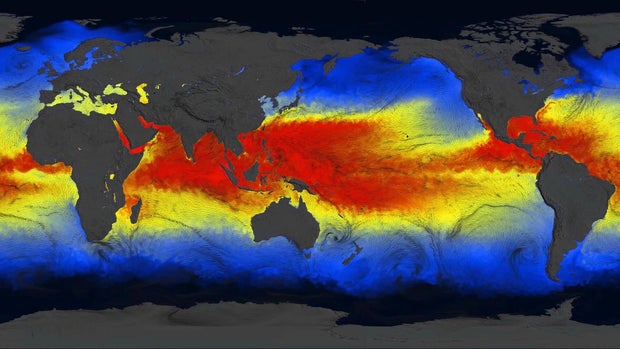
Nor'easters are more common between October and April. This is the time of year when temperature changes over short distances, something we call a gradient, are most frequent, and the polar jet stream pushes farther south in the winter, helping create pressure drops.
Another similarity is that both hurricanes and nor'easters can happen outside of their seasons if the ingredients are just right!


