Why do we only see one side of the moon? | Hey Ray

I love it when people look up and wonder about what is in the sky above them, especially when something they see time and time again gets them thinking.
Jacqueline made one of those observations and asked: "If Earth is rotating, isn't the Moon also rotating? If so, why don't we see the 'back side' of the moon?"
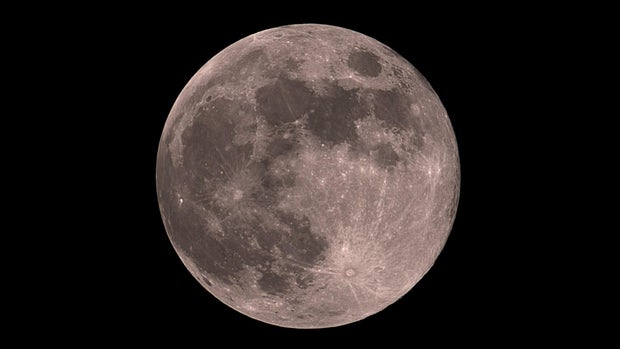
She's right. We only see one side of the Moon.
The Moon is mostly spherical like Earth. It is not perfectly round, and neither is our planet. Still, why doesn't the Moon seem to rotate like Earth?
We only see one side of the Moon because it is "tidally locked" to Earth. The specific term is "synchronous tidal locking". This means the Moon rotates on its axis at the same speed it orbits our planet, which is once every 27.3 days.
This tidal locking, simply put by the University of Hawaii at Manoa, is the result of the gravitational effect of the Earth on the Moon. This results in the same hemisphere of the Moon constantly facing Earth, and keeps the "far side" of the Moon facing away from us.
This synchronous tidal locking is not a special relationship between the Earth and Moon, though.
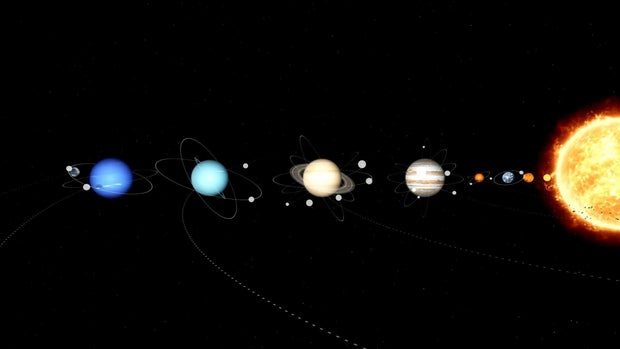
NASA says it's actually quite common in our solar system. All the solar system's large moons are tidally locked with their planets. Beyond our solar system, there is evidence that many planets are tidally locked with their stars as well.
Even though it is tidally locked to Earth, you can see more than half of the Moon!
This is because of libration. That is an oscillation of the Moon, causing parts near the edge of the disc that are often not visible from the Earth to sometimes come into view. The National Space Centre in the UK says we see around 59% of the Moon's surface from the Earth because of the slight tilt of the Moon's rotation, and the fact that the Earth rotates.
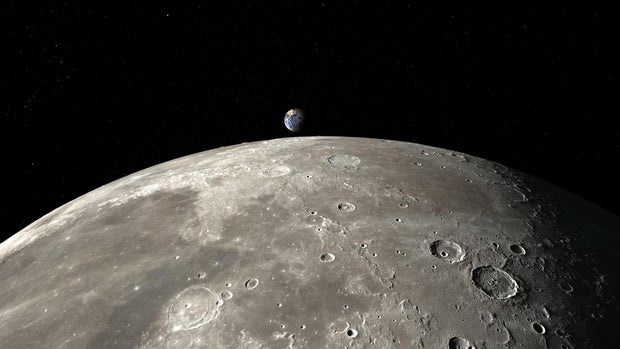
These effects result in the Moon being viewed from slightly different angles.
Some people talk about "the dark side of the Moon", but the other side of the Moon does get sunlight, too; that is why I call it the "far side of the Moon".


