77 years later, a look back at the 1948 Donora smog disaster
From Oct. 26-31, 1948, a blanket of smog engulfed Donora, Pennsylvania.
According to an article by Jacobs, Burgess, and Abbott in the American Journal of Public Health, activities such as the Donora Dragons High School football game and the town's annual Halloween parade went on as normal despite the smog that had moved into the region.
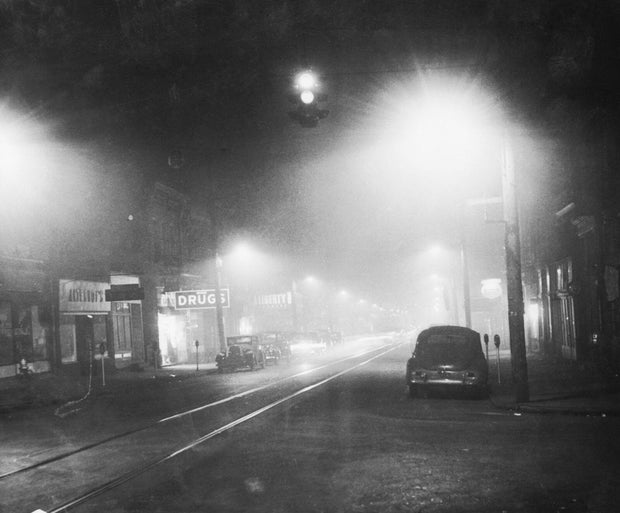
The smog gradually worsened after arriving, and doctors warned those susceptible to health issues from the smog to leave. But it was too late as visibility made for dangerous travel conditions. Twenty people died in Donora and nearby Webster, with an additional 43% of the population affected by long-term health issues.
The main generating factor of the smog was pollution emitted by the American Steel and Wire plant and Donora Zinc works, which "regularly emitted billowing plumes of smoke." This smoke consisted of particulate matter and hazardous chemicals such as hydrogen fluoride, carbon monoxide, nitrogen dioxide, multiple sulfur compounds and heavy metals.
The weather conditions that resulted in the smog involved a temperature inversion and very weak winds in the lowest levels of the atmosphere, which led to poor atmospheric mixing. Before the 26th, a cold front moved through western Pennsylvania and the Upper Ohio Valley.
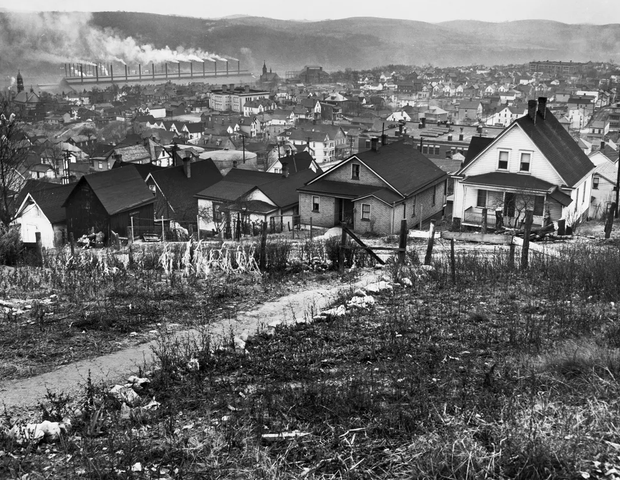
A high-pressure system moved in following the cold front passage, leading to calm winds, especially in the lowest levels of the atmosphere. An atmospheric sounding generated by reanalysis data on the morning of Oct. 28, 1948, near Donora shows temperatures near ground level around 40 degrees Farhenhte, but quickly rising to 57 degrees Farhenhte around 1100 feet above ground.
That is an impressive inversion. Typically, inversions improve or mix out during the afternoon hours, but reanalysis data showed some of the inversion lingering through daytime as well during the event. The cool, dense air near the ground, accompanied by light winds, held the smog in place for days until the large-scale weather pattern changed around Oct 31 and Nov. 1.
The 1948 Donora smog disaster was the catalyst for action at the state and federal levels to combat the issue of air pollution. In 1949, Pennsylvania established the Division of Air Pollution to investigate the event. In 1965, the Clean Streams Law was enacted, and statewide clean air regulations came into effect in 1966.
In 1970, the Environmental Protection Agency and the Clean Air Act were enacted by Congress.