Snow, sleet, rain or freezing rain? Breaking down four types of precipitation

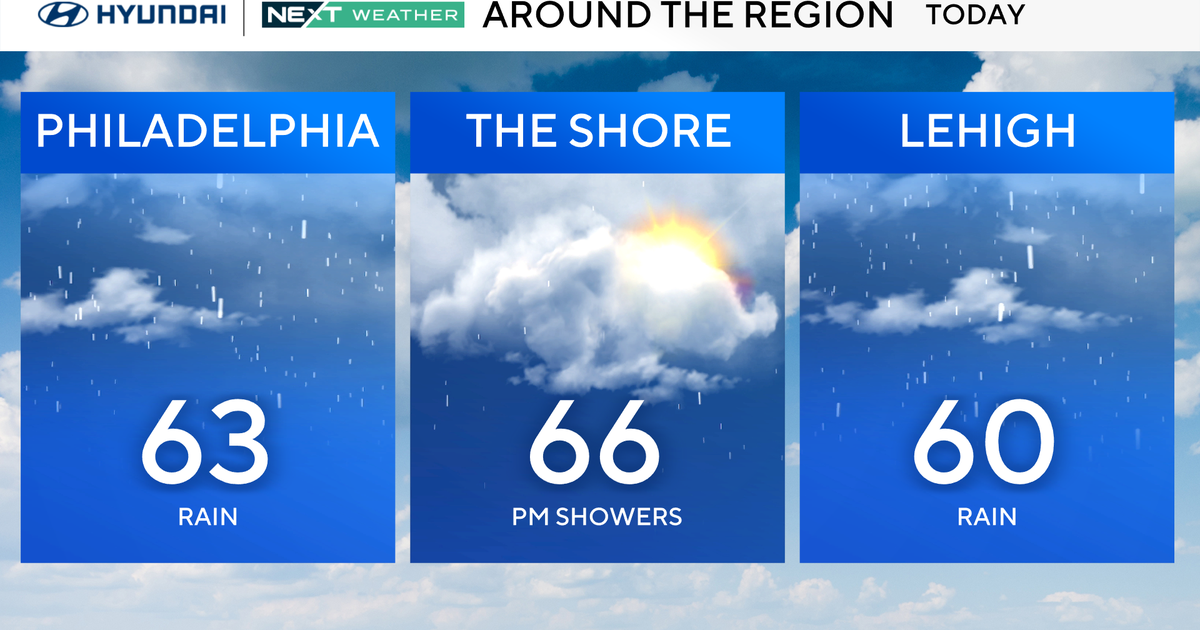
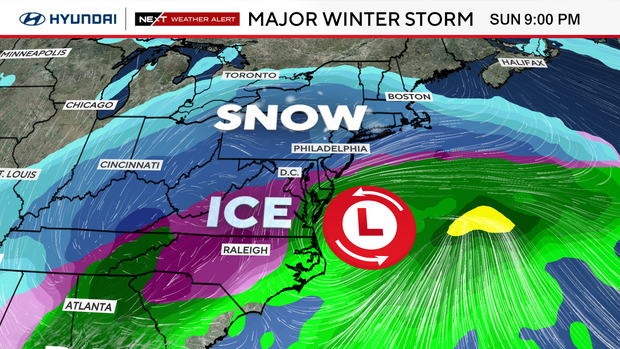
There are four main precipitation types, and the Philadelphia area can and does receive all types, sometimes all within a single storm.
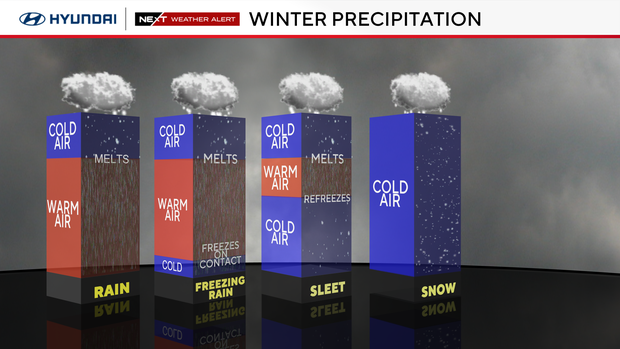
The four types of precipitation are rain, snow, sleet and freezing rain. The factor that drives the type of precipitation that falls is the temperature, not just at the surface but through the entire column of air where the precipitation falls.
Rain
Rain falls when the air temperature from the surface through the clouds is mostly or all above freezing, or 32 degrees Fahrenheit. During the winter, precipitation may start as snow well above the surface, but if the remaining air below the surface is above freezing, then that snowflake will melt to a rain drop and fall to the ground as rain.
Snow
Snow falls when the air temperature is below 32 degrees, all the way from where the snow forms (the dendritic growth zone) to just above the surface. Technically, snowflakes can still reach the ground with surface temperatures above freezing, but they are in the process of melting and will likely continue to melt as soon as they hit the ground.
Sleet
The atmosphere, however, is a dynamic thing, and often with strong storm systems, relatively warmer air mixes in with cold air to produce sleet and freezing rain.
Sleet is when a rain drop freezes and falls to the ground as a small pellet of ice. The ice pellet that reaches the ground could have originally started as a snowflake way above the Earth's surface, where the air temperature was below freezing. As the snowflake falls to the ground, it enters a zone of above-freezing temperatures where the snowflake melts into a rain drop.
For sleet to form, this zone of above-freezing temperatures needs to be relatively small before temperatures closer to the ground return below 32 degrees. In this case, as the rain drop continues its journey down to the ground and encounters air below freezing, the liquid rain then freezes into an ice pellet, sleet.
Sleet is the type of precipitation that makes a tapping or pinging sound.
Freezing rain
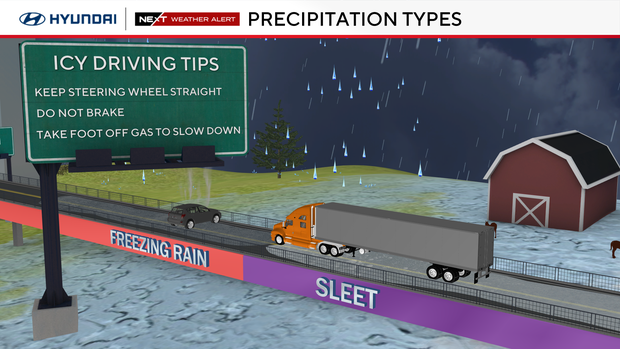
Freezing rain is simply rain that falls to the ground as liquid but freezes on contact with any surface on the ground.
Freezing rain starts off very similar to sleet, where the precipitation starts off as snow, forming in a layer of below-freezing temperatures before falling into a layer where temperatures are above freezing. For freezing rain to occur, the layer with above-freezing temperatures is relatively thicker compared to when sleet forms.
In the case of freezing rain, however, there is just a very shallow or thin layer of subfreezing air right at the surface. This limits the time for the rain drop to refreeze, causing it to fall as a rain drop, but freezing shortly after hitting the surface.
All types of precipitation come with their own threats, but sleet and freezing rain are often the hardest to forecast due to the delicate nature and atmospheric profile necessary for them to form. Additionally, the development of sleet or freezing rain during a snowstorm will greatly reduce the total amount of snow accumulation because the sleet or freezing rain takes the place of additional snowfall while compressing the depth of any snow that fell before.