As holiday returns surge, this company is using AI to spot fakes
Nearly half of shoppers say they've committed some form of return fraud, and now some companies are deploying artificial intelligence to crack down.
A new survey conducted by the National Retail Federation and UPS-owned logistics company Happy Returns reveals shoppers admit to ordering multiple items only intending to keep some (36%), wearing or damaging items before returning (27%), or even swapping out items with cheap knock-offs (20%).
It's estimated nearly one in every 10 retail items returned for a refund in the U.S. is fraudulent, said Happy Returns CEO David Sobie, amounting to a costly problem for retailers that ultimately impacts consumers.
"Fraudulent returns by a few bad actors actually impact all of us as shoppers," Sobie said. "It might mean that the merchant has a less forgiving return policy, might mean that they are implementing fees."
In fact, a growing number of retailers are tacking on fees for returning items by mail, while others are charging restocking fees.
One simple way to avoid most of these fees: Return the item in-store or to a designated location.
Companies like Happy Returns accept box-free returns from a growing number of retailers at designated drop-off points, like UPS Stores, Staples and Ulta Beauty. Returned items are bulk-shipped to processing hubs like this one in Berks County saving retailers on shipping costs and offering shoppers the opportunity for immediate refunds.
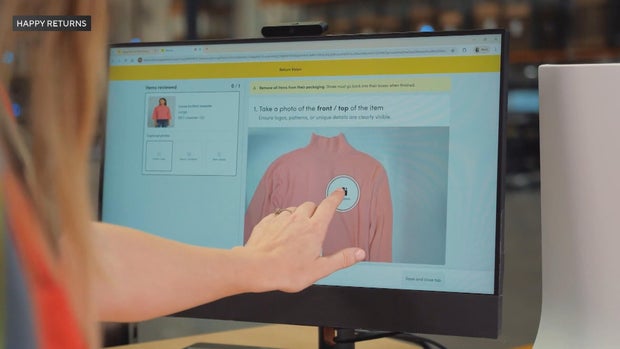
Sobie said this process has already helped curb fraud like when people return empty boxes or fewer items than they claim. But now the company is doubling down with artificial intelligence to find fraudulent returns and withhold refunds, by identifying suspicious return patterns and analyzing items to verify their authenticity.
"Is this an email address where there's been return fraud in the past, or we sometimes look at the time difference between when the item was delivered and when the return was started," he said.
AI screening at a processing hub then compares images of the returned item to what's in the retailer's product catalog. No match, no refund.
"Artificial intelligence is augmenting a human being's ability to discern is this item that's being returned, actually the item that was sold by the merchant," he said.
However, the AI cannot detect all forms of return fraud, like when a customer returns an item they wore or damaged, known as 'wardrobing.' Still, Sobie said he believes the technology will help retailers combat the growing issue.
Competitors like Amazon are also utilizing AI in the return process to flag potential fraud.
Roughly $850 billion worth of items are expected to be returned by the end of 2025, accounting for about 15% of all retail sales, according to Happy Returns and the National Retail Federation. Roughly 9% of those returns will be fraudulent, amounting to an average loss of $261 per item.