Pennsylvania House approves new mass transit bill ahead of SEPTA's funding deadline, but what's next?



Pennsylvania's House of Representatives voted Monday to pass legislation that would provide SEPTA with the funding it needs to avoid the looming "doomsday" service cuts, just three days ahead of the transit agency's deadline.
The Democratic-backed bill passed the chamber, 108-95, over the objection of nearly every Republican in the chamber. The bill increases aid for transit agency operations by $292 million, or about 25%, with the lion's share of the money going to the Philadelphia-based SEPTA.
State representatives were expected to approve the funding, as they've repeatedly approved similar proposals over the last several months. It still has to pass the state Senate.
The nearly $1 billion bill has the support of Democratic Gov. Josh Shapiro and includes funding for highways and bridge projects in all 67 counties. The House bill also includes accountability measures for SEPTA, an idea proposed by three Republican senators.
"The bill passed in the House today with bipartisan support. So we think that's key, and we think we have similar support in the Senate," Andrew Busch, SEPTA's director of media relations, said. "It's got a number of changes that add accountability on SEPTA's part, and those were things that some Republican legislators said they wanted to see. We're fully supportive of that."
In the Republican-controlled state Senate, where the majority has resisted increasing aid for transit, the bill faces an uncertain future.
"I don't think that the votes will be there in the Senate for that," said GOP state Sen. Frank Farry, who serves Bucks County. "We still come back to the same, original problem of they are funding SEPTA with existing revenue."
Under the House plan, funding for public transit comes from increasing its share of sales tax revenue. But Farry says that means something has to be cut, and they're not sure what that is. Instead, he favors a plan for a new funding stream for public transit.
"That re-occurring revenue probably comes from bringing the skill games fully under the Gaming Control Act and treating it like any other gaming machine, which would generate the re-occurring revenue year in and year out," he said.
Farry said talks over skill games legislation continue, and he believes SEPTA needs to be funded.
Before the vote, Rep. Sean Dougherty, who represents Northeast Philadelphia and made the bill, warned his fellow lawmakers about some of the repercussions this would have on the City of Brotherly Love.
"These cuts will be devastating to my neighbors who rely on SEPTA every single day to get to work, school and medical appointments. These cuts will also impact my neighbors who do not use SEPTA by adding 275,000 more vehicles to our already congested roads," Dougherty said. "One hundred thousand people commute into Center City, Philadelphia, each day, but there are only 45,000 parking spaces. I don't know about you all, but I hate traffic."
"My neighbors are out of time," Dougherty said before the vote. "We are out of time."
Rep. Jordan A. Harris, a Democrat who represents part of Philadelphia and is the majority chair of the Appropriations Committee, said, "Everything that we've heard publicly from the Senate, and what they wanted to see and needed in the bill, we put it in."
SEPTA riders on Monday expressed concern about losing service.
"Especially for a lot of lesser fortunate people, it's going to be harder for them to get around, and I feel like that is what public transportation is for, so I feel like if we lose that we're losing a part of the city," Moustapha Doumbia said.
State senators will return to session Tuesday afternoon to begin initial consideration of the bill.
However, time is ticking. SEPTA has previously said that if it doesn't receive the $213 million it needs to plug its budget by Thursday, it will begin planning for those "doomsday" cuts.
The cuts would begin to take effect on Aug. 24 — one day before School District of Philadelphia students' first day of the new school year.
SEPTA general manager Scott Sauer previously explained the Thursday deadline comes as the authority needs 10 days to adjust to the possible schedule change — that time is used to update the SEPTA app and other feeds with the new information, as well as change digital signs, automated announcements and all bus and train marquees.
Other critical work leading up to the schedule change involves train signals, ensuring trains are routed to the right tracks at the right times, Sauer previously said in a news conference.
SEPTA previously said the proposed cuts will:
- Eliminate 32 bus routes
- Shorten 16 bus routes
- Reduce service on the 88 bus, Regional Rail and subway lines
- Cut five Regional Rail lines and the Broad-Ridge Spur subway
- Reduce all remaining services by 20%
- Add a 9 p.m. curfew on metro and Regional Rail service
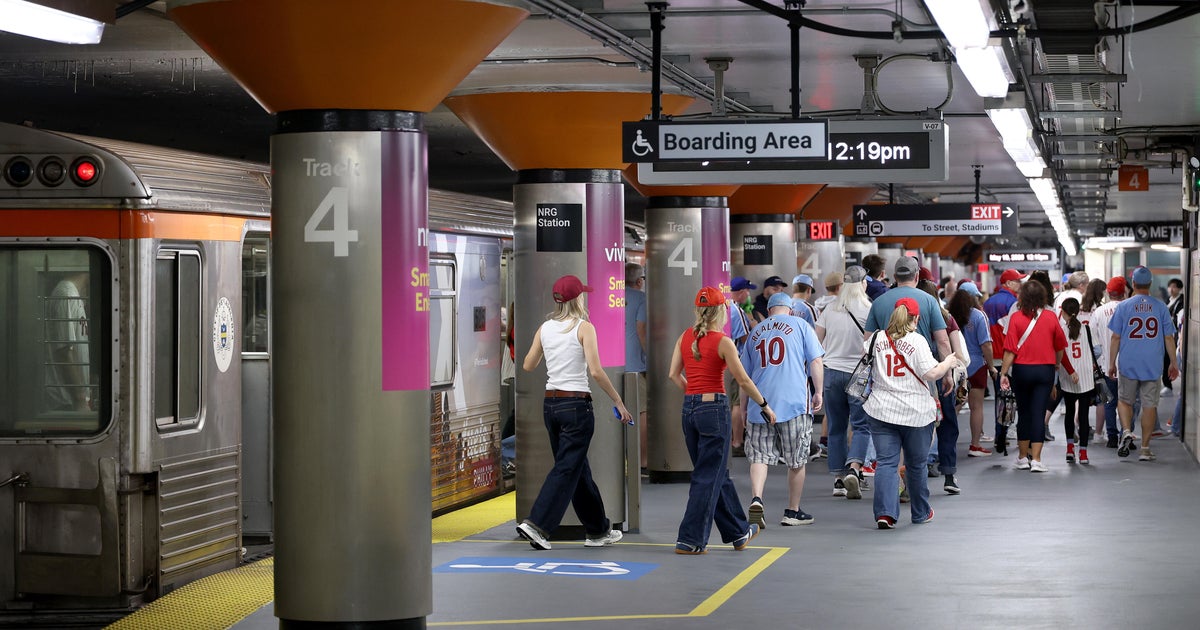
- Cancel special service such as sports express trains
- Raise fares by 21.5% starting Sept. 1
On Sunday, Shapiro held a news conference at SEPTA headquarters in Philadelphia to demand a vote.
"We are past the point of short-term stop-gap measures. We are past the point of a few months of fixes," the Pennsylvania governor warned. "It is time to have recurring long-term revenue for SEPTA and for the other mass transit agencies across Pennsylvania, and the time to act is now."