Not every Black Friday deal is a bargain. Here's how to spot the real savings.

With Black Friday just a week away, retailers are rolling out major sales and early holiday promotions.
But consumer advocates say shoppers should take advertised discounts with a healthy dose of skepticism.
A new investigation by the economic think tank Groundwork Collaborative found that some products advertised as deals during recent Black Friday and Cyber Monday shopping events offered little or no savings at all.
Experts say that does not mean shoppers cannot find great bargains. It means consumers should do a little homework before clicking "buy now."
Report finds some advertised deals offered no savings
Groundwork Collaborative reviewed more than a year's worth of pricing data on hundreds of Amazon products advertised as Black Friday and Cyber Monday deals.
Researchers found that nearly 30% of 350 advertised deals provided no savings compared with the products' recent 30-day pricing history. The report also found that about 1 in 10 of those advertised deals were actually priced higher than they had been within the previous 30 days.
The organization highlighted examples of products that were marketed as discounted despite selling for less earlier in the year.
Amazon disputes the findings, calling the report "deeply flawed" and argues it relied on a limited review of data from 2024 and 2025. The company said it has strengthened its policies so that deals featured during major shopping events generally represent the lowest price offered during the previous 30 days.
Still, consumer experts say shoppers should not assume every sale tag represents a meaningful discount.
"They just want to get you in the door, or get you to click buy now by any means possible," said Jennifer Barger with Consumers' Checkbook. "Retailers are always running a discount."
Use price history tools before you buy
One of the easiest ways to verify whether a deal is legitimate is by checking an item's price history.
Michelle Riehn, a certified financial planner known to her hundreds of thousands of social media followers as "Money Momma," recommends using free online tools that track historical pricing.
"There's Google Shopping, there's CamelCamelCamel," Riehn said. "They'll already have the price history, and they'll know whether it's a deal."
Other tools such as Keepa can also help shoppers determine whether an advertised discount is actually the lowest price of the year or simply a temporary markdown.
Google's data reveals the best times to buy certain products
While Black Friday and Cyber Monday can offer some of the year's best prices, Google's new "When to Buy Guide" suggests timing matters depending on what you're shopping for.
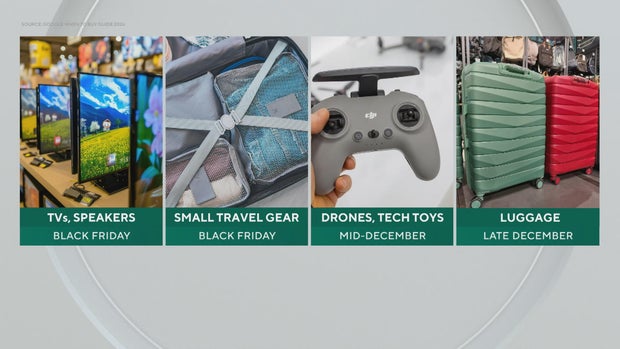
The guide analyzed holiday shopping trends across thousands of retailers and found that Black Friday and Cyber Monday remain particularly strong periods for products such as TVs and speakers.
However, shoppers willing to wait may find better deals on some other items later in the holiday season.
According to Google's analysis, categories including drones and remote-control toys often see lower prices later in December. The data also suggests shoppers looking for smaller travel accessories, such as packing cubes, may find some of the best deals around Black Friday, while larger luggage often reaches lower prices closer to Christmas.
The takeaway, experts say, is that Black Friday is not automatically the best shopping day for every product.
A good deal still needs to fit your budget
Even if a product is genuinely discounted, financial experts caution against treating every sale as a purchasing opportunity.
Riehn says shoppers should evaluate purchases against their plans and spending limits rather than focusing solely on the size of the discount.
"A 50% discount doesn't necessarily mean that it's affordable or that you should buy it," Riehn said. "The question is: Is it on your list, and is it within your budget?"
As holiday shopping ramps up, consumer advocates recommend creating a spending plan, researching prices before buying and using price-tracking tools to confirm whether a discount is as good as retailers claim.
After all, the best deal is not necessarily the one with the biggest percentage off. It is the one that saves money on something you already planned to buy.