The legacy of Milwaukee's Socialist mayors
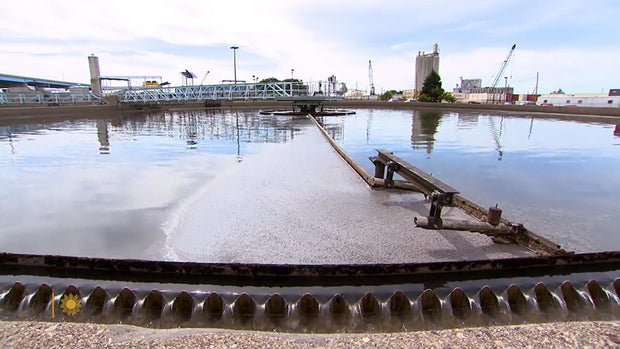
Public servants going into government to clean things up? Sounds cliché! But at the Jones Island Water Reclamation Facility in Milwaukee, Wisconsin, that's job number one (and number two).
As our guide Bill Graffin explains, this 101-year-old pioneering feat of engineering treats as much as 400 million gallons of wastewater each day.
So, before the treatment center was built, how was water in Milwaukee treated? "It wasn't," Graffin replied.
Kevin Shafer, executive director of Milwaukee's sewer system, explained: "All the sewage in the region went right to the rivers, which then went to Lake Michigan. And then we took our drinking water out of Lake Michigan."
He said private industry could have built the sewage treatment system, "but that initial capital investment was huge. So, it really took a public tax base to pay for it."
And that's just what happened in 1925 under the leadership of Milwaukee's Socialist mayor.
In fact, Milwaukee was once the capital of American Socialism, and was the only major American city to elect three Socialist mayors. They collectively presided for nearly 40 years, beginning in 1910.
So why, in Milwaukee of all places, did voters elect a Socialist government? "Because they were the best choice, absolutely," said John Gurda, the preeminent historian of Milwaukee. "You have a lot of things going on. One was corruption in high places, so there was an appetite for change; and then you had a huge working-class population as well – 57% of Milwaukee's males worked in manufacturing. 'Machine shop of world,' that was the self-signed slogan. So, appeals to that class consciousness were really well-received."
Also key: the city's vibrant community of educated German immigrants who'd been raised with Socialist ideals before coming to America. They'd gather at Turner Hall. "This was really a center of German social life, as well as kind of an intellectual salon," said Gurda. "You got lectures here, lots of discourses, debates."
Now, this was a distinctly practical, Midwestern flavor of Socialism, focused less on class warfare and more on what they said was improving the lives of working-class people: more parks, public housing, and functioning sewers, which is why it was dubbed "Sewer Socialism."
"It was probably more social democracy back in those years," said Gurda, "and I think probably less ideological than practical."
Asked if that was why it was successful, because it didn't emphasize ideology, Gurda said, "Yes, absolutely."
He added that Milwaukee's Socialists were anti-capitalist, "but they worked with anyone."
Socialism has long been a boogeyman in American politics. While recent polls show it's increasingly appealing to younger voters, it's still more often an accusation hurled to cast suspicion on a candidate, such as attack ads accusing Michigan's Democratic Senate nominee Abdul El-Sayed of promoting Socialism. [For the record, El-Sayed has said repeatedly that he is not a Socialist.]
But back in the early 1900s, "Socialism" was not a radioactive label. "No, not at all," Gurda said, "and I think what people learned over time, they learned to trust the Socialists. These guys were absolutely un-buyable."
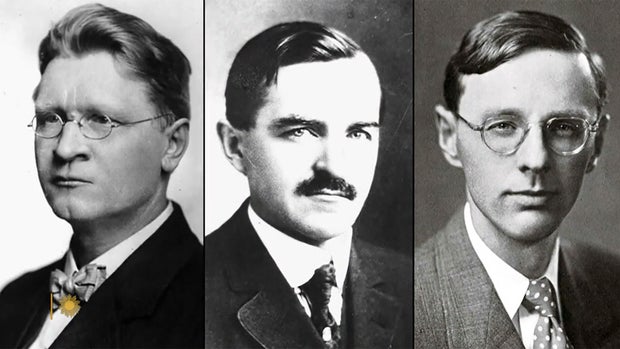
One of the first acts of the first Socialist mayor, Emil Seidel, was erecting a public exhibit on the city's budget – which was not exactly thrilling political theater. "It appealed to immigrant thrift," Gurda said. "Because people, the average German house frau, you gotta make a dollar stretch, and the Socialists were doing that on the city level."
It was Milwaukee's second Socialist mayor, Daniel Hoan, who made the biggest impact on the city. During his 24 years in office, Milwaukee won award after award for being the safest, healthiest and cleanest big city in America. "We won the public health award so often that Milwaukee had to be retired, to give other cities a chance," Gurda said. "So, not sexy. But this is good government. This is government working."
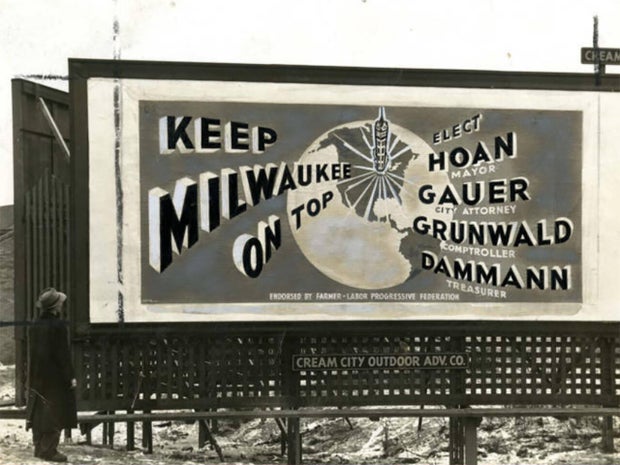
Hoan was the mayor who spearheaded the Jones Island Water Treatment Facility. But this Socialist was thinking more like a capitalist when he helped come up with a product that could be made from the wastewater: Milwaukee Organic Nitrogen, better known as the fertilizer Milorganite. "A lotta people think it's poop in a bag, and it's not," said Bill Graffin. "It is the microscopic organisms that are huge in wastewater treatment."
And Milwaukee hit pay dirt with Milorganite. Still sold today, it brings in millions each year to the city. "Master gardeners love it, the golf course superintendents, and homeowners," Graffin said.
Yes, this legacy of Milwaukee Socialism is used to keep golf courses a rich green.
Milwaukee's last Socialist mayor, Frank Zeidler, left office in 1960. By that time, the most popular Socialist ideas had been adopted by the Democratic Party.
According to Gurda, "What happened was, the New Deal, they co-opted Socialist rhetoric, so things like old-age insurance became Social Security in 1935. So as time went on, that became kind of the party of more progressive policies and politics."
Milwaukee's Socialist era is long past. But Gurda says there are lessons for today's progressives: "These guys were not ideologues. They certainly believed a kind of leftist philosophy, but what they wanted to do was create a better life for the working people especially."
Story produced by Dustin Stephens. Editor: Jason Schmidt.
For more info:
- Historian John Gurda
- "The Making of Milwaukee (4th Edition)" by John Gurda (Milwaukee County Historical Society), in Hardcover, available via Amazon, Barnes & Noble and Bookshop.org