What's the required minimum distribution from a $100,000 retirement account? Here's what to know.
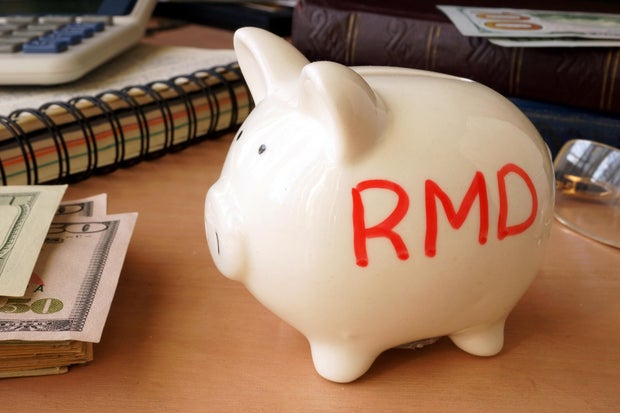
A retirement account worth $100,000 may seem like a lot on paper, but the reality is that it's often far from what's needed. New research shows that Americans consider $1.46 million the "magic number" needed to retire comfortably. At the same time, a report from earlier this year showed that the typical U.S. worker has just $955 saved for retirement. But building up your retirement funds is just one item to consider when preparing for your golden years. It's arguably equally as important to understand the required minimum distributions (RMDs) you'll be expected to take once you reach a certain age.
Whether you want to or not, federal law dictates that you need to start taking money from your account at a certain point. And you'll be expected to pay taxes on tax-deferred accounts when you do, adding another layer of complexity to an already difficult situation. To better understand what you'll be expected to pay, it first helps to know what you'll be expected to take out. So, what is the RMD from a $100,000 retirement account? That's what we'll detail below.
Boost your retirement savings further with a high-rate savings account here.
What's the required minimum distribution from a $100,000 retirement account?
Under existing rules and requirements, retirees are generally expected to start withdrawing funds from their 401(k) or IRA at age 73. The amount you'll be expected to take out annually is determined by completing a simple calculation: the account balance divided by the life expectancy factor per age. According to the IRS Uniform Lifetime Table, the life expectancy factor will decrease each year, meaning you'll need to take out more annually.
Using that table, here's what you'll be expected to withdraw from a $100,000 retirement at five different ages:
- Age 73: $3,774 annually ($100,000 ÷ 26.5)
- Age 75: $4,065 annually ($100,000 ÷ 24.6)
- Age 77: $4,367 annually ($100,000 ÷ 22.9)
- Age 79: $4,739 annually ($100,000 ÷ 21.1)
- Age 83: $5,650 annually ($100,000 ÷ 17.7)
Retirees between ages 73 and 83 will be expected to take annual RMDs from a $100,000 retirement account ranging from $3,774 to $5,650, depending on their age bracket. It's important to remember, however, that those funds won't come without a tax, as they were initially stored in a tax-deferred account. Please account for that expense in advance so you can accurately determine how much you'll actually have available each year.
Speak with a financial advisor about the best ways to improve your retirement portfolio now.
How to protect your retirement portfolio with gold and silver
Precious metal investing should generally be restricted to a maximum of 10% of your retirement portfolio (or less, depending on your age). So, on the surface, it may not seem like a worthy investment for those looking to protect their retirement portfolio. But gold and silver can still be effective tools to do just that.
Thanks to their historic ability to maintain value and even rise in price when market conditions deteriorate, both metals are considered worthwhile for those looking for a portfolio protector. A quick glance at the price charts for both metals in recent years – when inflation was surging and interest rates spiked – clearly demonstrates the value each metal offers.
That said, it's important to note the distinction between a portfolio protector and an income-producing asset, of which neither metal is. At the same time, the prices on both have been steadily increasing in recent years, surpassing numerous records in the process. So, in today's economic climate, at least, there's greater potential to make a quick profit from the sale of the metal than there would normally be in a different period.
Learn more about your gold investing options by requesting a free information kit here.
The bottom line
The annual RMD from a $100,000 retirement account will range from $3,774 to more than $5,600, depending on your age. Consider these amounts carefully, then, as they will increase your tax bill when they are ultimately distributed. And don't discount the maintenance of your retirement portfolio when you do start making withdrawals, especially with precious metal investments like gold and silver still providing effective ways to diversify and protect your portfolio. And, if you have specific questions or are unsure about your next steps, consider reaching out to a financial advisor directly who can help guide you toward the most appropriate next steps.