Marco Rubio says "the president always retains optionality" to occupy Venezuela
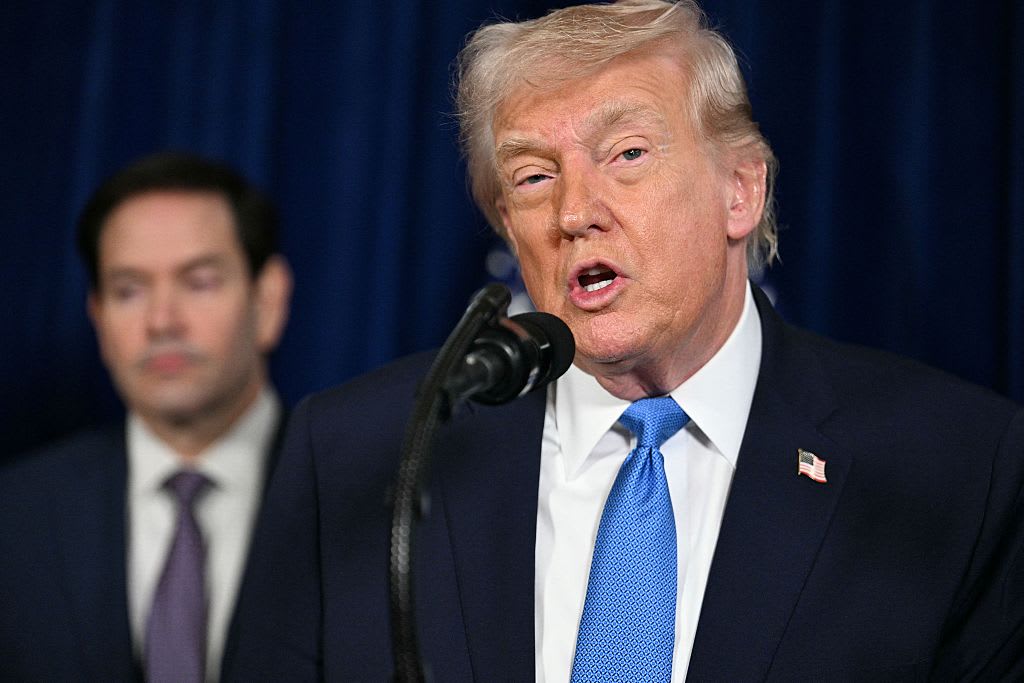
Secretary of State Marco Rubio said Sunday that President Trump always has options around what comes next in Venezuela, after the U.S. carried out airstrikes and captured the country's president, Nicolás Maduro.
Asked to clarify that there is no plan for U.S. occupation of Venezuela, Rubio said "the president always retains optionality on anything and on all of these matters."
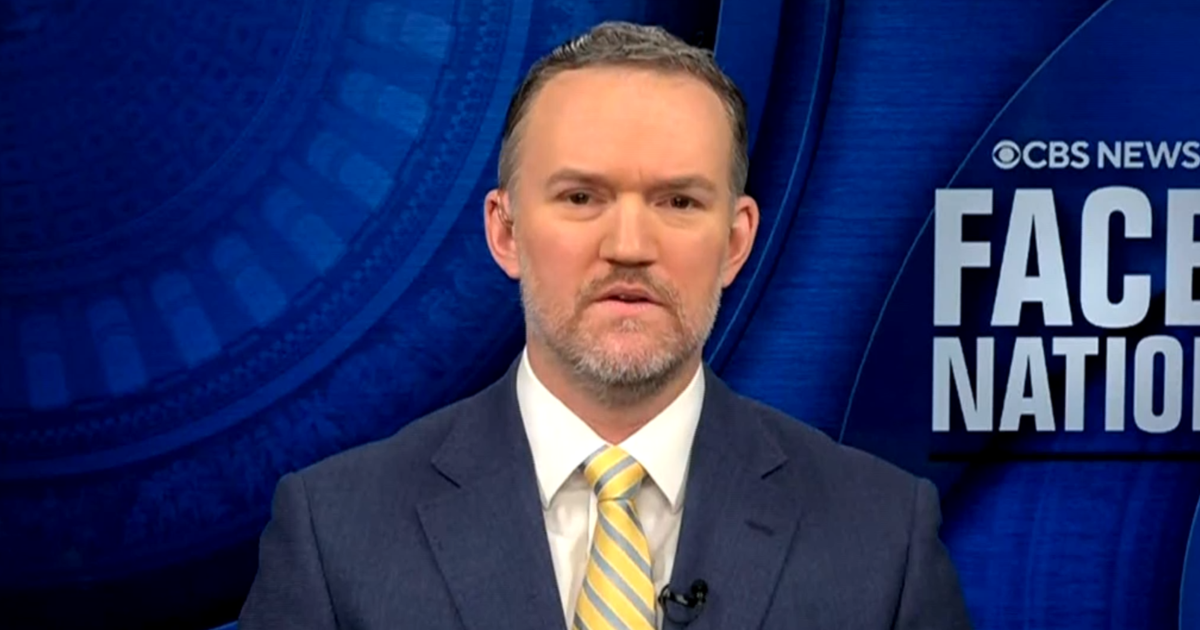
"He certainly has the ability and the right under the Constitution of the United States to act against imminent and urgent threats against the country," Rubio said on "Face the Nation with Margaret Brennan."
Maduro arrived Saturday night at a detention center in New York City and faces federal charges related to drug trafficking and working with gangs designated as terrorist organizations, which he denies. Mr. Trump said Saturday that the U.S. would "run" Venezuela on a temporary basis during the transition, sparking questions about what comes next.
Mr. Trump said he is "not afraid" to have American military "boots on the ground" in Venezuela. Rubio expanded on this on Sunday, saying that Mr. Trump "does not feel like he is going to publicly, you know, rule out options that are available for the United States, even though that's not what you're seeing right now."
"What you're seeing right now is an oil quarantine that allows us to exert tremendous leverage over what happens next," Rubio said.
Rubio pointed to the U.S. naval deployment in the region, which has carried out a series of strikes on more than 30 boats, saying it's "capable of stopping, not just drug boats, but stopping any of these sanctioned boats that come in and out" and "paralyzing that portion of how the regime, you know, generates revenue." The secretary of state added that it "will continue to be in place."
The secretary of state argued that "the key to what that regime relies on is their economy fueled by oil," calling the country's oil industry "backwards."
"None of the money from the money from the oil gets to the people, it's all stolen by the people that are on the top there," Rubio said. "And so that's why we have a quarantine."
The U.S. has seized multiple vessels in international waters, and the White House announced last month a "blockade" of all sanctioned oil tankers entering or leaving Venezuela. Rubio said the "quarantine" allows the U.S. to seize sanctioned oil shipments with a court order and offers "a tremendous amount of leverage that will continue to be in place until we see changes that not just further the national interest of the United States, which is number one, but also that lead to a better future for the people of Venezuela."
"And so that's the sort of control the president is pointing to when he says that," Rubio said. "We continue with that quarantine, and we expect to see that there will be changes not just in the way the oil industry is run for the benefit of the people, but also so that they stop the drug trafficking, so that we no longer have these gang problems, so that they kick the FARC and the ELN out, and that they no longer cozy up to Hezbollah and Iran in our own hemisphere."
"This is not the Middle East"
The secretary of state argued that the calculus is different for the U.S when it comes to Venezuela as opposed to other foreign policy matters.
"The whole, you know, foreign policy apparatus thinks everything is Libya, everything is Iraq, everything is Afghanistan. This is not the Middle East. And our mission here is very different," Rubio said.
Rubio said that within the Western Hemisphere, Venezuela is a country that "under the control of this regime, has cozied up to Iran, has cozied up to Hezbollah, has allowed narco-trafficking gangs to operate with impunity from their own territory, allows boats with drugs to traffic from their territory."
"That is what we're addressing now. We're not just addressing the regime, we are addressing the factors that are a threat to the national interest of the United States," he added.
The secretary of state said "our objectives when it comes to how Venezuela impacts the national interest of the United States have not changed, and we want those addressed."
"We want drug trafficking to stop, we want no more gang members to come our way, we don't want to see the Iranian and, by the way, Cuban presence in the past," Rubio said. "We want the oil industry in that country not to go to the benefit of pirates and adversaries of the United States, but for the benefit of the people. We want to see all of that happen. We insist on seeing that happen, and we are going to work to continue to see that happen."
Rubio says it's "absurd" to suggest an immediate election
Rubio said the U.S. "just could not work with" Maduro, adding that "we offered him, on multiple occasions, an opportunity to remove himself from the scene in a positive way. He chose not to do so."
Asked whether Maduro's vice president, Delcy Rodríguez, is someone the U.S. could work with, Rubio said "we're going to find out."
"Everyone's asking why, 24 hours after Nicolás Maduro was arrested, there isn't an election scheduled for tomorrow? That's absurd," Rubio said. "These things take time. There's a process."
The secretary of state said "of course we want to see Venezuela transition to be a place completely different than what it looks like today. But obviously we don't have the expectation that's going to happen in the next 15 hours. What we do have an expectation is that it move in that direction. We think it's in our national interest, and frankly, in the interest of people of Venezuela."
Asked about other indicted members of Maduro's Cabinet, Rubio responded, "So you wanted us to land in five other military bases?"
"The number one person on the list was the guy who claimed to be the president of the country that he was not, and he was arrested along with his wife, who was also indicted," Rubio said, calling Maduro the "top target."
Rubio has previously recognized Edmundo González as the winner of the 2024 election. Asked whether the U.S. is working on a transition to install the leader, Rubio said while he has "admiration for Edmundo" and opposition leader María Corina Machado, "There's the mission we are on right now."
Rubio said ultimately the goals in Venezuela are "very simple."
"In the 21st century, under the Trump administration, we are not going to have a country like Venezuela in our own hemisphere, in the sphere of control, and the crossroads for Hezbollah, for Iran, and for every other malign influence in the world — that's just not going to exist," Rubio said.