Epstein offered advice to billionaire facing accusation of sexual impropriety
Documents released by Congress shed new light on Jeffrey Epstein's role in an attempt to help billionaire Leon Black squelch an accusation of sexual impropriety.
Epstein's relationship with Black has already faced extensive scrutiny, but recently released, previously unreported emails from the House Oversight Committee document Epstein's involvement in Black's personal affairs while the private equity investor paid him huge sums for wealth management advice.
Black, the co-founder of Apollo Global Management, had a six-year affair with a former Russian model named Guzel Ganieva, whom he met at a party in New York City in 2008, according to court records. It was a relationship that ended in acrimony, with Ganieva accusing Black of sexual abuse — allegations Black denies.
As Black prepared a nondisclosure agreement to secure Ganieva's silence about their affair, Epstein offered him some advice. Epstein suggested in a Sept. 21, 2015, email that Black hire former law enforcement officers to approach Ganieva about the agreement.
"Choose method of message delivery, my choice. - two highly respected former ---- fill in the blank, immigration, scotland yard. sfo. . who may knock on her door and present the terms," Epstein wrote in his typical email style, forsaking standard grammar and punctuation.
Black had learned that Ganieva was planning to travel from London to New York to confront him. And Epstein suggested a similar approach if she showed up stateside. "Have the same types of individuals [available] in new york if she decides to return as stated.. i prefer former fbi, or immigration one man one woman."
Epstein did not mention Ganieva by name, but details in the email make it clear he's referring to her. A spokesperson for Black did not dispute that conclusion. An attorney for Ganieva declined to comment.
Epstein penned a follow-up email minutes later, giving Black's assistant and attorney further instructions. Epstein wrote that Black's assistant "should set up a separate email account for this correspondence. she currently is on an apollo server."
No other emails in the trove released by Congress appear to address Black's long-running dispute with Ganieva.
Ernest Badway, a former Securities and Exchange Commission enforcement attorney who frequently represents clients in internal investigations, said an exchange of this nature should have set off red flags inside his company when they later looked into Black's ties to Epstein.
"As an investigator, that would concern me if I saw an email that people sent on the business's server saying, 'set up a private email so we can have private conversations.' You know, what are those private conversations about?" Badway said.
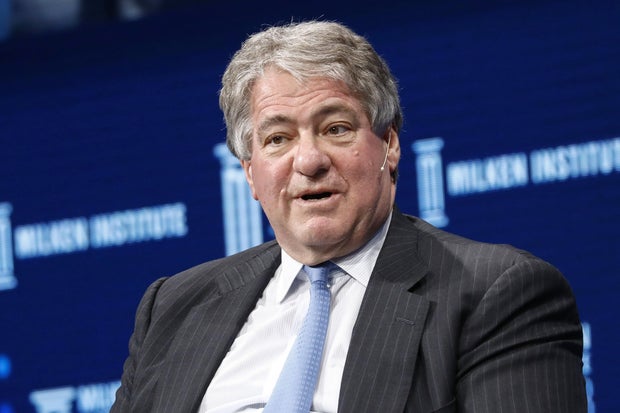
Epstein spent years forging relationships that bridged his business interests with his connections to international law enforcement and intelligence figures — including some powerful players in Russia. He engaged in transactions with Russian banks involving hundreds of millions of dollars, a congressional investigator, Oregon Democratic Sen. Ron Wyden, said in July. He frequently met with Vitaly Churkin, the Russian ambassador to the United Nations, until Churkin's death in 2017. And he nurtured a relationship with former Russian Deputy Minister of Economic Development Sergey Belyakov — a reputed FSB agent.
In the summer of 2015, Epstein reached out to Belyakov for information on Ganieva to determine whether she was working for the Russian government, according to The Dossier Center, a website run by former Russian oligarch and Putin critic Mikhail Kordokovsky.
On Oct. 18, 2015, Ganieva signed a nondisclosure contract with Black in which the billionaire agreed to pay her $100,000 monthly for 15 years, forgive a $1 million loan and provide two million British pounds for her to obtain legal status in the U.K.
Two months later, Epstein emailed Black seeking additional payments for his financial advice.
"As you are well aware, There is little I won't do for you, or at least try to do as a friend, and a great deal that I have already done ( both known and some things that will need (sp) to remain unknown.)" Epstein wrote.
The nondisclosure agreement broke down four years later, leading to a series of lawsuits and countersuits. Court filings show Black discussed Ganieva's deal with two people, Epstein and a private investigator. It's unclear if Black turned to the private investigator — who had spent decades working for the U.S. Department of Justice — because Epstein had suggested hiring ex-law enforcement.
Susan Estrich, an attorney for Black, told CBS News that his relationship with Epstein has already been the subject of an internal investigation commissioned by Apollo, and conducted by the law firm Dechert LLP.
"Epstein's emails, to which Mr. Black never responded, make it clear that Epstein was a braggart who embellished and exaggerated his role and responsibilities in many ways," Estrich said. "Mr. Black's consensual relationship with Ms. Ganieva ended with an amicable settlement in 2015 and a voluntary non-disclosure agreement. Ms. Ganieva's unfounded lawsuit against Mr. Black has been dismissed by the trial court and that decision was upheld on appeal."
The Dechert investigation concluded that Black paid Epstein $158 million for work related to his family office, "and that Black genuinely believed that Epstein was extremely smart, capable, and saved him substantial amounts of money." The Dechert report made no mention of any effort by Epstein to advise Black regarding Ganieva — only that Black had "confided" in Epstein about certain personal matters.
"Mr. Black asked for an independent investigation of his relationship with Jeffery Epstein and Dechert investigated and reviewed more than 60,000 documents and concluded that Mr. Black paid Epstein for estate planning and tax advice, no more, no less," Estrich said.
It's unclear if the two emails about Ganieva were among those turned over to Dechert's investigators. The Dechert investigation was led by Andrew Levander, a former federal prosecutor. Levander, who also represented former CBS CEO Les Moonves when he was the focus of an internal investigation in 2018, declined to comment.
Black stepped down from the company he founded in March 2021, citing health concerns, two months after the Dechert report was finalized.
Sen. Wyden — who has spent nearly four years investigating the financial relationship between Black and Epstein — says Black's payments to Epstein actually reached $170 million and he does not believe the emerging picture matches Black's explanation for paying Epstein nine-figure "fees" for tax advice.
"All along Mr. Black's story has been that he, a multi-billionaire Wall Street titan who employed the finest tax and estate planning minds in America, had to pay astronomical rates for special tax advice from Jeffrey Epstein, who was neither a tax attorney nor an accountant," Wyden told CBS News. "I've never found Black's account believable, and every new revelation in this case raises more troubling questions about what really motivated his payments to Epstein and whether previous investigations of this matter covered up the truth."
Editor's note: This article has been updated to reflect that the nondisclosure agreement between Black and Ganieva only sought confidentiality about their affair.