Gisèle Pelicot speaks

WARNING: This story contains descriptions of sexual abuse.
For 50 years, Gisèle Pelicot lived with her husband, Dominique Pelicot, whom she described as "a kind man, a devoted family man. It was a beautiful love story, until the day I found myself facing the horror of the facts."
Those facts shattered Gisèle's seemingly normal life, and put her at the center of a mass rape trial – an unthinkable crime that gripped France and received worldwide attention. But it was her response that would be defining.
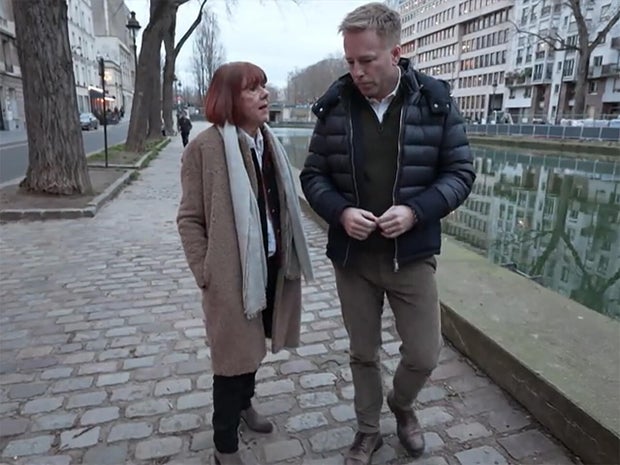
She sat down with "CBS Sunday Morning," for what she said was her first-ever interview: "Yes, it's a first," she said through an interpreter. "I'm not used to speaking in front of cameras. I used to be a very discreet woman."
It all unravelled in 2020, inside a supermarket in Mazan, France, when what seemed like a small crime uncovered a far greater one. Dominique Pelicot was caught taking video up women's skirts. His arrest led to the discovery of disturbing footage taken inside their home of Gisèle Pelicot unconscious.
"My world collapsed"
At a local police station, an investigator told Gisèle what they found: "He said, 'Mrs. Pelicot, do you recognize yourself in these photos?'" she recalled. "And I said, 'No, it's not me.' Then he said, 'This is your bedroom.' And I see a woman I don't recognize at all, completely asleep with a man beside her. I don't know this man. And then he says, 'I'm going to tell you something shocking: You were raped by 53 individuals.' My world collapsed."
She described the woman in the video as looking like a rag doll. That woman was her. "Yes, it was me, but this woman was lifeless," she said. "She looked dead."
Her response? "I could not speak. I was in such a state of shock. All I wanted was to go home, to get my life back as it was before."
But that life was gone. The man she knew as a loving father to their three children, and a doting grandfather, had been drugging her with sleeping pills and muscle relaxants, then inviting men he met online to abuse her.
Her lawyer, Stéphane Babonneau, said it represented hundreds of rapes over at least 10 years. He and Gisèle started to grasp the scale of the crimes as they prepared for trial – "In the range of hundreds, if not thousands" of photos, he said. "And for videos, definitely hundreds."
Among the evidence: messages Dominque Pelicot posted online ("I'm looking for a pervert accomplice to abuse my sleeping wife..."), and text messages ("I'm about to dose her... We have to wait at least one hour to abuse").
"It's been a real journey into the darkness," said Babonneau. He described the images as "scenes of torture. There is no other word for that. … On this video we see a human being, being treated as an object. We see men who desecrate a human body, who desecrates someone, Gisèle, who is in profound distress, because her life was at risk at every moment where she was drugged and abused."
Victims of sexual abuse can remain anonymous in France. So up until the trial in 2024, Gisèle Pelicot's name was not known. But then she made a bold decision: to demand an open trial, allowing the public and the press into the courtroom.
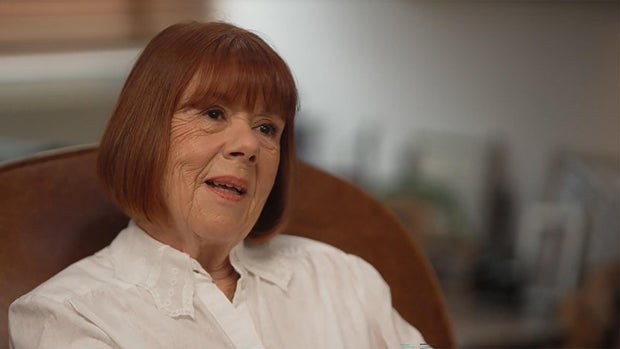
Revealing her identity to the world, she said, was difficult: "It was very hard. I didn't want anybody to discover and know about this woman who had experienced all this violence. Because, in truth, victims always feel shame about what happened to them. I told myself that if I opened the closed-door proceedings, the shame would change sides."
The words "Shame Has to Change Sides" are the subtitle of her intimate account of the ordeal, "A Hymn to Life" (to be published Tuesday by Penguin Press).
Babonneau said he was worried when he heard that she wanted to have an open trial: "Because we knew that there would be a tremendous pressure on her," he said.
"Anger and hatred build nothing; they destroy"
At trial, the accused hid their faces as they filed into court. They ranged in age from 26 to 74. Among them: a firefighter, a soldier, and a nurse. In court, many claimed Gisèle Pelicot must have known, must have been complicit.

But Dominique Pelicot admitted everything, testifying, "It was always against her knowledge," adding he drugged her two to three times a week. "I had an addiction," he said.
Looking back, Gisèle said, there were warning signs: "I only knew I had blackouts, and I had health problems," she said. There were also periods where her memory was affected. "I couldn't remember that I'd been to the hairdresser; it was only the next day that I realized I had," she said. "And when I called my children, it was the same – I didn't remember our conversations.
"I thought I was seriously ill. I consulted neurologists, I had a CT scan – nothing was found," she said.
Even recounting her horrifying ordeal to "Sunday Morning," Gisèle Pelicot maintained her poise. "I've always been this way," she said. "Anger and hatred build nothing; they destroy. And I didn't want to go down that path."
The trial made headlines worldwide, and drew huge crowds of supporters, who praised Gisèle Pelicot for her bravery, holding her up as a feminist hero. Seeing those supporters, she said, made her feel that she was not alone: "It was an incredible source of strength for me."

All of the 51 men eventually put on trial were convicted. Dominique Pelicot was sentenced to the maximum of 20 years.
He has asked for his (now ex-)wife's forgiveness. But Gisèle Pelicot says, "No. Forgiveness is extremely difficult. But I don't want to live in hatred. I do need to speak with him – and it will also be to say goodbye."
But she does want to see him again. "Yes," she said. "I need answers. I may never get them. But that's also part of my journey."
During our interview, just off camera, was Gisèle's new partner, Jean-Loup, who was also by her side during the trial, along with her children.
"I never thought I'd fall in love, or even want to," she said. "It's a beautiful story. As for the rest, it belongs to us, and I keep that to myself."
But you're in love? "Indeed. You can fall in love at any age. Everything is possible. That, too, is a message of hope, to tell yourself that nothing is lost in life."
Despite the details of her ordeal, by the end of the book, her story is, miraculously, uplifting. "I was always wondering what my mission on Earth was, why I had been born," she said. "Some are painters, some are poets, others are writers. I think my mission was to give others hope, that even after hardship, you can rise again and choose happiness. I think that was my mission."
For more info:
- "A Hymn to Life: Shame Has to Change Sides" by Gisèle Pelicot (Penguin Press), in Hardcover, eBook and Audio formats, available February 17 via Amazon, Barnes & Noble and Bookshop.org
Story produced by Mikaela Bufano. Editor: Brian Robbins.