CBS News poll on America at 250 — its successes and its challenges

Two hundred fifty years on, Americans generally see their nation as a success story — even if it's one that they feel still has work to do.
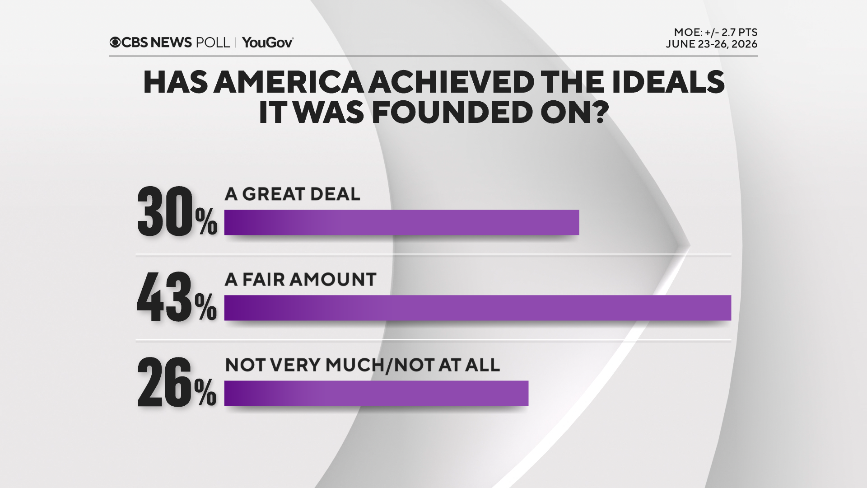
A big majority say the nation has succeeded in achieving its founding ideals, at least a fair amount, if not a great deal.
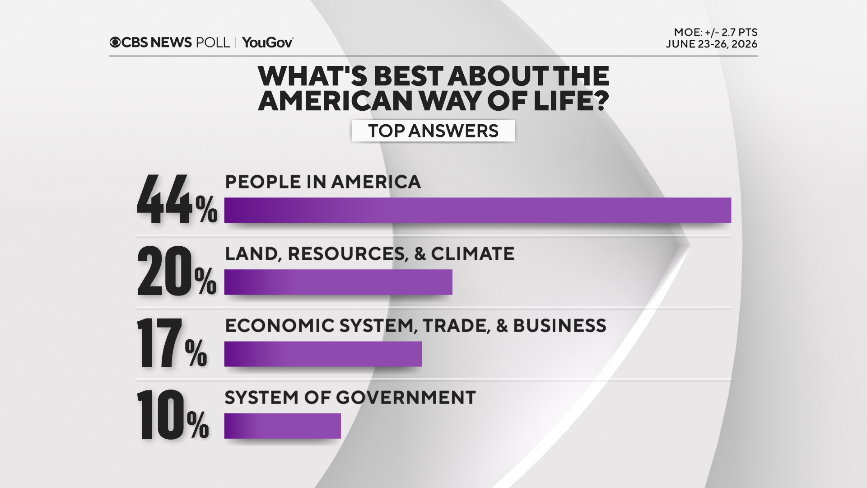
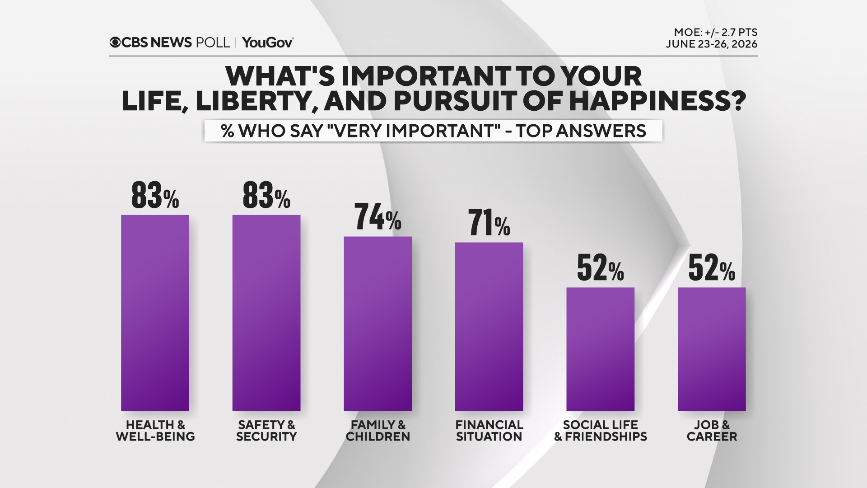
We, the people, think of ourselves — America's people — as the best thing about the country. Most of us like having a nation of many different ideas and cultures, and we share common views on what constitutes "life, liberty and the pursuit of happiness."
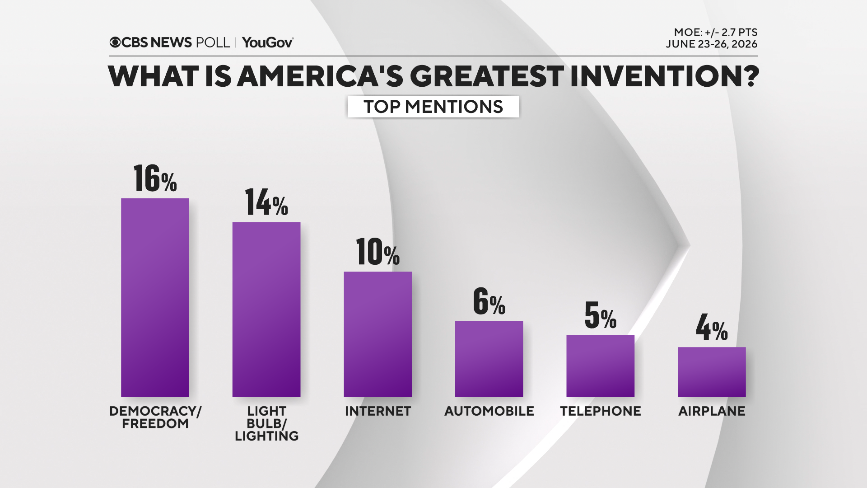
And for a country that produced the light bulb and the internet, today it is still the ideas laid out in the founding that many offer up as America's best invention of all.
Yet, Americans also see a nation facing challenges today:
Almost half the country marks this milestone feeling that America's best days are in its past.
The American Dream is seen under pressure, often unattainable.
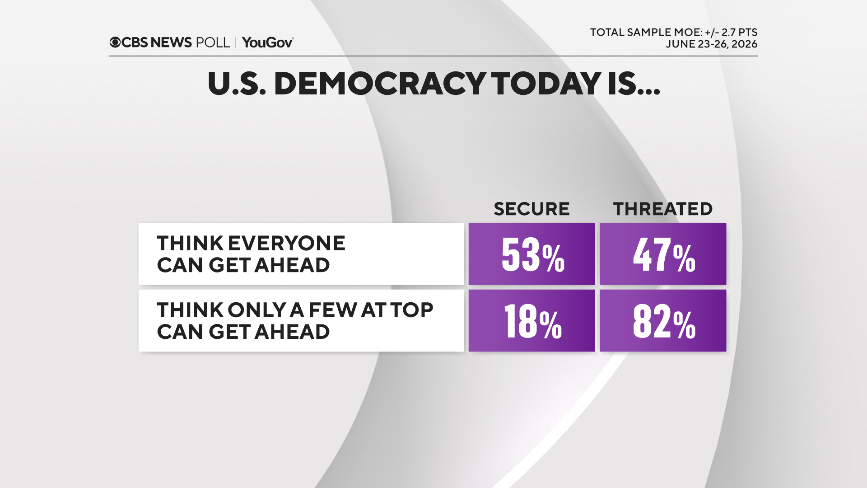
And just as economic opportunities are entwined with our political history, they're seen today just as defining as democracy itself. But those who think opportunity is only for a few feel democracy, too, is under threat.
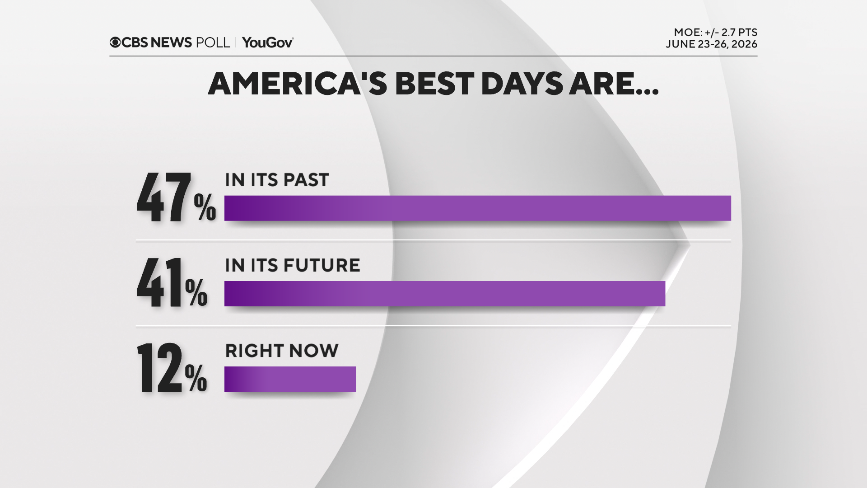
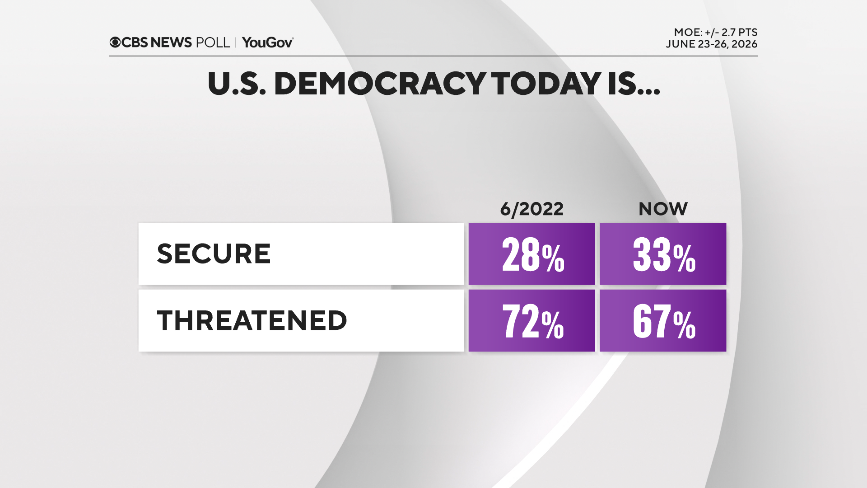
Views of the future and past are linked.
Those who say the U.S. has done a great deal in achieving its founding ideals are the most optimistic about the future, and tend to think U.S. democracy is secure.
Opportunity and the American Dream
Americans today have skepticism about the availability of opportunity. Just half of Americans are even somewhat confident that the American Dream is attainable today, and most think it's mainly just a few people at the top who have a chance to get ahead.
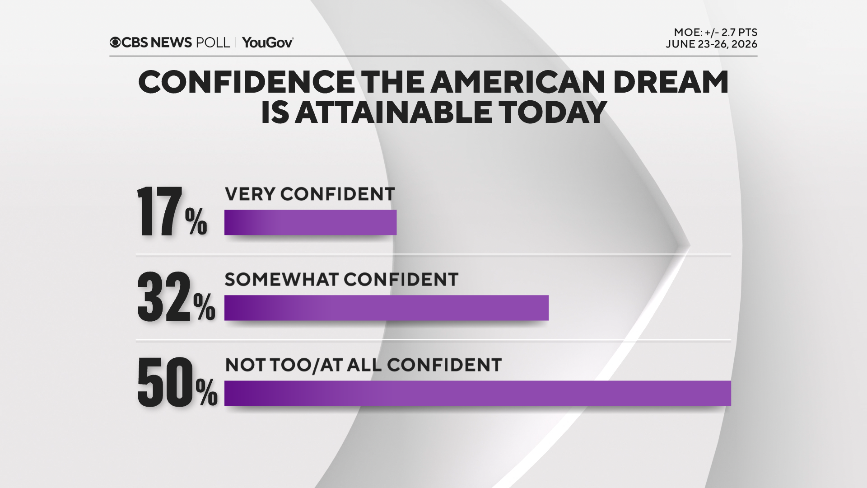
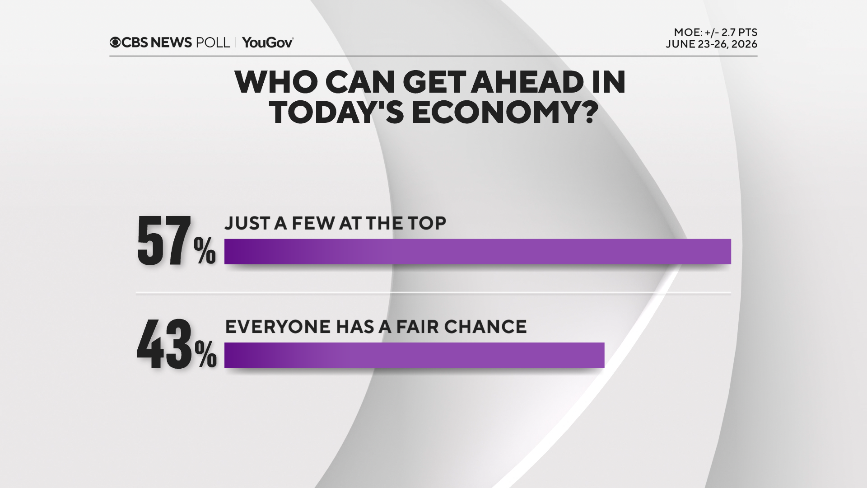
Americans see a connection between economic opportunity and the nation's fortunes: those with the least confidence in the attainability of the American Dream are the most likely to see America's best days as being in the past.
They also connect it to a threat to democracy: Most who think only a few have a chance to get ahead in today's society think U.S. democracy is under threat.
What unites us
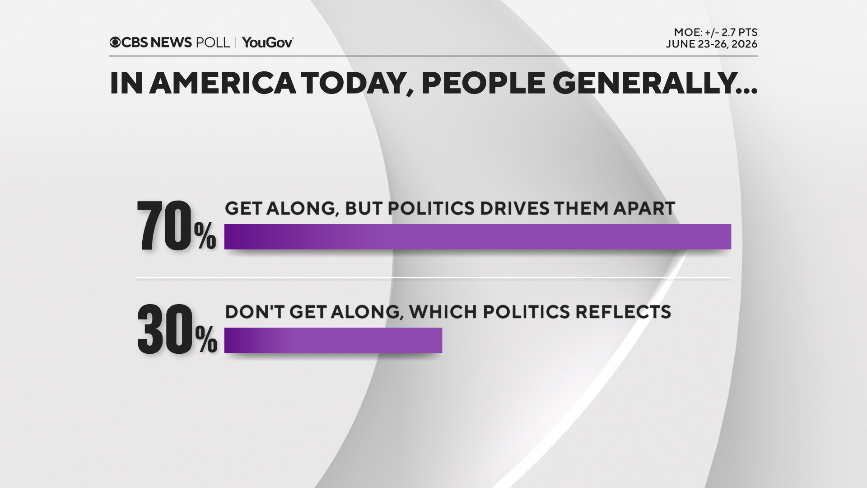
Most Americans think they generally get along, and it's politics that drives them apart — a view shared by a majority of Democrats, Republicans and independents alike.
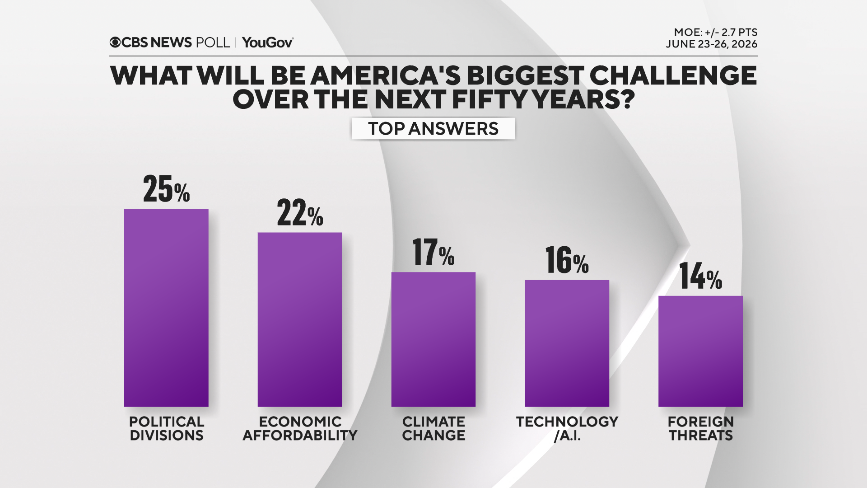
In fact, it is political division, even as much as economics, that people see as the biggest challenge over the next half-century.
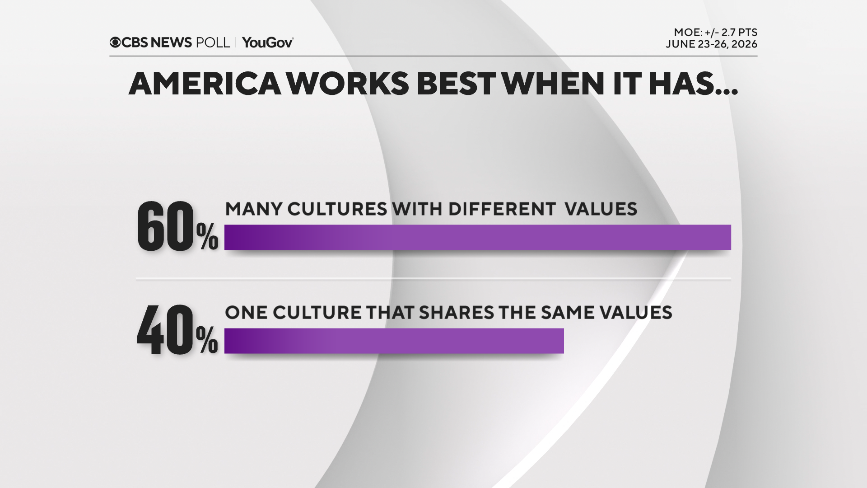
Most think America works best when it has many different cultures with different values.
And we share common views of what constitutes life, liberty and the pursuit of happiness.
Pride and patriotism
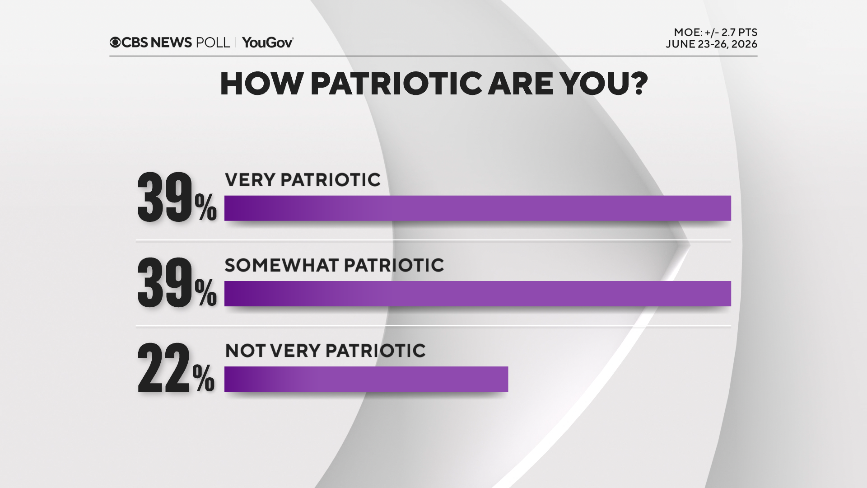
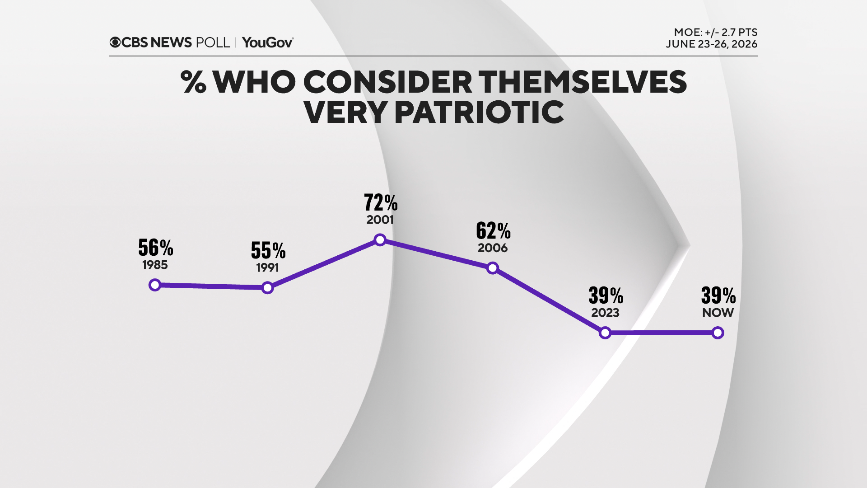
Most Americans say they are at least somewhat but not necessarily very patriotic. The percentage that have described themselves as very patriotic has fluctuated over the years, reaching its peak after the 9/11 attacks in 2001, though in recent years it has been at historic lows.
Most Americans also are at least somewhat proud, if not very proud, when looking back over the course of U.S. history. The two are linked — those who describe themselves as very patriotic are the most likely to say they are very proud.
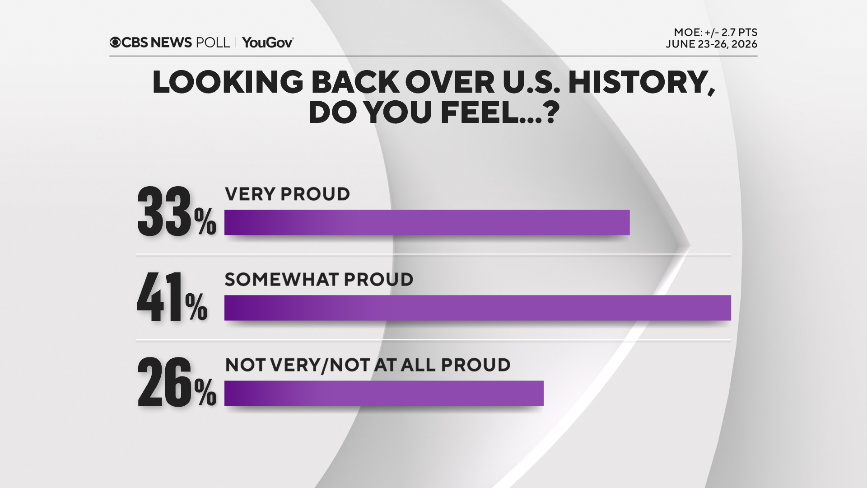
Majorities of all age, gender, and racial groups describe themselves as at least somewhat proud. Older Americans and men are particularly likely to be so.
A large majority of Black Americans call themselves patriotic today, but just over half describe themselves as somewhat or very proud when looking back on 250 years of American history.
Politically, Republicans proclaim the most pride and patriotism, and they are more sweeping in their praise for the U.S. than Democrats or independents.
A majority of Republicans think the U.S. has succeeded a great deal in achieving the ideals upon which it was founded (not just somewhat), and while most Americans describe the U.S. as at least one of the greatest countries, Republicans say it stands alone as the single greatest country in the world.
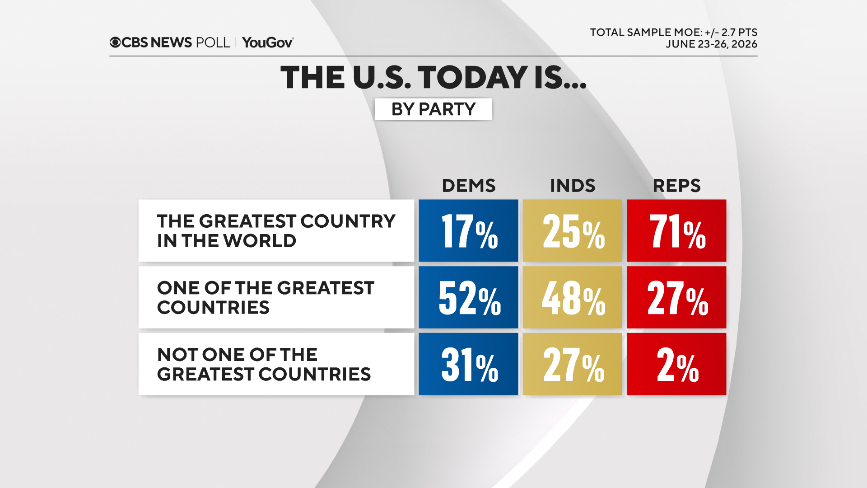
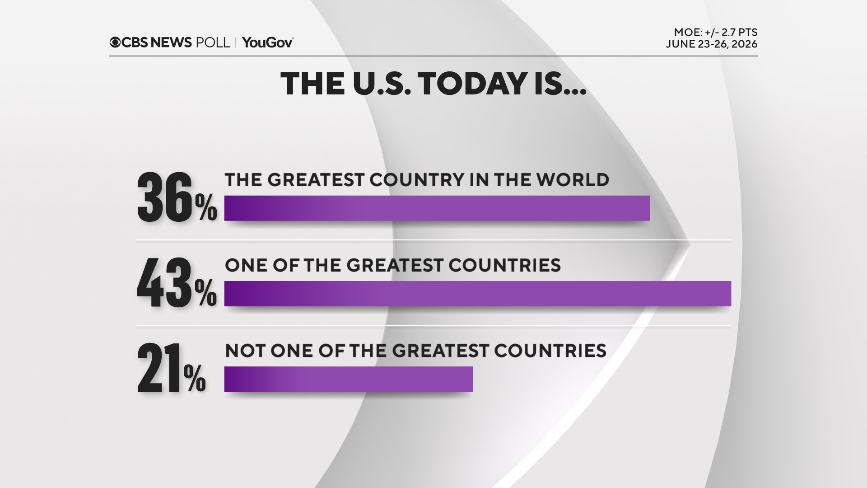
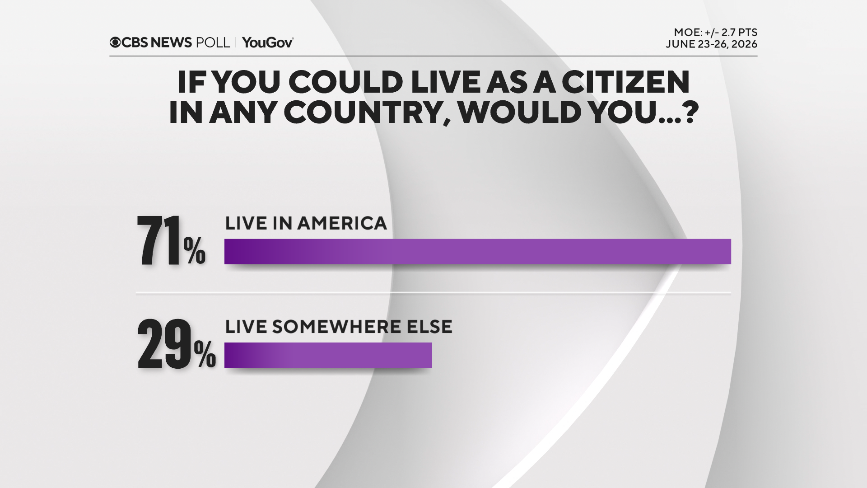
Whether they consider the U.S. the best country or among the best, most Americans across the political spectrum say they would rather live in the United States than anywhere else.
Looking ahead to America at 300
As they think ahead to the 2076 tricentennial, Americans' outlook is one of cautious optimism. On balance, more people believe things in America will be better than worse, compared to today. This is especially so among those who feel America's best days are ahead.
And that includes many younger people, who are feeling more positive than older people about the state of America 50 years from now.
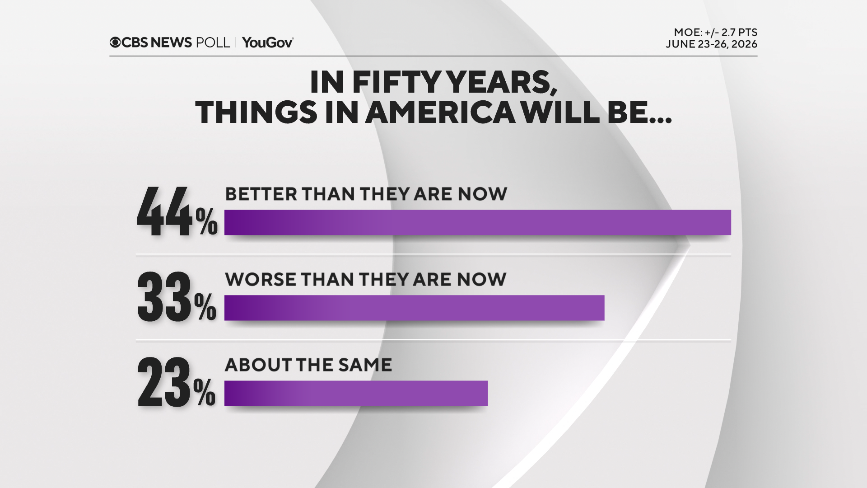
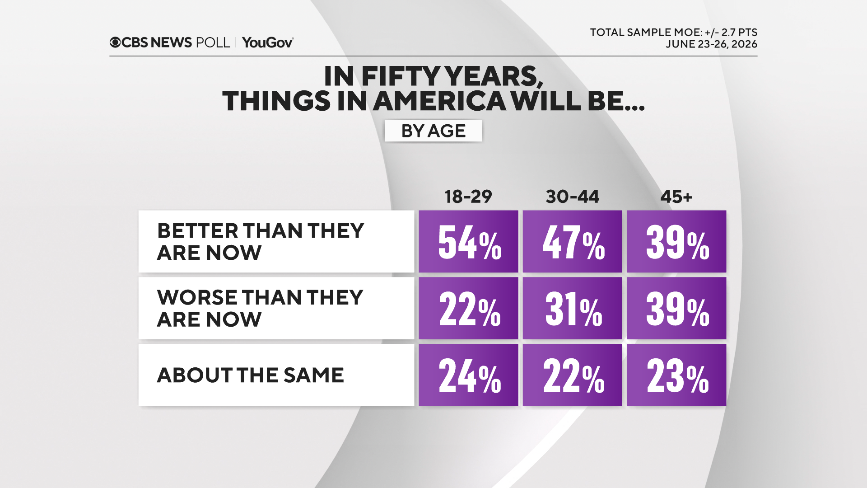
But Americans do foresee some hurdles ahead.
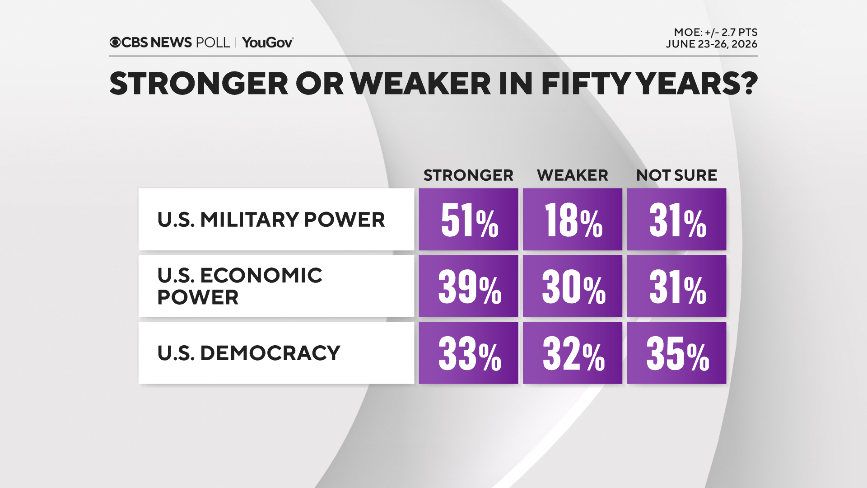
While many think American military power will be stronger in 50 years, fewer are confident in the strength of America's democracy (particularly those who think democracy is threatened today) and its economic power, and even more are skeptical about its morality and values.
Today, most Americans feel politics drives people apart, and it seems they don't think that will disappear. When asked what will be America's biggest challenge over the next 50 years, political division, along with economic affordability, tops the list.
This CBS News/YouGov survey was conducted with a nationally representative sample of 2,150 U.S. adults interviewed between June 23-26, 2026. The sample was weighted to be representative of adults nationwide according to gender, age, race, and education, based on the U.S. Census American Community Survey and Current Population Survey, as well as 2024 presidential vote. The margin of error is ±2.7 points.