How wildfire smoke is different from backyard bonfire and the health risks it poses

Wildfire smoke has continued to blanket the Great Lakes region, among others, and the intensity is enough that nearly all sites are rating the air quality as hazardous.
While that goes without saying when you inhale and begin to cough, what exactly makes wildfire smoke different from, say, a backyard bonfire?
The last 20 years have seen a steady number of wildfire occurrences in the U.S. and an increase in Canada.
The most significant change is the size of the fires; the total acreage burned has drastically increased.
Wildfire smoke is a mixture of different compounds and pollutants.
Water vapor is the first.
Carbon monoxide, oxides of nitrogen, organic compounds like hydrocarbons, VOCs, and different particulates are also included.
Wood fires emit a lot of volatile organic compounds (VOCs).
Most of these VOCs are noticeable to our noses as the familiar "campfire" smell, but they break down quickly when exposed to UV radiation from sunlight.
With how bright and hot it's been, this means the effect is unfortunately even worse, as our UV level is higher.
To add to that, VOCs like benzene, formaldehyde, and acrolein are also released in wildfire smoke, and they outlast the "campfire" VOCs.
It's these chemical compounds that you're smelling as the smoke wafts around for a few days and settles to the ground and reaches your nose.
This can present itself as a burning plastic smell.
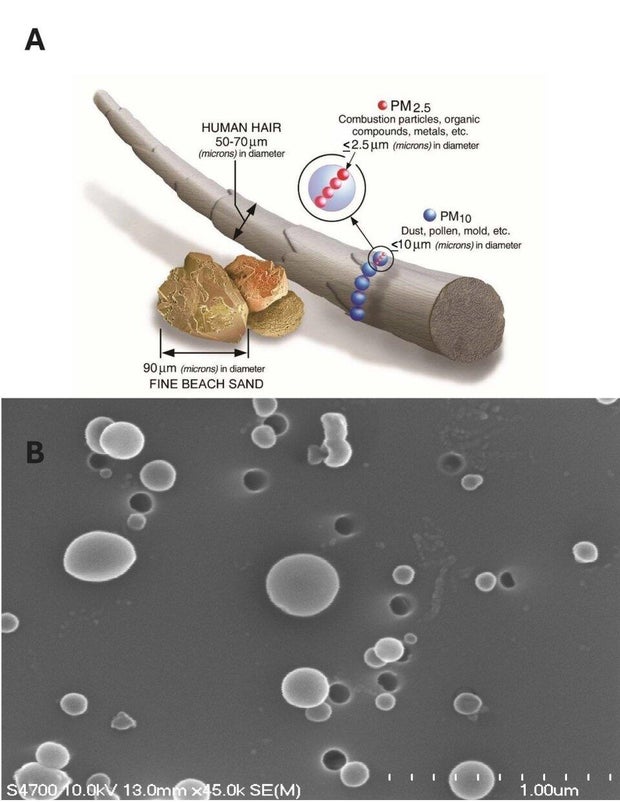
When you hear the numbers about air quality, you're hearing the Air Quality Index, which represents the measurement of PM2.5. PM stands for particulate matter, and 2.5 is 2.5 microns, measured in a concentration within a cubic meter of air.
The size is a major issue here, as PM2.5 is drastically smaller than a human hair and therefore more difficult to filter and easier to breathe in.
Because of the insanity of the smoke concentration above an AQI of 300 and the higher level of UV light we are seeing as well, this is the reason our burst of smoke is such a concern.
So what does it do to our bodies?
When evaluating health effects, in particular on someone's lungs, you have to look at particle concentration, physical activity, and properties of the particles themselves.
Health effects at our current levels can be felt by anyone, of any background and any health level.
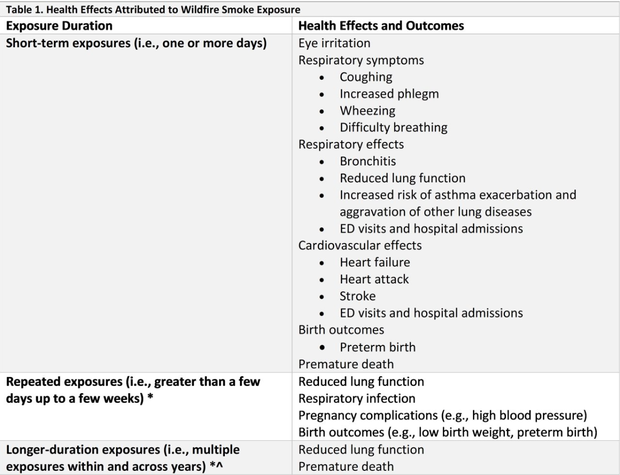
The most common are inflammation, stress on breathing, headaches, dizziness, and even nausea.
At levels above AQI 300 for PM2.5, an exposure of 24 hours would be equal to smoking a pack of cigarettes.
It's important to protect yourself with filtration indoors, and if needed in the short term, wear an N95 mask or a P11 respirator with "NIOSH."
HEPA filtration and MERV-13 filters on central air are very important in these instances.