Story of St. Paul-bred boxers the Gibbons resurrected a century later by family member


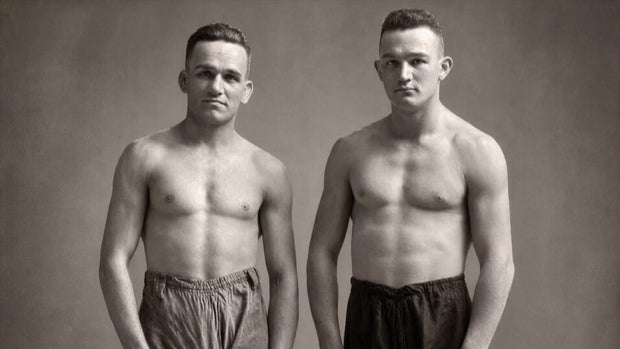
Over a century ago, the Gibbon brothers stepped into the ring and became some of the most well-known American boxers of their era.
However, over the years, their names fell into obscurity until a direct descendant decided to bring their history back to where it all started, in St. Paul, Minnesota.
"The Gibbon Brothers were lost in history and they were deserving to be remembered," said Dr. Gerard Gibbons. "Telling this story has become my life mission."
Dr. Gibbons is the grandson of heavyweight contender Tommy Gibbons and great-nephew of Mike Gibbons, known around the world as the "St. Paul Phantom" for his elusive style of boxing.
"They were masters of what we call the 'sweet science'. They were very good at avoiding blows, drawing out their opponent, seizing just the moment, studying them and knowing exactly when to strike," he said.
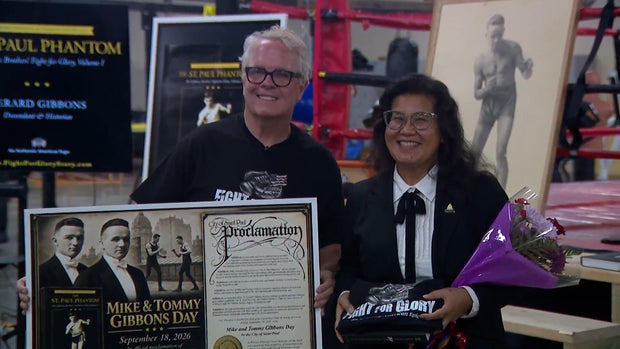
Now, their hometown is recognizing their contributions in and out of the ring. The city of St. Paul proclaimed Sept. 18 "Mike and Tommy Gibbons Day."
The proclamation coincides with the publication of The St. Paul Phantom: The Gibbons Brothers Fight for Glory, Volume 1, a new book by Dr. Gibbons.
"To receive the proclamation from the mayor that today is Tommy and Mike Gibbons Day in St. Paul was immensely rewarding," he said. "This is an important story for St. Paul to own and to honor. Not just me and my family. This is St. Paul's story."
The book is a result of a decade of research into the lives of the brothers, where Dr. Gibbons said he drew from family records, newspaper articles, photographs and video.
The brothers grew up in the Frogtown neighborhood after their Irish immigrant family came to Minnesota in 1884. Their family worked the railroads, and Dr. Gibbons said boxing offered them a path out of their impoverished lives.
"Boxing became that little way, especially with Mike, where he saw a way out of the railyards, perhaps to afford a better life," he said. "He became very good with his hands and of course his younger brother Tommy followed. That raised them from obscurity to national fame."
The brothers eventually rose to stardom and, best known for their roots in St. Paul, were later inducted into the Boxing Hall of Fame.
Their stories also intersected with many notable figures in the early 20th century. Dr. Gibbons said they crossed paths with F. Scott Fitzgerald. Their fame also had them in the orbit of other famous boxers of the time.
"By that time, the Gibbons brothers were legendary. They had a gym in St. Paul and that drew F. Scott Fitzgerald to the Gibbons brothers. [Fitzgerald said] 'teach me how to fight.' He credits the Gibbons brothers for basically saving him in the streets," he said.
During World War I, both brothers enlisted in 1917 and used their boxing experience to train American soldiers. Mike Gibbons served as a boxing instructor for the U.S. Army, while training incorporated hand-to-hand combat and bayonet techniques, according to the book.
The book also places the brothers' career into an actively changing United States where mass migration, the 1918 influenza outbreak and the birth of celebrity culture all intersected.


