Officer who found Sophia Forchas at Annunciation shooting thought "there's no way she survived this"

In the first moments after Minneapolis police arrived at Church of the Annunciation on Aug. 27, 2025, the scene outside was quiet.
"It was an odd, almost serene kind of landscape," said Lt. Ryan Kelly, who was the first officer on scene. "There was somebody standing outside the church and it didn't seem like anything was going on. Birds were chirping. And I just remember getting out of my car and looking around and not hearing gunshots, not hearing anybody screaming."
Kelly said he later realized the person standing outside was in shock.
"They didn't know what to do, and I just remember asking them, is there anybody hurt inside," Kelly said. "And then they pointed."
It took officers 3 minutes and 40 seconds to reach the church after the first 911 call came in. Police previously said the department received calls of shots fired at 8:27 a.m., with the first officer arriving at 8:31 a.m. Kelly said the initial report — a person with a rifle outside a church — is the kind of call that, in his experience, is usually unfounded.
"Nine times out of 10, there's just somebody trying to elicit a response from the police department," Kelly said. "My goodness, this is the one time out of 10. In my head, I was trying to figure out what's the fastest way there. So that's why I eventually just hit the highway."
To minimize additional trauma for those who witnessed the shooting, Minneapolis police opted not to have officers speak directly with journalists at this one-year mark. Instead, the department conducted its own interviews with responding officers and shared them with WCCO.
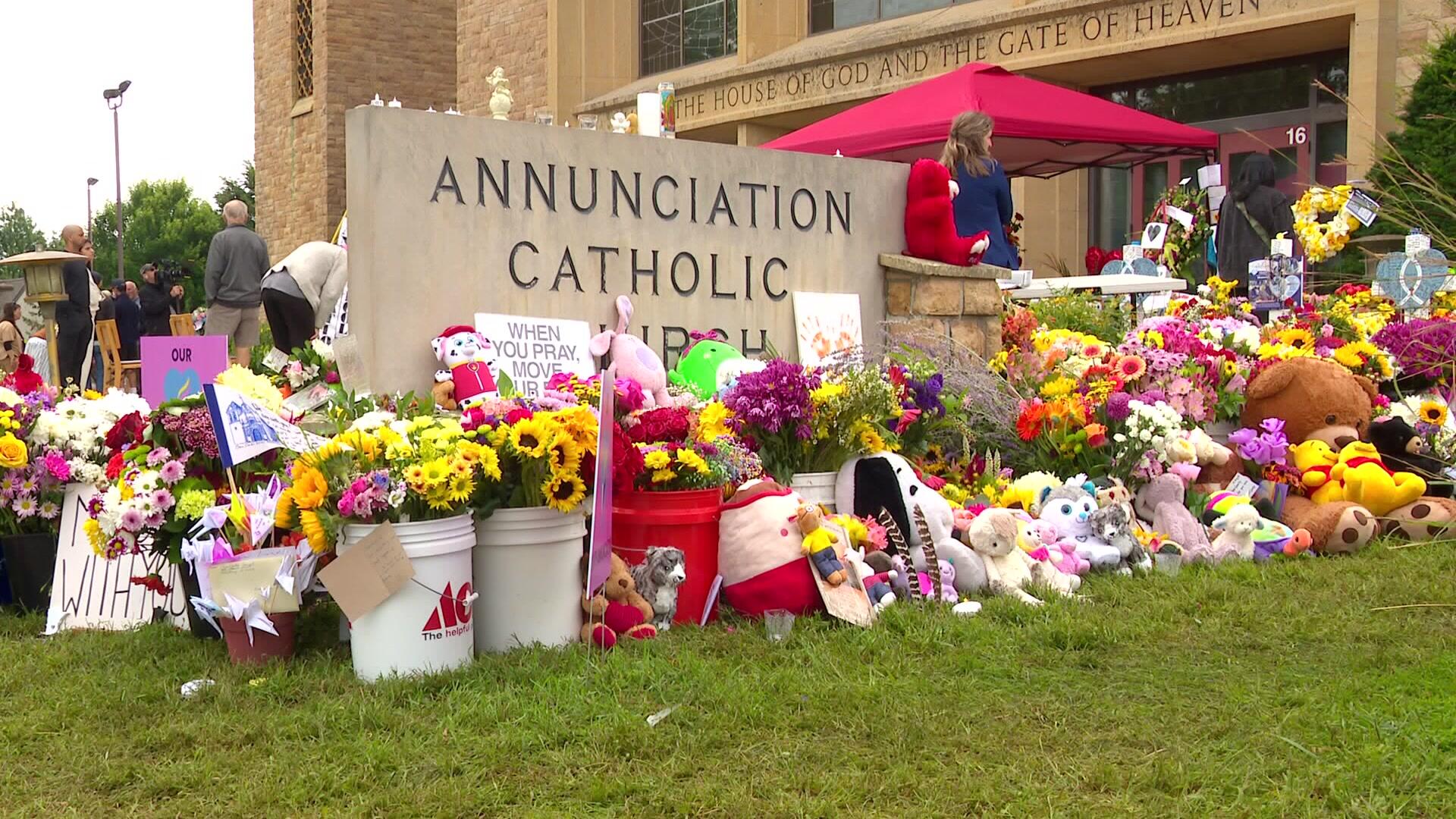
Kelly said the scene shifted the moment he walked through the church doors.
"When I came through the door, there was one of the dads was there, and I guess he was standing there, ready to take down the shooter," Kelly said. "After he realized I was a cop, then he basically started pointing. And at that point, there were people lying everywhere, blocking doors, but no one was injured that I could see."
It wasn't immediately clear who had been hurt, Kelly said.
"Somebody was yelling that it's the police, and all I saw were dozens and dozens of little heads starting to poke up from the pews," he said. "And that's when I realized that it was the kids that were shot, not all these adults that were standing blocking doors. I just remember it was like a rush coming over me — 'Oh my gosh, you know, these kids, how many kids are in here and how many are wounded?' I couldn't even see, but I just remember seeing the kids. A lot of them were crying."
Kelly said the wait for backup felt endless.
"I knew that my first priority, of course, is to go eliminate the bad guy, go get the bad guy," he said.
The shooter was already dead by the time Kelly went back outside, where he found the scale of the attack laid out on the sidewalk.
"That's when I got to the sidewalk on the east side and saw just dozens of casings — 60, 70 casings all up and down the sidewalk, spent magazines dropped on the ground," Kelly said.
Investigators later determined the shooter fired more than 100 rounds from a rifle into the church. Kelly went back inside to search for the most severely wounded children.
"I was looking for the most wounded kids that couldn't move or they couldn't get up," Kelly said. "And that's when I located the two children that died on scene before I even got there."
The two children killed, 8-year-old Fletcher Merkel and 10-year-old Harper Moyski, were sitting in the pews when they were shot.
One father asked Kelly whether he should perform CPR on the children who had died, Kelly said.
"At that point I knew, given my experience and my training, that there was nothing that we could do for those kids," he said.
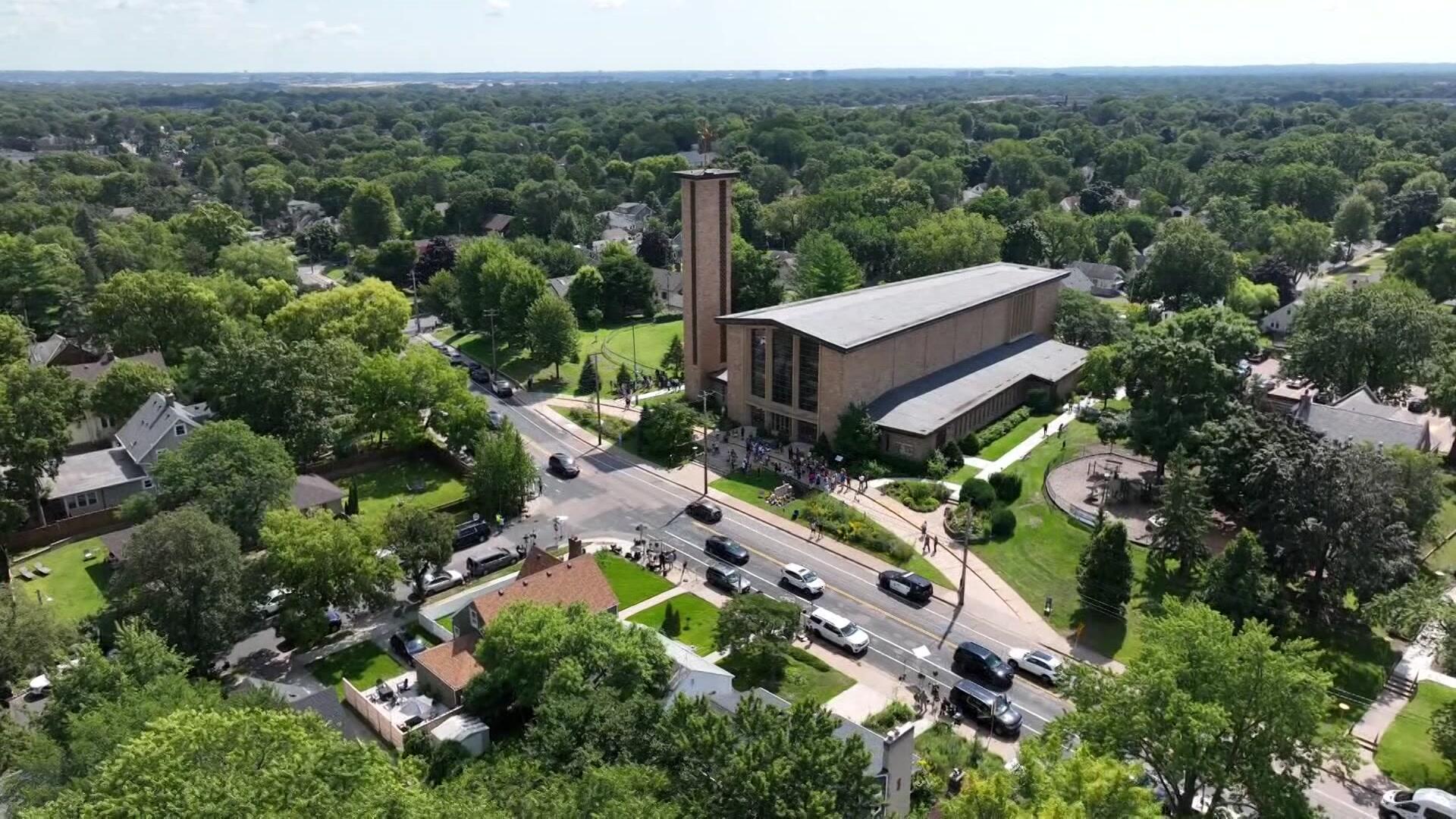
Then Kelly heard another father shouting. The man was standing with his young child near one of the shooting victims — a girl who was later identified as Sophia Forchas.
"I found that she had been hit in the head. I was like, well, there's no way that she survived this," Kelly said. "But then when I checked, she had a pulse and she was breathing. I'm like, OK, we've got to get her going now. She was my primary victim."
Kelly said he called out for help, and officers carried Forchas to a spot on the grass near a tree before he returned to check on the rest of the wounded.
"I went back through and triaged all the victims again," he said.
As more officers arrived, Kelly began directing the response, assigning priority to the most critically injured.
"Lieutenant Kelly was there just trying to triage everybody," said officer Drea Mays, "making sure whoever needed to go went first."
Inspector Jose Gomez said Kelly called out numbers to establish the order in which victims would be loaded into ambulances.
"I remember him shouting out numbers — one, two, three — basically the order that they were going to get loaded up," Gomez said.
Officer Liban Ibrahim credited Kelly's leadership as officers continued arriving at the scene.
"Inspector Kelly did an amazing job, and as the other officers arrived on the scene and all that, did an even more better job in making sure those kids are taken care of," Ibrahim said.
Kelly said the response from Minneapolis police, the Minneapolis Fire Department and Hennepin Healthcare (HCMC) ultimately saved lives, including Forchas'.
"It does bring a little bit of peace knowing that a lot of these kids that I see, they're still here because of that response," Kelly said. "It's something that, you know, people call it a once-in-a-lifetime call."
Forchas was released from the hospital about two months after the shooting, according to police.
Kelly has since been promoted. He now holds the title of inspector.
Earlier this year, a survivor of the shooting, eighth grader Lydia Kaiser, spoke publicly for the first time about the attack, telling lawmakers at the State Capitol that she was one of two students who survived gunshot wounds to the head. Law enforcement's full account of the response and investigation was later detailed in a 2,600-page report released by authorities.


