NOAA winter outlook suggests likelihood of snowier, colder winter in Minnesota

The National Oceanic and Atmospheric Administration (NOAA) has issued its winter outlook, sharing what we could expect for the coming months.
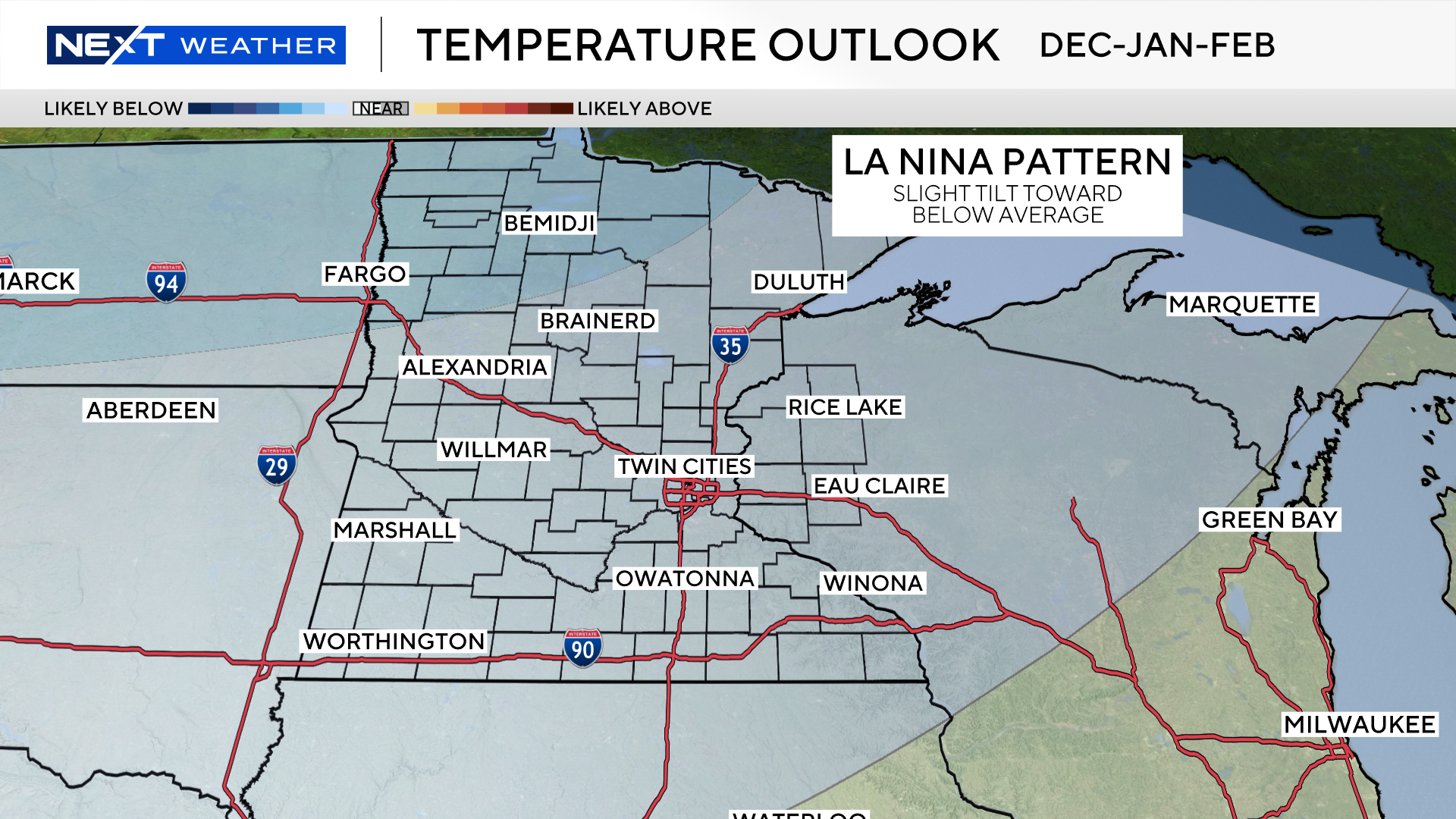
According to their outlook, Minnesota stands a greater-than-average chance for more snow and colder temperatures this winter, pertaining to the three months that make up the meteorological season: December, January and February.
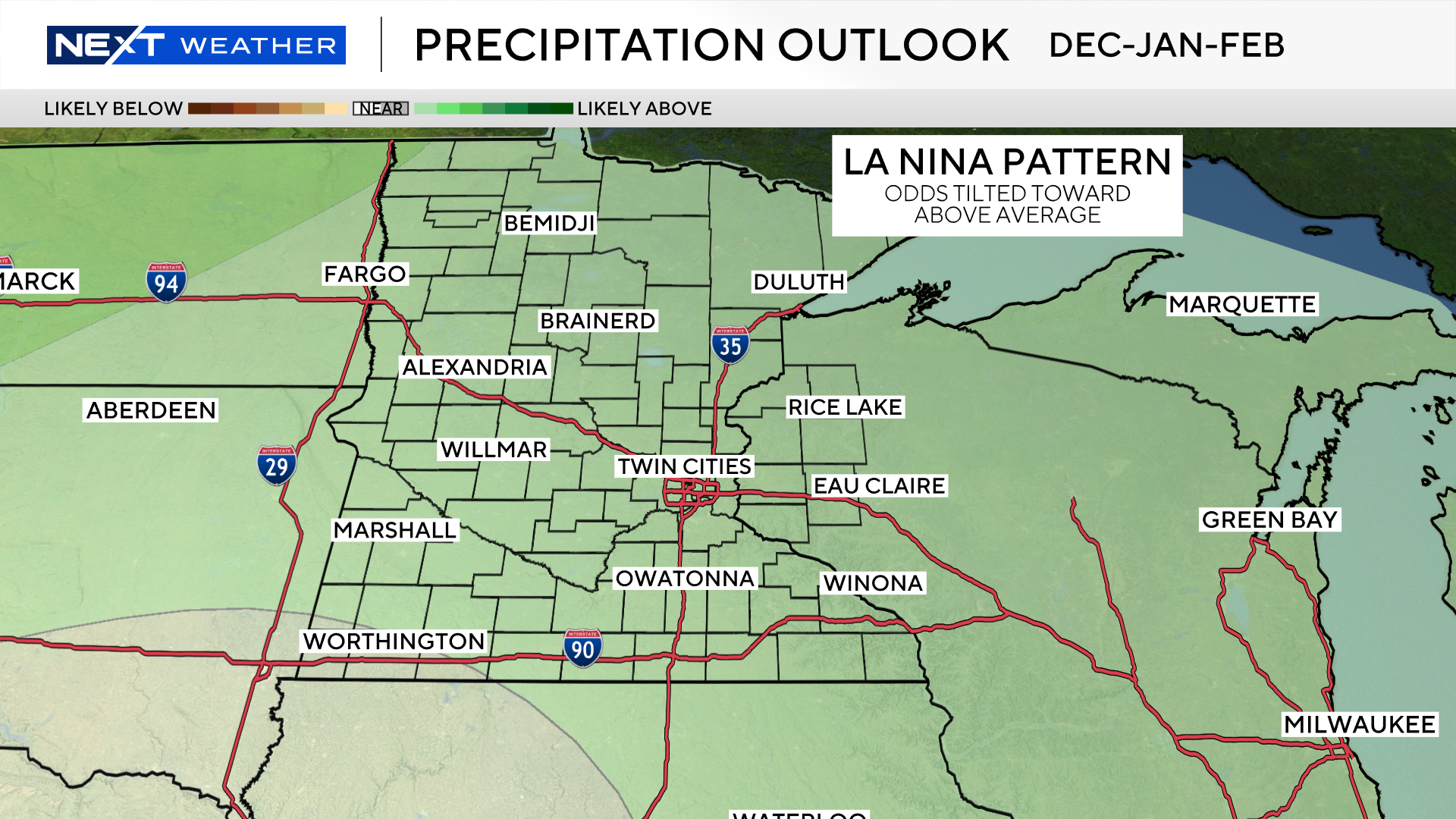
However, WCCO's Mike Augustyniak says this outlook is based on the forecast for weak La Niña conditions in the early part of the winter.
"Not all La Niña winters produce cold, snowy winters around here," Augustyniak says. "What La Niña always does produce is a volatile jet stream; that can bring weeks-long stretches of both cold air and mild air."
Augustyniak says that this winter's La Niña pattern is expected to be very weak.
The El Niño phenomenon occurs when sea surface temperatures in the equatorial Pacific are warmer than average. El Niño and its opposite phase, La Niña, are among the many factors that can create global weather extremes.
The winter of 2022-2023 — a weak La Niña year, as with this year's forecast — was a half-degree above average, temperature-wise, with exceptional January warmth. The La Niña winter of 2016-2017 was even more extreme, with temperatures about 5.6 degrees above average, and more than 6 inches of snow below average.
According to Climate Central, winter is the fastest-warming season for Minnesota, Wisconsin and 36 other states, thanks to climate change. Since 1970, our average winter temperature has gone up about 5 degrees, with nearly two extra weeks featuring temperatures warmer than normal.


